Generator Won’t Start? 12 Common Causes & Fixes
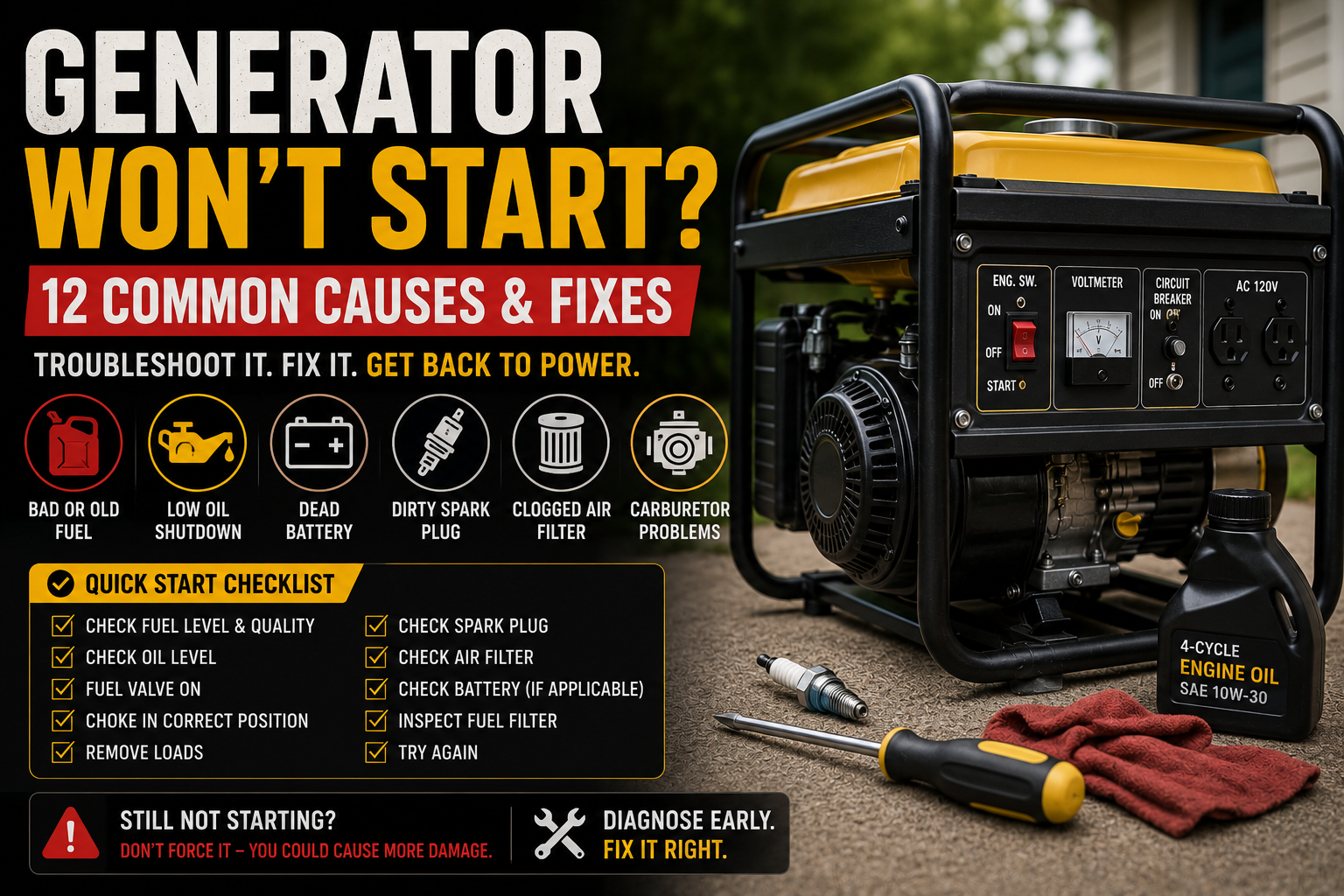
If your generator won’t start, the most common causes are old fuel, low oil shutdown, a dead battery, clogged carburetors, dirty spark plugs, fuel flow problems, or poor maintenance. In many cases, the issue can be diagnosed and fixed at home without major repairs.
The key is figuring out what happens when you try to start it. Does it crank but not start? Turn over slowly? Click but do nothing? Or start briefly and die? These clues often point directly to the problem.
If you’re troubleshooting multiple generator issues, visit our Generator Troubleshooting Guide: Common Problems & Fixes for a full breakdown of common failures.
Signs & Symptoms Your Generator Won’t Start
Before troubleshooting, pay attention to what the generator is doing.
Common warning signs include:
- Generator won’t crank at all
- Pull cord feels stuck or hard to pull
- Engine cranks but won’t start
- Clicking sound on electric-start models
- Starts briefly then dies
- Fuel smell but no ignition
- Warning lights or oil indicators
Understanding the symptoms can help narrow down the cause faster.
Top Reasons Your Generator Won’t Start
1. Old or Bad Fuel
Gasoline breaks down over time and can clog fuel systems.
Signs:
- Generator sat unused for months
- Rough starting attempts
- Fuel smells stale
Fix:
Drain old fuel and refill with fresh gasoline.
2. Low Oil Shutdown Sensor Activated
Many generators have a low oil safety feature that prevents starting.
Signs:
- Generator suddenly stopped working
- Oil warning light present
Fix:
Check and top off oil levels.
3. Dead Battery (Electric Start Models)
Electric-start generators rely on batteries that can drain during storage.
Signs:
- Clicking noise
- Weak cranking
- No response when pressing start
Fix:
Charge or replace the battery.
4. Fuel Valve Is Off
Sometimes the simplest issue is easy to miss.
Signs:
- Engine cranks but won’t fire
Fix:
Make sure the fuel valve is open.
5. Choke in Wrong Position
Cold starts usually require the choke to be engaged.
Signs:
- Starts briefly then stalls
Fix:
Adjust the choke based on engine temperature.
6. Dirty or Fouled Spark Plug
Spark plugs wear out over time.
Signs:
- Misfires
- No ignition
Fix:
Clean or replace the spark plug.
7. Clogged Carburetor
Old fuel often leaves varnish buildup inside the carburetor.
Signs:
- Generator sat unused for months
- Engine sputters but won’t run
Fix:
Use carb cleaner or have the carburetor cleaned.
8. Dirty Air Filter
Restricted airflow can make starting difficult.
Signs:
- Weak performance
- Black smoke
Fix:
Clean or replace the air filter.
9. Fuel Filter Blockage
A clogged fuel filter can stop gasoline flow.
Fix:
Replace the filter.
10. Spark Arrestor Blockage
Carbon buildup can restrict exhaust flow.
Signs:
- Hard starting
Fix:
Clean the spark arrestor.
11. Flooded Engine
Too much fuel can prevent ignition.
Signs:
- Strong fuel smell
Fix:
Wait several minutes and try again without choking.
12. Internal Mechanical or Electrical Failure
Rarely, deeper issues like ignition coil failures or damaged components are to blame.
Fix:
Professional diagnosis may be necessary.
Step-by-Step Fixes
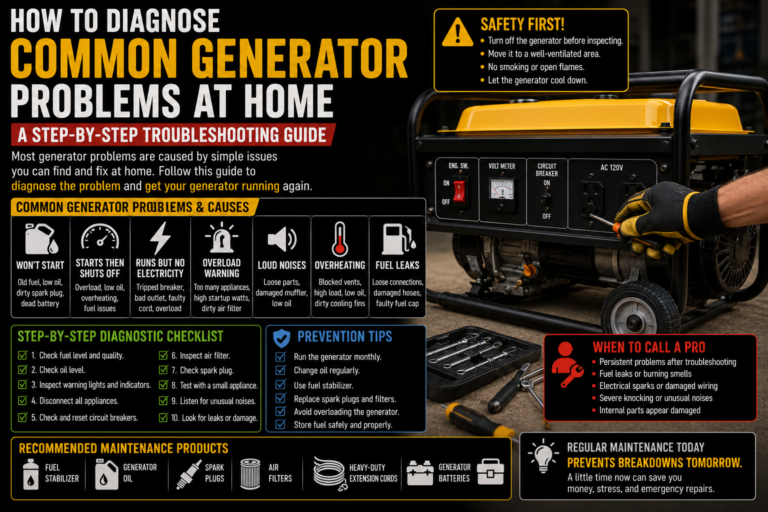
Before calling for repairs, try these troubleshooting steps.
Step 1: Check Fuel
Confirm there’s fuel in the tank and it’s fresh.
Step 2: Check Oil Levels
Low oil shutdown prevents starting.
Step 3: Verify Fuel Valve Position
Ensure the fuel valve is fully open.
Step 4: Adjust the Choke
Use choke for cold starts only.
Step 5: Inspect Spark Plug
Replace dirty or damaged plugs.
Step 6: Check Battery (Electric Start)
Test battery voltage.
Step 7: Clean Filters
Inspect air and fuel filters.
Step 8: Try a No-Load Start
Disconnect appliances before starting.
When to Call a Professional
You should consider professional help if:
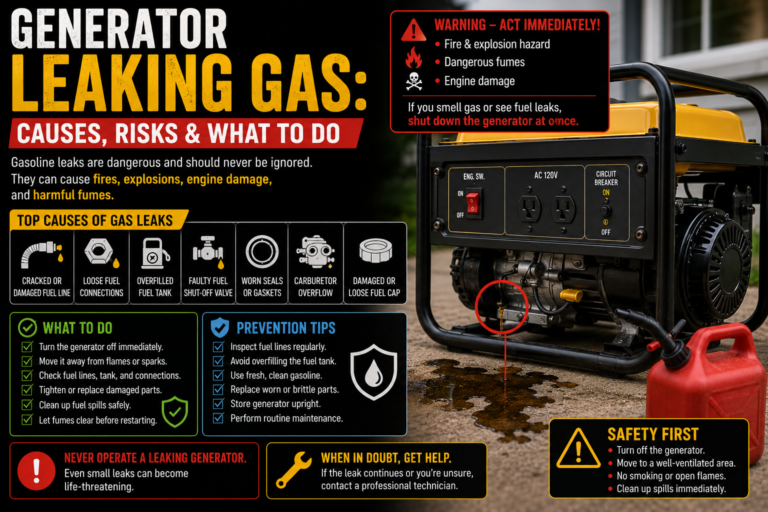
- Fuel leaks are present
- The pull cord locks up
- Electrical components fail
- The generator still won’t start after troubleshooting
- Internal engine damage is suspected
Stop troubleshooting immediately if you smell gas or notice electrical burning odors.
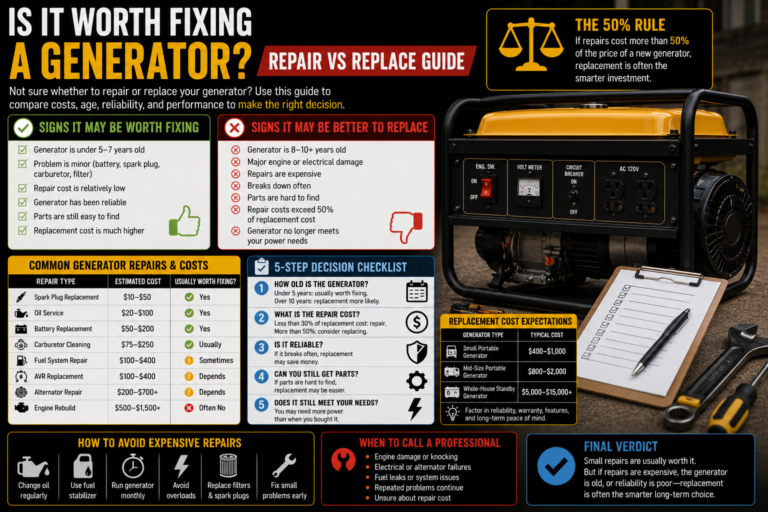
Repair Cost Expectations
Generator starting problems can range from cheap fixes to larger repairs.
| Problem | Estimated Cost |
|---|---|
| Spark plug replacement | $10–$50 |
| Battery replacement | $50–$200 |
| Carburetor cleaning | $75–$250 |
| Fuel system repairs | $100–$400 |
| Ignition system repair | $150–$500+ |
If repairs cost close to half the price of a new generator, replacement may be the better option.
Related: How Much Does Generator Repair Cost?
Related: Is It Worth Fixing a Generator?
How to Prevent Starting Problems
Simple maintenance can prevent most startup failures.
- Use fuel stabilizer during storage
- Run your generator monthly
- Replace spark plugs regularly
- Keep fresh oil in the engine
- Clean air filters
- Store fuel properly
Related: Generator Maintenance Checklist to Prevent Breakdowns
Recommended Maintenance Products
Helpful products for preventing startup problems:
- Fuel stabilizer
- Replacement spark plugs
- Generator oil kits
- Generator batteries
- Air filters
- Fuel treatment additives
You can also browse our guide to the Best Generator Maintenance Products.
Related Troubleshooting Articles
Still having trouble? These guides may help:
- Generator Troubleshooting Guide: Common Problems & Fixes
- Why Does My Generator Keep Shutting Off? (Fixes Explained)
- Generator Not Producing Power? Here’s What to Check First
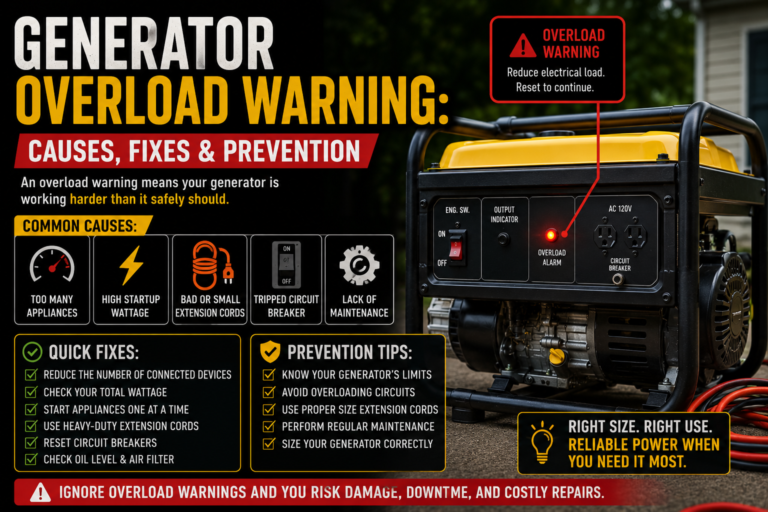
- Generator Overload Warning: Causes, Fixes & Prevention
- Generator Overheating: Causes, Fixes & Prevention
Frequently Asked Questions
Why won’t my generator start after sitting?
Old fuel, dead batteries, clogged carburetors, or stale oil are common causes after long storage periods.
Can low oil stop a generator from starting?
Yes. Most generators have low oil shutdown protection.
Why does my generator crank but not start?
This usually points to fuel delivery, spark plug, carburetor, or choke problems.
Why is my pull cord hard to pull?
Engine lockup, flooding, or internal resistance may be the cause.
Is old gas bad for generators?
Yes. Old fuel is one of the most common reasons generators fail to start.
Final Verdict
A generator that won’t start can be frustrating, but many startup problems are surprisingly simple to fix. Start with the basics—fuel, oil, spark plug, battery, and filters—before assuming major repairs are needed.
If troubleshooting doesn’t solve the issue, professional repair or replacement may be the next step, especially for older or heavily used generators.