
Introduction to Solar Generators for Home Backup: Complete Buying & Sizing Guide
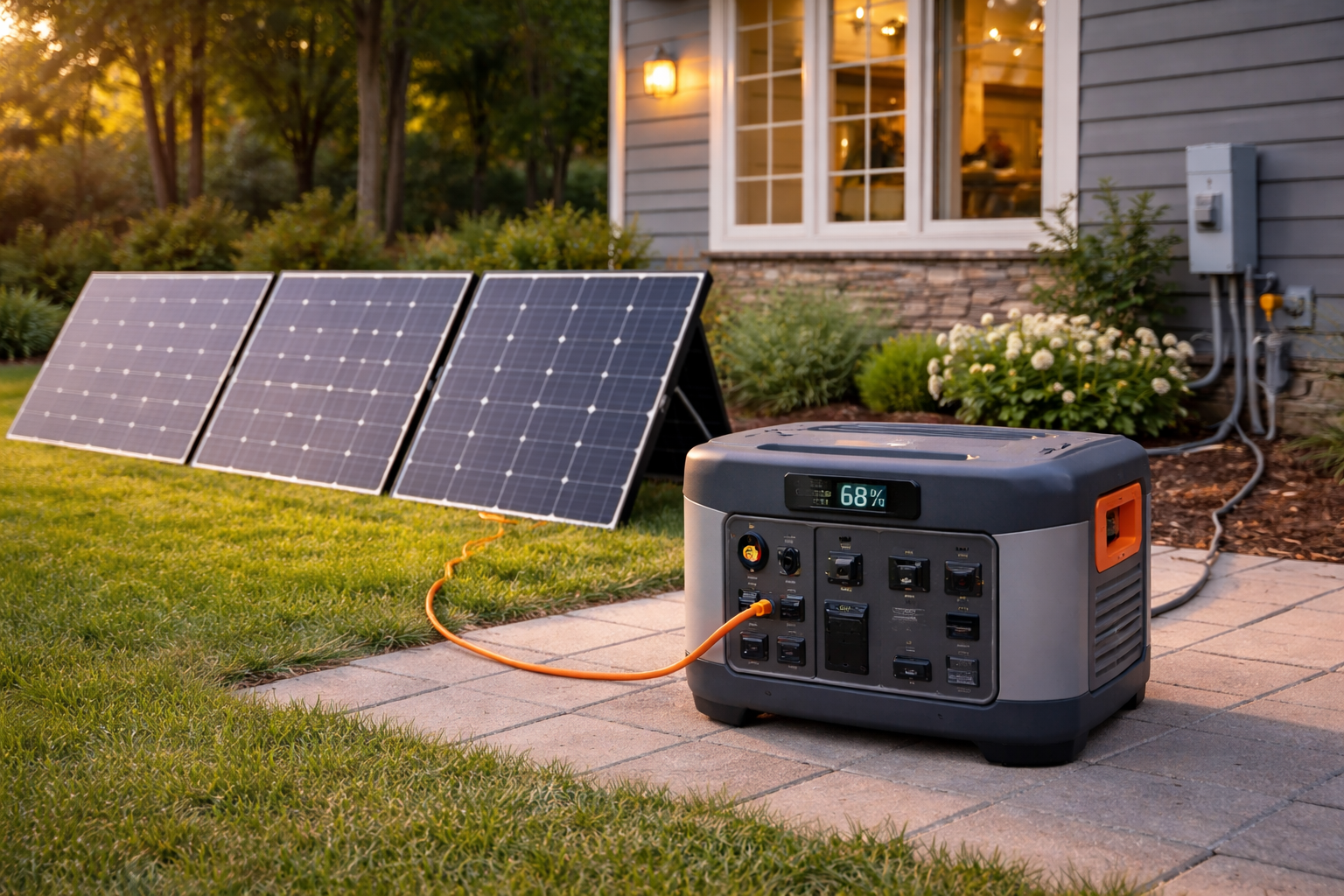
Solar generators for home backup provide quiet, emission-free emergency power during outages. Unlike gas or propane generators, solar generators use battery storage and inverter systems to deliver electricity without combustion, fuel storage, or engine noise.
For homeowners who want:
• Clean backup power
• Indoor-safe operation (battery only)
• Minimal maintenance
• No fuel dependency
Solar generators can be a practical solution for essential circuit backup.
However, choosing the right solar generator for home backup requires understanding:
• Battery capacity (Wh vs kWh)
• Inverter output (continuous vs surge watts)
• Solar panel input limits
• Recharge time
• Runtime expectations
• Whole-home limitations
This guide explains how solar generators work, what they can realistically power, and how to size one properly for outage protection.
If you’re comparing all backup system types, visit
👉 Top Recommended Generators & Gear
What Is a Solar Generator?
A solar generator is a battery power station that:
• Stores electricity in lithium batteries
• Converts DC battery power into AC household electricity
• Recharges via solar panels, wall outlets, or sometimes car charging
Unlike traditional generators, solar generators:
• Produce no exhaust
• Require no gasoline or propane
• Operate silently
• Can be used indoors safely (battery only)
They are sometimes called:
• Portable power stations
• Battery generators
• Solar battery systems (portable type)
How Solar Generators Work
A solar generator consists of:
- Battery storage (measured in watt-hours or kilowatt-hours)
- Inverter (measured in watts)
- Charge controller
- Solar input ports
Power Flow:
Solar Panels → Charge Controller → Battery → Inverter → Appliances
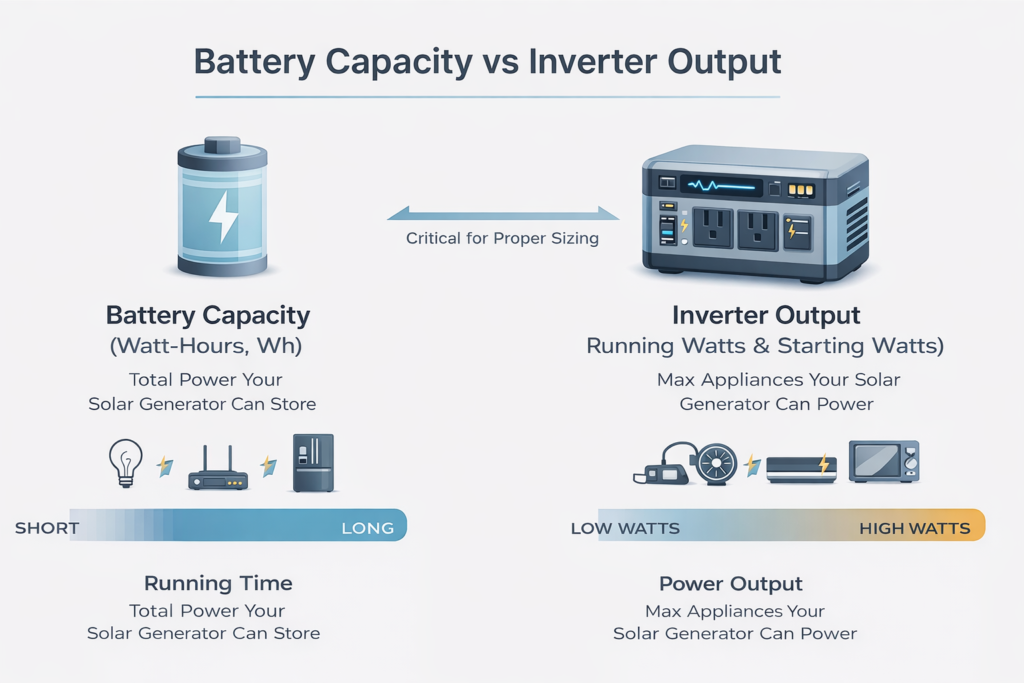
Understanding both battery capacity and inverter output is critical for proper sizing.
Solar Generator Battery Types
Most modern solar generators use lithium-based batteries, but the battery chemistry can significantly affect lifespan, safety, and overall performance.
The two most common battery types are LiFePO4 (lithium iron phosphate) and traditional lithium-ion batteries. LiFePO4 batteries typically last longer and offer improved safety, while lithium-ion batteries are lighter and often less expensive.
👉 Learn more in our detailed guide: LiFePO4 vs Lithium Ion Batteries
What Can a Solar Generator Run During an Outage?
Most solar generators are designed for essential loads, not full-home HVAC.
Typical supported appliances:
• Refrigerators
• Freezers
• CPAP machines
• Internet routers
• Lighting
• TVs
• Small kitchen appliances
Larger units may support:
• Sump pumps (check surge rating)
• Window AC units
• Small power tools
Most solar generators cannot run:
• Central air conditioning
• Electric water heaters
• Large electric furnaces
Proper sizing depends on both inverter surge rating and battery capacity.
Understanding Solar Generator Capacity
Battery Capacity (Wh vs kWh)
• 1,000 Wh = 1 kWh
• Determines runtime
• Larger battery = longer backup
Example:
A 2,000 Wh solar generator can theoretically run:
• 200 watts for 10 hours
• 1,000 watts for 2 hours
Actual runtime varies due to inverter efficiency.
Inverter Output (Watts)
• Continuous watts = steady output
• Surge watts = short startup spike
Motor-driven appliances require surge capacity just like traditional generators.
Solar Generator Sizes (Typical Ranges)
Small (300–1,000 Wh)
• Phones
• Laptops
• Small electronics
Medium (1,000–2,000 Wh)
• Refrigerator (limited runtime)
• Internet
• Lighting
Large (2,000–5,000+ Wh expandable)
• Multiple essential appliances
• Partial circuit backup
• Longer outages (with solar recharge)
Future articles:
• 2000Wh Solar Generator Guide
• Best Solar Generators for Refrigerator
• Expandable Solar Battery Systems
Solar Recharge vs Wall Charging
Solar recharge depends on:
• Panel wattage
• Sunlight hours
• Panel angle
• Weather conditions
Example:
400W of panels in good sunlight may recharge:
• 1–2 kWh per day
Solar charging is slower than gasoline refueling, so planning matters.
Pros of Solar Generators for Home Backup
• Silent operation
• No fuel storage
• Indoor-safe battery use
• Minimal maintenance
• Expandable systems available
• Renewable energy compatibility
Limitations of Solar Generators
• Limited high-wattage capacity
• Not ideal for central HVAC
• Recharge speed dependent on sun
• Higher cost per watt vs gas generators
Solar generators are ideal for:
• Apartment dwellers
• Noise-sensitive neighborhoods
• Occasional outages
• Emergency preparedness
Solar Generators vs Portable Gas Generators
| Feature | Solar Generator | Gas Generator |
|---|---|---|
| Noise | Silent | Moderate–Loud |
| Fuel | Solar / Wall | Gas / Propane |
| Indoor Use | Battery only | Never indoors |
| Maintenance | Minimal | Engine maintenance |
| High HVAC Support | Limited | Better capacity |
| Refueling Speed | Slow (solar) | Fast |
→ Link: Portable Generators for Home Backup
Solar Generators vs Whole Home Battery Systems
Solar generators are portable battery units.
Whole-home battery systems (like Tesla Powerwall) are:
• Permanently installed
• Integrated with electrical panel
• Designed for full-home backup
This page focuses on portable solar generators only.
→ Link: Solar & Battery Backup Systems for Home
→ Link: Whole House Generators
How to Size a Solar Generator for Home Backup
Step 1: List essential appliances
Step 2: Identify running watts
Step 3: Identify surge watts
Step 4: Calculate total simultaneous load
Step 5: Determine runtime needs
For example:
Refrigerator (150W avg)
Router (20W)
Lights (100W total)
Total = 270W average
For 10 hours:
270W × 10 = 2,700 Wh required
Always oversize 15–20% for safety.
→ Link: Generator Sizing Guide
Are Solar Generators Worth It?
Solar generators are worth it if you:
• Need quiet indoor-safe power
• Experience short-to-moderate outages
• Don’t require full HVAC support
• Prefer renewable backup
They are not ideal if:
• You require full central AC support
• You experience multi-day outages without sun
• You need high simultaneous load support
Frequently Asked Questions About Solar Generators
Can a solar generator power a refrigerator?
Yes — most medium-to-large solar generators can power a refrigerator. However, runtime depends on battery size and startup surge compatibility.
Can solar generators run central AC?
Most portable solar generators cannot support central air conditioning due to high startup surge and sustained wattage requirements.
How long will a solar generator run?
Runtime depends on battery capacity and load. Divide battery Wh by appliance wattage for an estimate.
Can you use solar generators indoors?
Yes — because they do not produce combustion exhaust. However, attached solar panels must remain outdoors.
Considering Clean Backup Power?
Solar generators provide quiet, fuel-free protection for essential appliances during outages.
→ Explore Solar Generators for Home Backup
If you’re comparing all system types:
→ Home Backup Power Systems Guide