
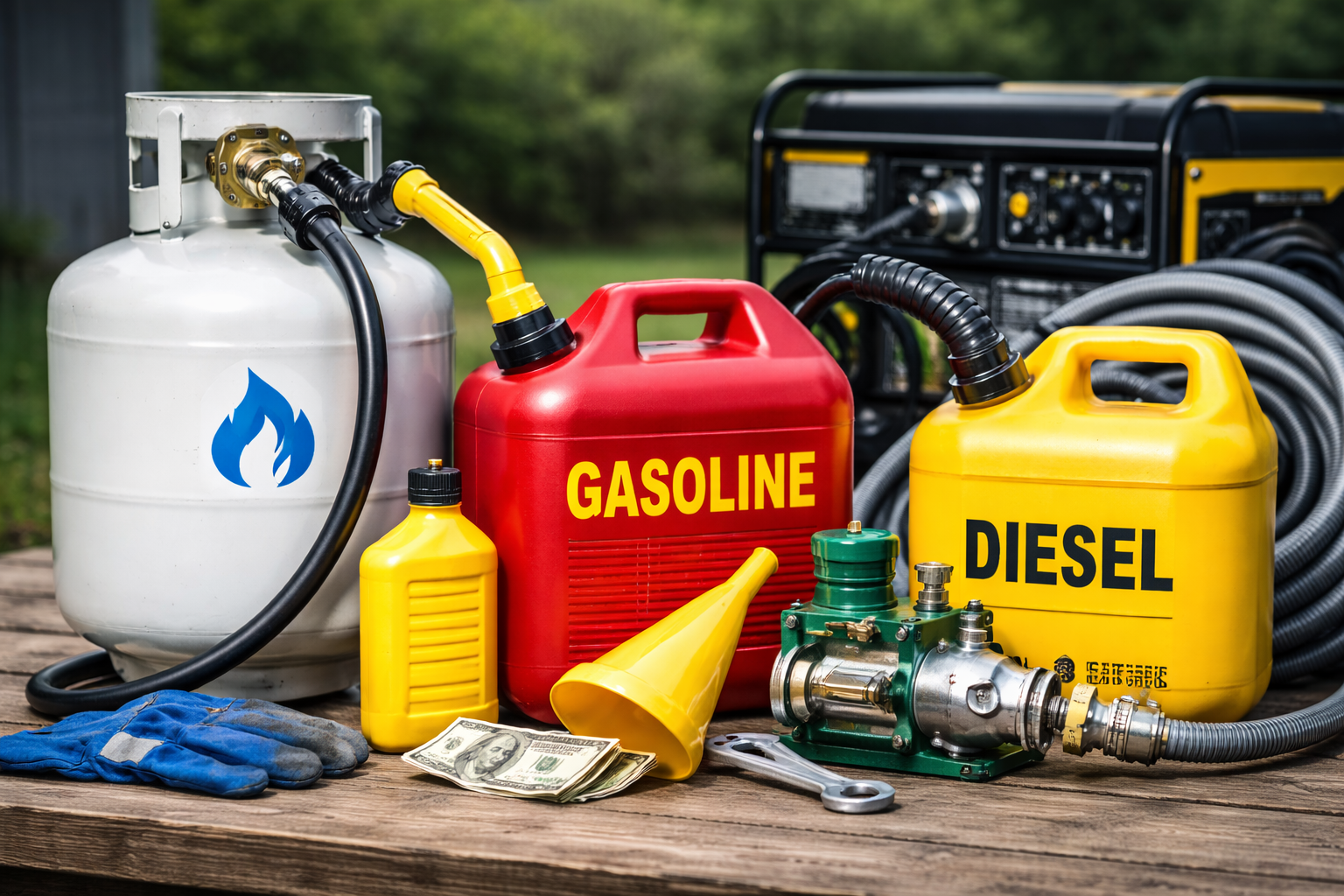
Introduction to Generator Fuel Types
Choosing the right fuel is one of the most important decisions when planning a home backup power system. This generator fuel guide explains how gasoline, propane, natural gas, and diesel affect generator runtime, reliability, maintenance, and long-term performance.
The fuel you choose determines:
• How long your generator can run
• How easy it is to refuel during outages
• Long-term storage reliability
• Operating cost per hour
• Maintenance requirements
👉 Top Recommended Generators & Gear
Generator Fuel Usage and Runtime Calculator
Generator Fuel Usage & Runtime Calculator
1) Generator + Fuel
2) Appliances + Hours/Day
| Appliance | Watts (running) | Qty | Hours/day | Wh/day |
|---|
3) Results
Some fuels are better suited for portable generators, while others are ideal for whole house standby systems.
Why Generator Fuel Type Matters
Generator fuel affects more than just runtime. It directly impacts reliability during emergencies.
The right fuel choice helps ensure:
• Reliable startup when power fails
• Consistent runtime during extended outages
• Safe long-term storage
• Lower maintenance requirements
• Predictable operating cost
Poor fuel planning is one of the most common causes of generator failure during outages.
Main Generator Fuel Types Overview
Most residential generators use one of four fuel types:
• Gasoline
• Propane
• Natural Gas
• Diesel
Each has advantages depending on generator type and backup requirements.
Gasoline Generator Fuel
Gasoline is the most common fuel for portable generators because it is widely available and provides strong power output.
Advantages
• Easily available at most fuel stations
• Strong power output
• Works well with portable generators
• Lower upfront generator cost
Disadvantages
• Short shelf life (3–6 months untreated)
• Can degrade and clog carburetors
• Requires fuel storage planning
• May be difficult to obtain during major outages
Gasoline is best suited for portable generators used during short-duration outages.
Propane Generator Fuel
Propane is one of the most reliable long-term generator fuel options due to its stability and clean combustion.
Advantages
• Extremely long shelf life (years)
• Clean burning fuel
• Reduced engine maintenance
• Ideal for emergency fuel storage
Disadvantages
• Slightly lower power output than gasoline
• Requires propane tank storage
• Limited by tank capacity unless large tank installed
Propane is commonly used in both portable generators and whole house standby generators.
👉See: Natural Gas vs Propane Generator Guide
Natural Gas Generator Fuel
Natural gas is commonly used in standby generators connected to home gas lines.
Advantages
• Continuous fuel supply (no refueling required)
• Ideal for long outages
• Automatic operation capability
• No fuel storage required
Disadvantages
• Requires natural gas utility connection
• May be unavailable during major infrastructure failures
• Professional installation required
Natural gas is one of the most convenient fuel options for whole house generators.
Diesel Generator Fuel
Diesel is commonly used in larger or commercial backup systems but is less common in residential setups.
Advantages
• Highly efficient fuel consumption
• Excellent durability
• Strong performance under heavy load
• Long engine lifespan
Disadvantages
• Higher generator cost
• Fuel storage requirements
• Less common in residential standby systems
Diesel generators are typically used in commercial or heavy-duty backup applications.
Generator Runtime by Fuel Type
Generator runtime depends on:
• Fuel type
• Fuel tank size
• Load level
• Generator efficiency
Typical runtime comparison:
Gasoline
• 8–12 hours per tank (portable)
Propane
• Depends on tank size
• Can run for days with large tanks
Natural Gas
• Unlimited runtime while utility supply remains active
Diesel
• Long runtime with high efficiency
👉 See: Generator Runtime Guide
Fuel Storage and Reliability Comparison
Fuel storage reliability varies significantly:
Gasoline
• Short shelf life
• Requires stabilizer
Propane
• Excellent long-term storage
• Does not degrade
Natural Gas
• No storage required
Diesel
• Good storage stability with proper handling
Propane and natural gas offer the best long-term reliability for standby systems.
Fuel Type by Generator Category
Portable Generators commonly use:
• Gasoline
• Propane
• Dual fuel
Standby Generators commonly use:
• Natural gas
• Propane
Commercial Generators commonly use:
• Diesel
Generator Fuel Cost Comparison (Example Per Hour)
Actual generator fuel cost depends on fuel price, generator size, and load level. The examples below assume a typical 7,500–10,000 watt generator running at ~50% load (3,500–5,000 watts).
Natural Gas — Lowest Cost Per Hour
Natural gas is usually the cheapest generator fuel because it’s delivered continuously through utility lines and costs less per unit of energy.
Example:
• Generator consumption: ~75 cubic feet per hour
• Average natural gas cost: $1.50 per 100 cubic feet
Cost per hour:
$1.10–$1.75 per hour
Why it’s cheaper:
• Utility pipeline supply
• Lower fuel cost per energy unit
• No delivery or storage costs
Best for: whole house standby generators
Propane — Moderate Cost Per Hour
Propane costs more than natural gas but offers excellent storage reliability and long shelf life.
Example:
• Generator consumption: ~0.6–0.8 gallons per hour
• Average propane cost: $2.50–$3.50 per gallon
Cost per hour:
$1.75–$2.80 per hour
Why it’s moderate cost:
• Higher cost per gallon than natural gas
• Slightly lower energy density
• But excellent storage and reliability
Best for: standby generators and emergency preparedness
Gasoline — Highest Cost Per Hour
Gasoline is usually the most expensive generator fuel due to higher fuel prices and faster consumption.
Example:
• Generator consumption: ~0.7–1.0 gallons per hour
• Average gasoline cost: $3.25–$4.25 per gallon
Cost per hour:
$2.50–$4.25 per hour
Why it’s more expensive:
• Higher per-gallon price
• Faster fuel consumption
• Requires refueling during outages
Best for: portable generators and short outages
Quick Comparison Table (Clear for Readers)
| Fuel Type | Typical Cost Per Hour | Best Use Case |
|---|---|---|
| Natural Gas | $1.10–$1.75/hr | Whole house standby |
| Propane | $1.75–$2.80/hr | Standby or emergency backup |
| Gasoline | $2.50–$4.25/hr | Portable generators |
Dual Fuel Generators
Dual fuel generators can run on both gasoline and propane.
Advantages include:
• Fuel flexibility
• Backup fuel options
• Improved outage reliability
Dual fuel systems reduce dependence on a single fuel source.
👉 See: Dual Fuel Generator Guide
Best Fuel Choice by Use Case
Portable generator backup:
Best fuel: gasoline or propane
Whole house standby generator:
Best fuel: natural gas or propane
Long-term emergency preparedness:
Best fuel: propane
Commercial or heavy-duty use:
Best fuel: diesel
Links to Our Other Guides
→ Generator Sizing Guide
→ Transfer Switch Guide
→ Portable Generator Guide
→ Whole House Generator Guide
→ Solar Generator Guide
→ Home Backup Power Systems Hub
Plan Your Complete Backup Power System
Fuel selection is just one part of building a reliable backup system. Proper sizing, safe integration, and fuel planning work together.
FAQ Section
What is the best fuel for generators?
The best generator fuel depends on your generator type. Gasoline is common for portable generators, while natural gas and propane are best for standby generators due to long runtime and reliability.
Is propane better than gasoline for generators?
Propane offers longer storage life and cleaner operation, while gasoline provides slightly higher power output. Propane is often better for long-term emergency planning.
How long can a generator run on natural gas?
Natural gas generators can run indefinitely as long as the gas supply remains active.
What fuel do whole house generators use?
Most whole house generators use natural gas or propane.
Which generator fuel lasts the longest in storage?
Propane has the longest shelf life and can remain stable for years.