
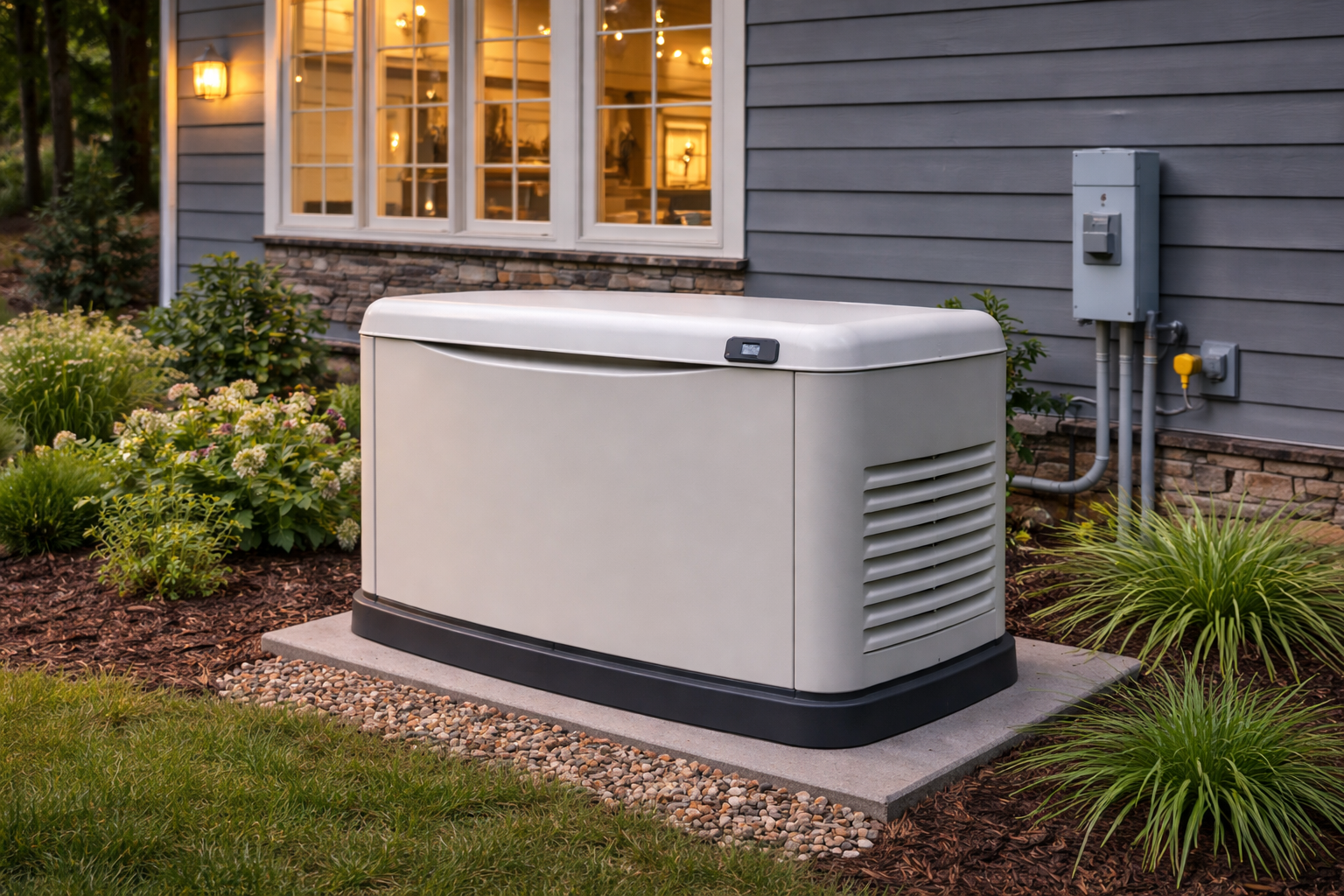
Introduction to Whole House Generators: Complete Buying, Cost & Installation Guide
Whole house generators (also called standby generators) provide automatic backup power for your entire home during an outage. Unlike portable generators, these permanently installed systems start within seconds of power loss and restore electricity without manual setup.
A properly sized whole house generator can power HVAC systems, refrigerators, sump pumps, lighting, medical equipment, and more — making them ideal for homes in regions prone to storms, grid failures, or extended outages.
This guide explains:
• How whole house generators work
• How to choose the right size
• Air-cooled vs liquid-cooled systems
• Natural gas vs propane fuel options
• Installation requirements and permits
• Automatic transfer switches
• Real-world costs and maintenance
👉 Top Recommended Generators & Gear
What Is a Whole House Generator?
A whole house generator is a permanently installed standby power system connected directly to your home’s electrical panel through an automatic transfer switch (ATS). When utility power fails, the generator automatically starts and powers either:
• The entire home
• Or selected critical circuits
Unlike portable generators, standby systems:
• Start automatically
• Run on natural gas or propane
• Require professional installation
• Provide seamless power restoration
👉 Link: Automatic Transfer Switch Guide
👉 Link: Home Power Systems Hub
Best Whole House Generators (Top Brands & Comparisons)
When comparing systems, focus on:
• Power output (kW rating)
• Air-cooled vs liquid-cooled design
• Fuel type compatibility
• Noise levels
• Warranty coverage
• Service network
👉 For detailed reviews, see:
• Best Whole House Generator
• Generac vs Kohler
How to Size a Whole House Generator
Sizing is the most important step.
Standby generators are rated in kilowatts (kW). Most homes require:
• 14–18 kW for essential coverage
• 20–24 kW for larger homes with HVAC
• 30+ kW for full-house heavy load
Improper sizing can cause:
• Overloads
• HVAC startup failure
• Excess fuel consumption
• Shortened engine lifespan
👉 Link: Generator Sizing Guide
Air-Cooled vs Liquid-Cooled Generators
Standby generators fall into two primary cooling categories.
Air-Cooled Generators
• Most common for residential use
• Lower upfront cost
• Typically up to ~24 kW
• Easier installation
Liquid-Cooled Generators
• Designed for larger homes
• Higher capacity (25 kW+)
• Better for sustained heavy loads
• Higher cost
👉 Link: Air Cooled vs Liquid Cooled
Natural Gas vs Propane Standby Generators
Fuel choice affects runtime, cost, and reliability.
Natural Gas Generators
• Continuous supply (if utility active)
• No refueling required
• Lower storage responsibility
Propane Generators
• Long-term fuel storage stability
• Independent of gas utility
• Ideal in rural areas
👉 Link: Natural Gas vs Propane Generator
👉 Link: Fuel Guide
How Much Does a Whole House Generator Cost?
Total cost includes:
- Generator unit
- Automatic transfer switch
- Installation labor
- Electrical upgrades
- Gas line work
- Permits & inspections
Typical cost ranges:
• Small systems: $8,000–$12,000 installed
• Mid-size systems: $12,000–$18,000 installed
• Large liquid-cooled systems: $20,000+
Costs vary based on:
• Electrical panel upgrades
• Trenching for gas lines
• Concrete pad requirements
• Local code compliance
👉 Link: How Much Does a Whole House Generator Cost
Generator Installation Requirements
Whole house generators require:
• Concrete pad or approved mounting surface
• Minimum clearance from structure
• Gas line sizing and pressure compliance
• Dedicated breaker and wiring
• Proper grounding & bonding
• Automatic transfer switch integration
Installation must comply with:
• NEC (National Electrical Code)
• Local building codes
• Utility requirements
👉 Link: Generator Installation Requirements
👉 Link: Generator Pad & Placement Guide
Permits & Code Requirements
Most jurisdictions require:
• Electrical permit
• Gas permit
• Inspection approval
• Utility notification
Failure to obtain permits can:
• Void warranty
• Create insurance issues
• Cause fines
• Prevent home sale
Always verify local requirements.
Automatic Transfer Switch (ATS) Explained
The automatic transfer switch is the control center of a standby generator.
It:
• Detects utility power failure
• Signals generator to start
• Disconnects from grid
• Restores home power
• Switches back when grid returns
Without proper ATS integration, standby systems cannot function safely.
👉 Link: Automatic Transfer Switch Guide
👉 Link: Transfer Switch Guide
Generator Pad & Placement Guide
Proper placement requires:
• Clearance from windows and vents
• Compliance with manufacturer specs
• Noise buffer consideration
• Access for maintenance
Some areas also enforce:
• HOA rules
• Noise ordinances
• Property line setbacks
👉 Link: Generator Pad & Placement Guide
👉 Link: Noise Ordinance Considerations
Maintenance Schedule for Whole House Generators
Routine maintenance includes:
• Oil changes
• Air filter replacement
• Spark plug inspection
• Battery checks
• Load test cycles
Most manufacturers recommend:
• Annual service
• Exercise cycle weekly or biweekly
Neglected systems may fail during real outages.
👉 Link: Generator Maintenance Guide
👉 Link: Generator Fuel Guide
Portable vs Whole House Generators
(Include short comparison table)
Portable = Manual, lower cost
Whole House = Automatic, higher cost, full coverage
👉 Link: Portable Generators Hub
Is a Whole House Generator Worth It?
Best suited for:
• Homes with full HVAC dependence
• Frequent outages
• Medical equipment
• Remote work households
• High property value
Not always necessary for:
• Mild outage regions
• Small homes
• Budget-limited homeowners
Not every home requires automatic full-home coverage. To compare all backup system types side-by-side, review the complete Home Backup Power Systems Overview.
👉 Compare All Home Backup Power Systems
Frequently Asked Questions About Whole House Generators
How long do whole house generators last?
Most whole house generators (standby generators) last 20–30 years when properly maintained. In terms of engine life, that typically translates to 2,000–3,000+ operating hours, depending on the model, load level, and maintenance schedule.
Lifespan depends on:
• Proper annual servicing
• Oil and filter changes
• Load management (not constantly running at max capacity)
• Installation quality
• Environmental exposure
Standby generators are designed to run intermittently — mainly during outages and weekly exercise cycles — so in most residential settings, they accumulate hours slowly. A well-installed and professionally maintained system can provide decades of reliable backup power.
Do standby generators increase home value?
In many markets, yes — a whole house generator can increase perceived home value and buyer appeal, especially in regions with frequent outages (hurricanes, ice storms, grid instability).
While the exact dollar-for-dollar return varies, standby generators often:
• Improve resale attractiveness
• Differentiate the property from comparable homes
• Appeal to remote workers and home-based professionals
• Add value in outage-prone regions
Buyers view automatic backup power as a long-term infrastructure upgrade — similar to a new roof or HVAC system. However, the value increase depends on local market demand and the quality of installation.
Can a whole house generator run central AC?
Yes — if it is properly sized.
Central air conditioning systems have high startup (surge) requirements, especially 3–5 ton units. A correctly sized whole house generator can run:
• Central AC
• Heat pumps
• Electric furnace blowers
• Multiple HVAC zones
The key is proper load calculation. Undersized standby generators may struggle with compressor startup or operate near maximum capacity, increasing wear and fuel consumption.
Before installation, a full load analysis should account for:
• Running watts
• Starting (surge) watts
• Simultaneous load
• HVAC tonnage
Proper generator sizing ensures reliable HVAC operation during an outage.
How loud are standby generators?
Most residential standby generators operate between 60–70 decibels (dB) at 23 feet — roughly equivalent to a normal conversation or a dishwasher.
Noise levels depend on:
• Air-cooled vs liquid-cooled design
• Load percentage
• Distance from the unit
• Installation placement
Modern standby generators are enclosed and significantly quieter than open-frame portable generators. Many systems are designed to comply with local residential noise ordinances.
During weekly exercise cycles, the generator will briefly run to maintain readiness — but typically at moderate sound levels.
Do whole house generators run during maintenance mode?
Yes — most standby generators perform automatic weekly or biweekly exercise cycles.
These exercise cycles:
• Run the engine briefly (often 10–20 minutes)
• Circulate oil
• Maintain battery charge
• Confirm system readiness
Some models allow “quiet exercise mode,” which runs at reduced RPM without transferring load to the house.
These maintenance runs are normal and necessary to ensure the generator starts reliably during an actual outage. They do not mean something is wrong with the system.
A properly installed and maintained whole house generator provides automatic, long-term protection — especially in regions where power outages are frequent or prolonged.