
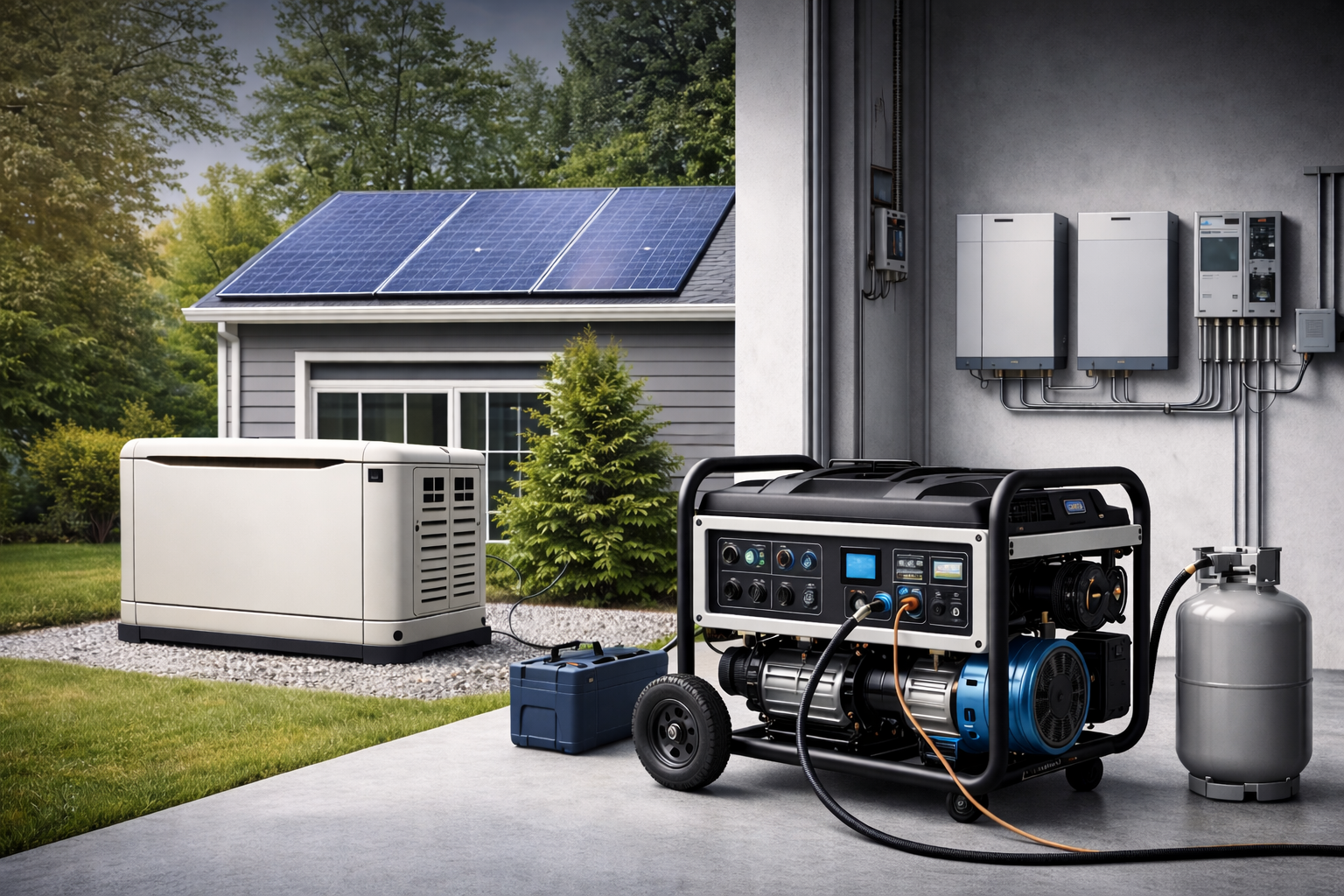
Introduction to Home Backup Power Systems
Power outages are no longer rare — and a reliable home backup power system is no longer just a luxury upgrade.
Storms, grid strain, extreme weather, and equipment failures can leave homes without electricity for hours or even days. A properly planned home backup power system protects critical appliances, heating and cooling systems, and essential circuits when utility power fails.
But choosing the right backup power system for your home isn’t just about buying a generator.
It requires understanding:
• Your home’s total electrical load
• Starting (surge) watt requirements
• Fuel availability and storage
• Safe transfer switch integration
• Long-term reliability and maintenance
This guide explains how home backup power systems work — including portable generators, whole house standby generators, and solar battery backup systems — so you can make informed decisions with confidence.
–
Why Home Backup Power Systems Matter
A home backup power system does more than provide convenience during an outage.
It protects:
• Refrigerators and freezers from food loss
• Medical devices and health equipment
• Well pumps and water systems
• Sump pumps that prevent flooding
• Heating and air conditioning systems
• Internet, communication, and security systems
Even short power interruptions can lead to frozen pipes, flooded basements, or expensive appliance damage. A properly sized backup power system helps prevent these risks.
Types of Home Backup Power Systems
Not all backup systems are the same. Each type of home backup power solution has advantages, limitations, and ideal use cases.
Portable Generators for Home Backup
Portable generators are flexible, lower-cost backup power solutions designed to run essential appliances or selected circuits during an outage. Unlike permanently installed standby systems, portable generators are manually operated and can be stored and deployed as needed.
Most portable generators run on gasoline, propane, or dual-fuel configurations and range from small 2,000-watt inverter units to 10,000+ watt heavy-duty models.
They are commonly used to power:
• Refrigerators and freezers
• Sump pumps and well pumps
• Lighting circuits
• Internet routers and charging stations
• Microwaves and small appliances
• Window AC units
• Gas furnace blowers
Higher-capacity portable home generators may also support portions of central air conditioning systems or multiple large appliances — if properly sized.
Because they are not permanently wired into the electrical panel, portable generator systems require:
• Manual startup
• Proper transfer switch or extension cord setup
• Fuel monitoring
• Outdoor placement for safe ventilation
When correctly sized and safely connected, a portable generator can provide dependable short-to-mid duration backup power for essential home systems.
Whole House (Standby) Backup Power Systems
Whole house standby generators are permanently installed home backup power systems that activate automatically when utility power is lost. These systems connect directly to the home’s electrical panel through an automatic transfer switch, allowing seamless operation.
Standby generators typically run on natural gas or propane and can power either essential circuits or the entire home, depending on system size.
Whole house backup power systems are ideal for:
• Full-home electrical coverage
• Automatic outage response
• Extended outages
• Homes with high electrical demand
While installation costs are higher than portable systems, standby generators provide the most comprehensive and convenient backup power solution for residential use.
Whole house generators deliver automatic, long-duration backup power for your entire home — including HVAC systems and high-demand appliances.
Solar & Battery Backup Systems for Home Use
Solar battery backup systems store electricity for use during outages and provide quiet, fuel-free operation. These systems can charge from the electrical grid or integrate with rooftop solar panels.
Battery backup systems are best suited for:
• Essential circuit coverage
• Quiet operation
• Homes with existing solar panels
• Short-to-moderate duration outages
While battery capacity is limited compared to fuel-powered generators, modern solar battery backup systems can provide reliable protection for critical loads when properly sized.
Portable vs Standby vs Solar: Choosing the Right Home Backup Power System
Selecting the right home backup power system depends on:
• Total household wattage requirements
• Budget and installation capacity
• Fuel availability
• Outage frequency and duration
• Desired level of automation
Before comparing specific models, it’s critical to calculate your home’s power requirements accurately.
Home Backup Power System Fuel Types
Every backup power system relies on a fuel source, and each option affects runtime, maintenance, cost, and storage requirements.
Common fuel options include:
Gasoline – Widely available but shorter shelf life.
Propane – Cleaner burning with long-term storage stability.
Natural Gas – Continuous supply for standby systems if utility lines remain active.
Diesel – Efficient and durable for larger backup power systems.
Understanding fuel type is essential when planning a reliable home backup power system.
Proper Sizing: The Most Important Step in Any Backup Power System
The most common mistake homeowners make is guessing wattage instead of calculating actual load requirements.
A home backup power system must account for:
• Running watts
• Starting (surge) watts
• Simultaneous load demand
• Critical vs non-critical circuits
An undersized generator will overload and trip breakers. An oversized system may operate inefficiently and waste fuel.
Correct sizing ensures reliability, efficiency, and long-term system performance.
Safe Integration & Transfer Methods
Safe generator connection is essential for any home backup power system.
Improper wiring can:
• Damage appliances
• Backfeed electricity into the grid
• Create fire or shock hazards
Proper integration typically requires:
• Transfer switches
• Interlock kits
• Dedicated inlet boxes
• Correct grounding and bonding
A code-compliant installation protects both your home and utility infrastructure