
Backup Power Insight
Natural gas vs propane generator. When choosing a standby generator for home backup power, one of the most important decisions isn’t the generator itself—it’s the fuel source. Two of the most common fuels used for standby generators are natural gas and propane, and each has advantages depending on your home’s setup and how you plan to use the generator.
Natural gas generators offer the convenience of a continuous fuel supply from a utility line, while propane generators provide reliable fuel storage that can last for years without degrading. Understanding these differences helps homeowners choose the best fuel option for reliable backup power.
Introduction
Standby generators are commonly powered by either natural gas or propane, and both fuels provide reliable electricity during power outages. The choice between these fuels often depends on whether your home already has a natural gas line or if propane storage is easier for your location.
In this guide, we’ll compare natural gas vs propane generators, explain how each fuel source works, and help you determine which option is best for home backup systems.
For a complete overview of generator fuel types and planning strategies, see our Generator Fuel Guide.
Quick Answer
Natural Gas vs Propane Generators
Both natural gas and propane generators are commonly used for home standby systems.
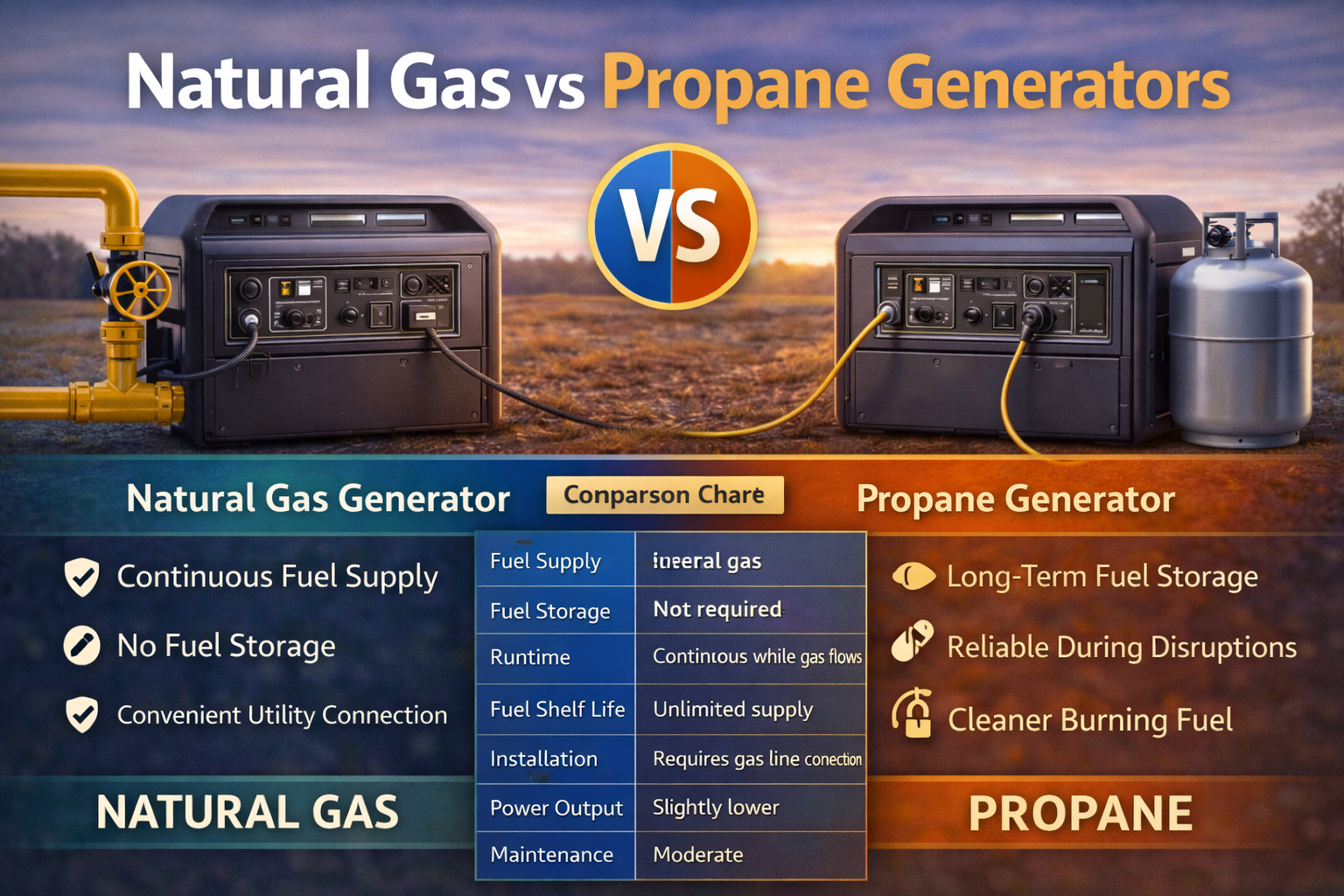
Natural gas generators
• continuous fuel supply from gas line
• no fuel storage required
• convenient for homes connected to utility gas
Propane generators
• long-term fuel storage
• reliable during utility disruptions
• cleaner burning fuel
Natural gas is often more convenient if a home already has a gas line, while propane offers greater fuel independence for emergency preparedness.
Natural Gas vs Propane Generator Comparison Chart
| Feature | Natural Gas Generator | Propane Generator |
|---|---|---|
| Fuel Supply | Utility gas line | Stored propane tank |
| Fuel Storage | Not required | Long-term storage |
| Runtime | Continuous while gas flows | Limited by tank size |
| Fuel Shelf Life | Unlimited supply | 10+ year storage |
| Installation | Requires gas line connection | Requires propane tank |
| Power Output | Slightly lower | Slightly higher |
| Maintenance | Moderate | Lower carbon buildup |
How Natural Gas Generators Work
Natural gas generators connect directly to a municipal gas supply line. When a power outage occurs, the standby generator automatically starts and draws fuel from the natural gas pipeline.
Benefits include:
• unlimited fuel supply while gas service continues
• no need for fuel storage
• automatic standby operation
Because natural gas flows continuously through utility infrastructure, it’s one of the most convenient fuels for permanent standby generators.
However, if the natural gas supply is interrupted during severe disasters, the generator will stop running.
How Propane Generators Work
Propane generators run on liquefied petroleum gas stored in tanks located near the home.
Common propane tank sizes include:
• 20 lb portable tanks
• 100 lb tanks
• 250–500 gallon home tanks
Propane is popular for standby generators because it offers:
• extremely long shelf life
• reliable emergency fuel storage
• cleaner engine combustion
Unlike gasoline, propane does not degrade over time, which makes it ideal for long-term emergency preparedness.
Learn more in our comparison: Propane vs Gasoline Generator
Fuel Storage and Reliability
The biggest difference between natural gas and propane generators is how fuel is supplied.
Natural Gas Fuel Supply
Natural gas generators rely on:
• underground gas infrastructure
• continuous municipal supply
• automatic standby operation
This means homeowners never need to refill fuel tanks.
However, if the natural gas system is damaged or shut down during disasters, the generator may stop working.
Propane Fuel Storage
Propane generators rely on stored fuel tanks.
Advantages include:
• independent fuel supply
• long-term storage
• reliable emergency backup
A large propane tank can often run a standby generator for several days depending on generator size and load.
Power Output Differences
Propane generators typically produce slightly more power output than natural gas generators using the same engine.
Example generator rating:
• 22 kW on propane
• 20 kW on natural gas
This difference occurs because propane contains slightly more energy per unit of fuel.
For most homeowners, the difference is relatively small and does not significantly affect appliance operation.
If you’re unsure what generator size your home requires, see What Size Generator Do I Need.
Example Home Backup Setup
A typical standby generator setup might include:
• 20–24 kW standby generator
• automatic transfer switch
• natural gas line connection or propane tank
During outages, the generator automatically powers essential systems such as:
• refrigerators and freezers
• heating systems
• lighting circuits
• internet and electronics
• sump pumps
Both natural gas and propane systems can support full-home backup depending on generator size.
When Natural Gas Generators Are Best
Natural gas generators are ideal for:
• homes with existing gas service
• homeowners who prefer automatic fuel supply
• standby generators used frequently
• urban and suburban areas
Because fuel is delivered continuously through pipelines, natural gas generators require minimal fuel management.
When Propane Generators Are Best
Propane generators are better for:
• rural homes without natural gas service
• emergency preparedness
• long-term fuel storage
• locations with unreliable gas infrastructure
Many rural homeowners prefer propane because it offers complete fuel independence.
Related Guides
If you’re planning a home generator system, these guides may help:
• Generator Fuel Guide
• Dual Fuel Generator Guide
• Propane vs Gasoline Generator
• Generator Fuel Consumption Calculator
• What Size Generator Do I Need
These resources will help you determine the best generator type and fuel system for your home.
FAQ
Is natural gas or propane better for generators?
Natural gas is convenient for homes connected to a gas line, while propane offers reliable long-term fuel storage and greater independence from utilities.
Do propane generators produce more power?
Yes. Propane generators typically produce slightly more power output compared to natural gas generators using the same engine.
Does propane fuel expire?
No. Propane can be stored for many years without degrading.
Can a generator run on both propane and natural gas?
Some standby generators can be configured for either propane or natural gas, but they typically run on one fuel type at a time.
Which fuel is cheaper for generators?
Natural gas is often cheaper per hour of operation because it is supplied directly through utility infrastructure.
Conclusion
Both natural gas and propane generators provide reliable fuel sources for standby home backup systems. Natural gas generators offer the convenience of a continuous fuel supply, while propane generators provide long-term fuel storage and greater independence from utility infrastructure.
Choosing between natural gas and propane usually depends on whether your home has access to a natural gas line or if propane storage is a more practical solution.
For more information about generator fuels and backup power planning, see our Generator Fuel Guide.
If you’d like, I can also help you finish the Generator Fuel silo by giving you the next 6 high-ranking articles that connect perfectly with the content you’ve already created.