
Backup Power Insight
Manual vs automatic transfer switch. One of the most important components of a home backup generator system is the transfer switch. This device safely connects your generator to your home’s electrical system and prevents dangerous backfeeding into utility lines.
Homeowners typically choose between manual transfer switches and automatic transfer switches, and the right option depends on how quickly you want backup power to activate and how much convenience you want during outages.
Introduction
A transfer switch allows your home to safely switch between utility power and generator power during an outage. Without one, connecting a generator directly to your home’s electrical system can be dangerous and may violate electrical codes.
There are two main types of transfer switches used with generators:
• Manual transfer switches
• Automatic transfer switches
In this guide, we’ll compare manual vs automatic transfer switches, explain how each type works, and help you decide which option is best for your home backup power system.
For a complete overview of transfer switch systems and installation options, see our Transfer Switch Guide.
Quick Answer
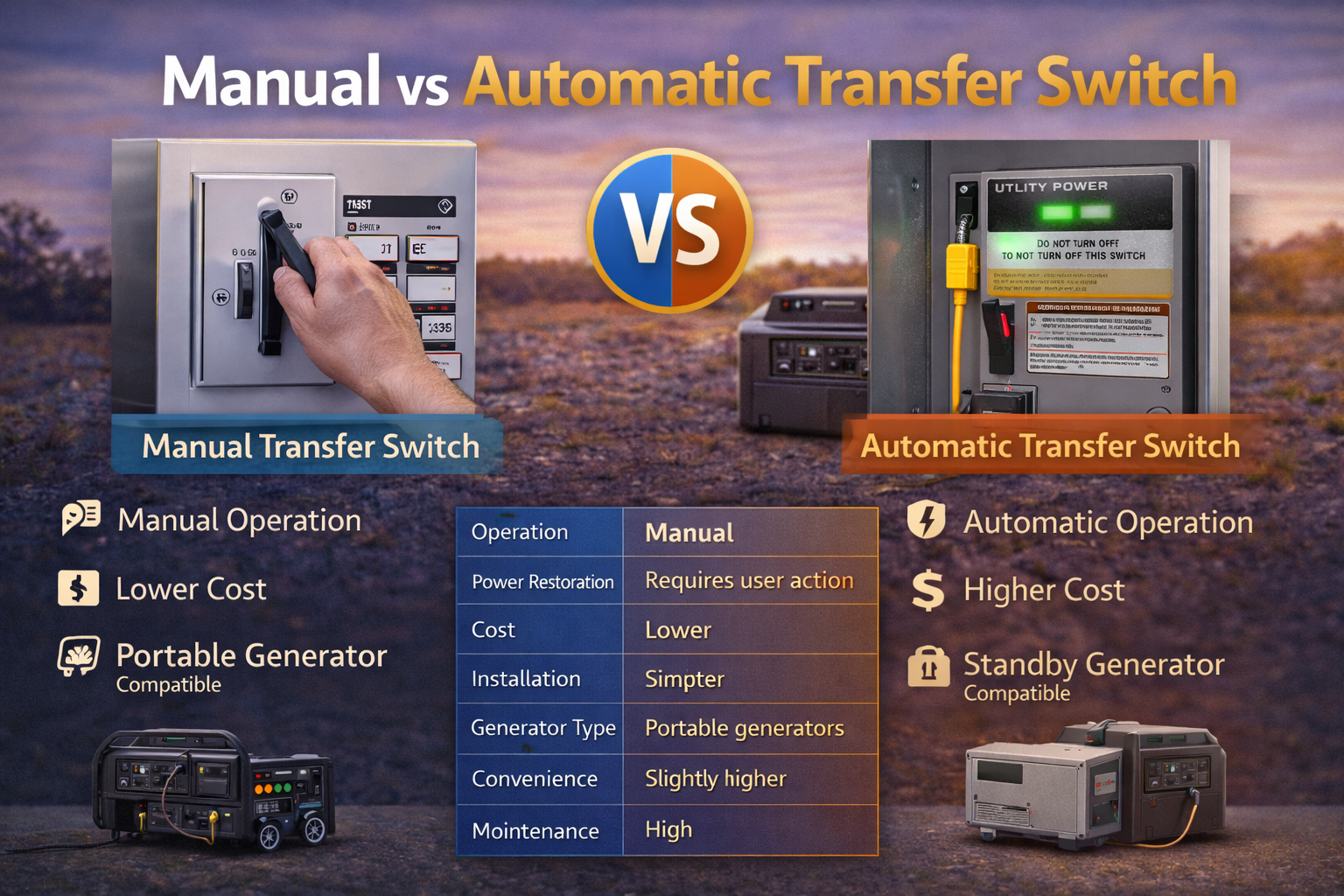
Manual vs Automatic Transfer Switch
Both manual and automatic transfer switches allow generators to power your home safely during outages.
Manual transfer switches
• require you to manually switch power
• lower installation cost
• common with portable generators
Automatic transfer switches
• switch power automatically during outages
• used with standby generators
• higher cost but greater convenience
Most portable generator systems use manual transfer switches, while whole-home standby generators typically use automatic transfer switches.
Manual vs Automatic Transfer Switch Comparison Chart
| Feature | Manual Transfer Switch | Automatic Transfer Switch |
|---|---|---|
| Operation | Manual switch | Automatic switching |
| Power Restoration | Requires user action | Automatic |
| Cost | Lower | Higher |
| Installation | Simpler | More complex |
| Generator Type | Portable generators | Standby generators |
| Convenience | Moderate | High |
What Is a Manual Transfer Switch?
A manual transfer switch requires the homeowner to physically switch power from the utility line to the generator when an outage occurs.
Typical steps include:
- start the generator
- plug the generator into the transfer switch inlet
- flip the transfer switch from utility to generator power
Manual transfer switches are popular because they are:
• affordable
• reliable
• easy to install with portable generators
They are commonly used for portable generator setups that power selected circuits such as refrigerators, lights, and sump pumps.
What Is an Automatic Transfer Switch?
An automatic transfer switch (ATS) automatically detects when utility power fails and starts the standby generator.
Once the generator reaches operating speed, the transfer switch automatically moves the home’s electrical load from the utility grid to the generator.
When utility power returns, the system automatically switches back and shuts down the generator.
Automatic transfer switches are typically used with:
• whole-house standby generators
• permanently installed generator systems
These systems provide seamless backup power without requiring manual intervention.
How Transfer Switches Prevent Backfeeding
One of the main purposes of a transfer switch is to prevent backfeeding.
Backfeeding occurs when generator electricity flows backward into utility power lines, which can:
• damage electrical equipment
• create fire hazards
• endanger utility workers
Transfer switches isolate generator power from the grid, ensuring electricity flows safely to your home circuits.
👉 Learn more about this safety issue in Backfeeding Explained.
Example Home Backup Setup
Here are two common generator setups.
Portable Generator Setup
• portable generator
• manual transfer switch
• selected essential circuits
This setup powers key appliances such as:
• refrigerator
• lights
• internet router
• sump pump
Whole-Home Standby Generator Setup
• standby generator
• automatic transfer switch
• full home electrical panel
This system powers the entire home automatically during outages.
Cost Differences
Manual transfer switches are generally more affordable.
Typical costs:
• Manual transfer switch: $300 – $800
• Automatic transfer switch: $800 – $3000+
Installation costs may also vary depending on the complexity of the electrical system.
However, automatic transfer switches provide greater convenience and faster response during outages.
When Manual Transfer Switches Are Best
Manual transfer switches work well for:
• portable generators
• occasional power outages
• homeowners on a budget
• small backup systems
They are a practical solution when powering only essential circuits.
When Automatic Transfer Switches Are Best
Automatic transfer switches are ideal for:
• standby generator systems
• whole-home backup power
• frequent outages
• homeowners wanting automatic protection
These systems provide seamless backup power with no manual steps required.
Related Guides
If you’re planning a generator installation, these guides may help:
• Transfer Switch Guide
• Interlock vs Transfer Switch
• What Size Generator Do I Need
• Backfeeding Explained
These articles will help you understand generator installation and safe electrical connections.
FAQ
Which is better: manual or automatic transfer switch?
Automatic transfer switches are more convenient because they switch power automatically, while manual switches are more affordable and commonly used with portable generators.
Do portable generators need a transfer switch?
Yes. A transfer switch allows a generator to safely power home circuits without dangerous backfeeding.
Are automatic transfer switches worth it?
Automatic transfer switches are worth it for homeowners who want seamless backup power without manually starting or switching the generator.
Can a manual transfer switch power the whole house?
Manual transfer switches usually power selected circuits rather than the entire home, depending on generator size.
Do standby generators require automatic transfer switches?
Most standby generators use automatic transfer switches to detect outages and restore power automatically.
Conclusion
Both manual and automatic transfer switches provide safe ways to connect generators to home electrical systems. Manual transfer switches are a cost-effective option for portable generators, while automatic transfer switches offer seamless backup power for standby generator systems.
Choosing the right transfer switch depends on your generator type, budget, and how much convenience you want during power outages.
For a complete overview of transfer switch installation and generator safety, see our Transfer Switch Guide.