
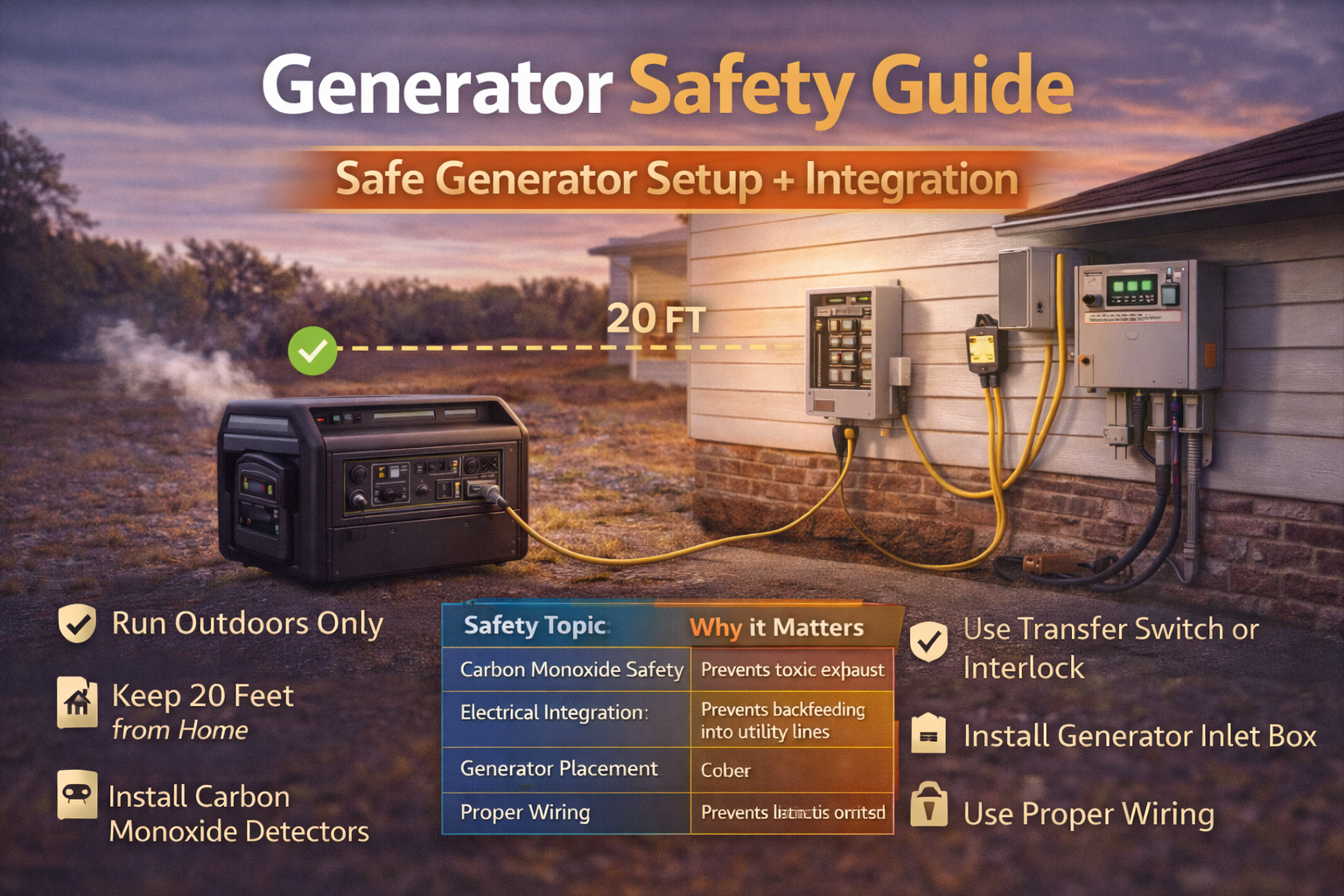
Backup Power Safety Tip
Generators are one of the most reliable ways to provide backup electricity during outages, but they must be installed and used correctly to prevent serious safety risks. Improper generator use can lead to carbon monoxide poisoning, electrical hazards, or dangerous backfeeding into power lines.
Understanding how generators safely connect to your home’s electrical system is essential before operating any backup power system. Proper integration using transfer switches, interlocks, and safe generator placement ensures your generator provides reliable power without creating hazards.
Introduction
Portable and standby generators can power essential appliances during outages, but they must be integrated into your home’s electrical system safely. Simply plugging appliances directly into a generator may work for small devices, but powering household circuits requires proper electrical connections.
This guide explains generator safety best practices, including proper placement, electrical integration, and equipment used to safely connect generators to home power systems.
For a complete overview of transfer switching setup and planning, see our Transfer Switching Guide.
Quick Answer
How Do You Safely Connect a Generator to a House?
Generators should never be connected directly to a home’s electrical panel without proper equipment.
Safe generator integration usually includes:
• a transfer switch or interlock kit
• a generator inlet box
• proper extension cords or wiring
• outdoor generator placement
These components allow a generator to power household circuits safely while preventing dangerous electrical backfeeding.
Generator Safety Overview
| Safety Topic | Why It Matters |
|---|---|
| Carbon Monoxide Safety | Prevents toxic exhaust exposure |
| Electrical Integration | Prevents backfeeding into utility lines |
| Generator Placement | Reduces fire and exhaust hazards |
| Proper Wiring | Prevents electrical overload |
| Transfer Switch Use | Safely isolates generator power |
Following these safety principles ensures your generator system operates reliably during outages.
Carbon Monoxide Safety
One of the most serious generator hazards is carbon monoxide poisoning.
Generators produce exhaust gases containing carbon monoxide, which is a colorless and odorless gas that can quickly become deadly in enclosed spaces.
Important safety rules include:
• never run generators indoors
• place generators at least 20 feet from the home
• direct exhaust away from windows and doors
• install carbon monoxide detectors inside the home
Because generators produce engine exhaust, they should always be operated outdoors in well-ventilated areas.
Safe Electrical Integration
Connecting a generator directly to a home’s electrical panel without a transfer switch can cause backfeeding.
Backfeeding occurs when generator electricity flows back into utility power lines, which can:
• damage electrical equipment
• cause fires
• seriously endanger utility workers
Safe generator integration typically requires one of the following:
• transfer switch
• panel interlock kit
These devices isolate generator power from utility power.
Learn more here: Backfeeding Explained
Transfer Switch Systems
A transfer switch safely connects a generator to a home’s electrical circuits.
When the generator is activated, the transfer switch moves selected circuits from utility power to generator power.
Benefits include:
• safe electrical isolation
• code-compliant generator connection
• ability to power household circuits
Learn more about transfer switch types in:
👉 Manual vs Automatic Transfer Switch
Interlock Systems
A generator interlock kit is another safe way to connect generators to electrical panels.
Interlock kits prevent the main breaker and generator breaker from being on at the same time.
Advantages include:
• lower installation cost
• simpler installation
• ability to power larger portions of the home
👉 See our comparison: Interlock vs Transfer Switch
Generator Placement and Outdoor Safety
Proper generator placement reduces fire risk and prevents exhaust from entering the home.
Best practices include:
• placing generators outdoors
• keeping generators away from windows and doors
• operating on stable surfaces
• protecting generators from rain using approved covers
Portable generators should always operate in open, ventilated outdoor areas.
Example Home Backup Setup
A typical portable generator setup might include:
• portable generator
• generator inlet box
• manual transfer switch
• heavy-duty extension cords
During outages, this system allows the generator to safely power essential appliances such as:
• refrigerator
• lights
• sump pump
• internet router
Standby generator systems use automatic transfer switches to power the home automatically during outages.
Common Generator Safety Mistakes
Many generator accidents occur because of improper use.
Common mistakes include:
• running generators inside garages
• backfeeding power into electrical panels
• using undersized extension cords
• placing generators too close to buildings
Avoiding these mistakes helps ensure generators operate safely during emergencies.
Related Guides
If you’re planning a generator system, these guides may help:
• Transfer Switching Guide
• Backfeeding Explained
• Manual vs Automatic Transfer Switch
• Interlock vs Transfer Switch
• What Size Generator Do I Need
These resources help homeowners safely install and operate backup power systems.
FAQ
Is it safe to plug a generator directly into a house?
No. Connecting a generator directly to a home’s electrical panel without a transfer switch or interlock kit can cause dangerous backfeeding.
How far should a generator be from a house?
Generators should generally be placed at least 20 feet from the home with exhaust directed away from doors and windows.
Do generators produce carbon monoxide?
Yes. Gas-powered generators produce carbon monoxide and must always be operated outdoors.
What is the safest way to connect a generator?
The safest methods are using a transfer switch or interlock kit installed according to electrical code.
Can portable generators power a whole house?
Portable generators usually power essential circuits only. Whole-home backup systems typically require standby generators.
Conclusion
Generators provide reliable backup electricity during outages, but they must be installed and used safely to avoid serious hazards. Proper generator placement, electrical integration, and safety equipment help ensure backup power systems operate safely and effectively.
Using transfer switches, interlocks, and proper wiring prevents dangerous electrical backfeeding while allowing generators to power essential appliances during emergencies.
For a complete overview of generator installation and safe backup power systems, visit our Transfer Switching Guide.