
Backup Power Insight
A portable generator can keep a refrigerator running or power a few lights during an outage, but it usually isn’t enough to run an entire home. Whole house generators solve this problem by automatically restoring electricity when utility power fails.
These permanently installed standby generators connect directly to your home’s electrical system and start automatically during outages. For homeowners who want uninterrupted power for heating, cooling, appliances, and electronics, a whole house generator is the most reliable backup solution.
Introduction
Power outages can happen at any time due to storms, equipment failures, or grid overloads. When the power goes out for hours or even days, having a whole house generator ensures your home continues operating normally.
Unlike portable generators that power only a few appliances, whole house generators automatically supply electricity to the entire home using an automatic transfer switch.
In this guide we’ll compare the best whole house generators, explain how standby generators work, and help you determine which system is right for your home.
If you’re still determining generator size, see our Generator Sizing Guide.
Quick Answer
What Is the Best Whole House Generator?
The best whole house generators typically include:
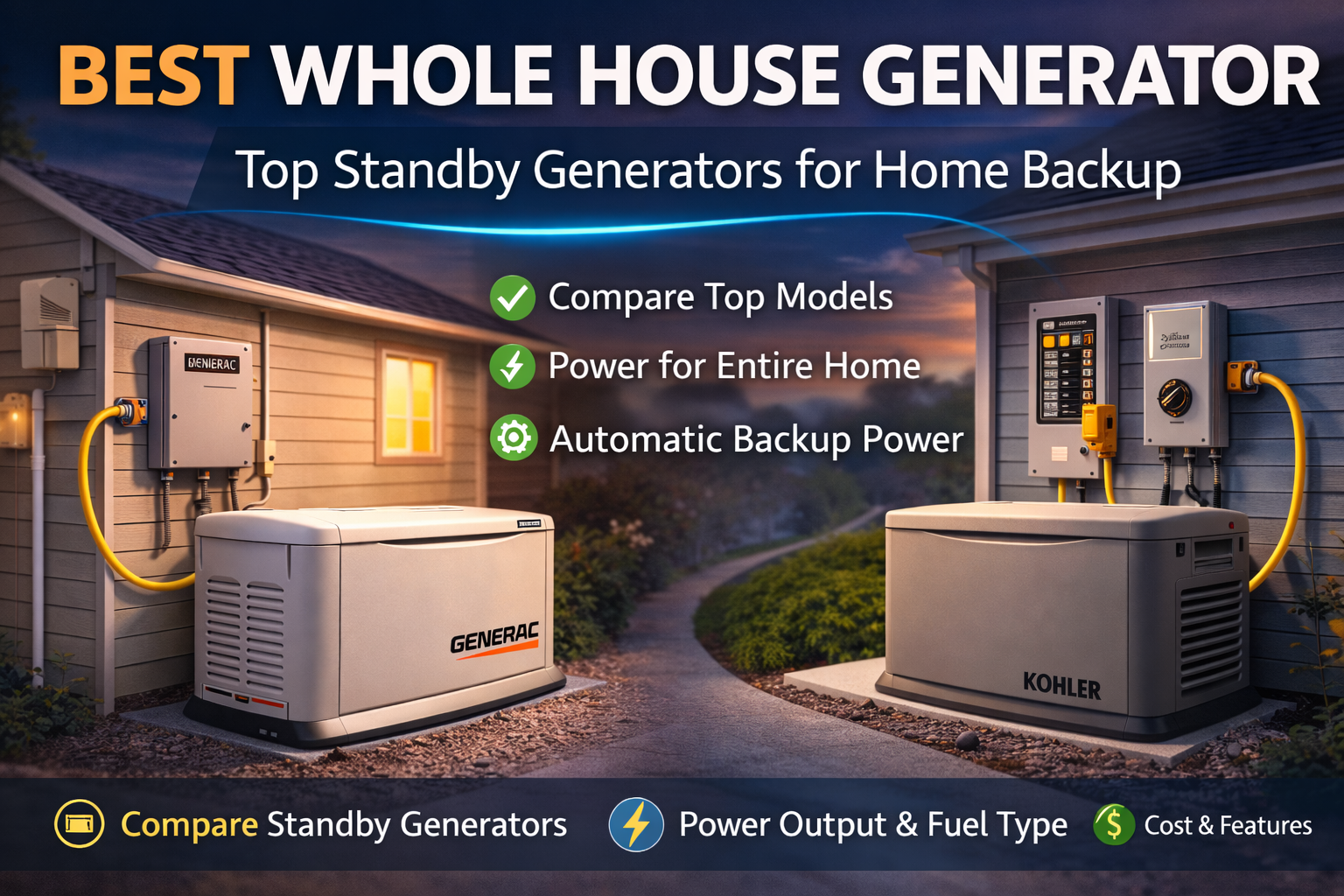
• Generac Guardian Series – most popular residential standby generator
• Kohler Standby Generators – premium performance and reliability
• Briggs & Stratton Standby Generators – strong value and dependable engines
Most homes require 20kW to 26kW standby generators to power the entire house including central air conditioning.
The exact generator size depends on your home’s electrical load and the appliances you want to power.
Whole House Generator Comparison Chart
| Generator Model | Power Output | Fuel Type | Best For |
|---|---|---|---|
| Generac Guardian 22kW | 22,000 watts | Natural Gas / Propane | Most homes |
| Kohler 20kW Standby | 20,000 watts | Natural Gas / Propane | Premium reliability |
| Briggs & Stratton 20kW | 20,000 watts | Natural Gas / Propane | Budget-friendly standby |
| Generac 26kW | 26,000 watts | Natural Gas / Propane | Large homes |
Most whole house generators connect directly to natural gas or propane fuel systems, allowing them to run for extended outages.
How Whole House Generators Work
Whole house generators are permanently installed outside the home and connect to the electrical panel using an automatic transfer switch.
When a power outage occurs:
- the transfer switch detects power loss
- the generator starts automatically
- the system switches the home from utility power to generator power
When the utility power returns, the system switches back automatically.
Learn more in our guide: Manual vs Automatic Transfer Switch.
How Much Power Does a Whole House Generator Need?
Most homes require 15,000 to 25,000 watts for full backup power.
Typical electrical loads include:
• central air conditioning
• refrigerators and freezers
• lighting circuits
• heating systems
• internet and electronics
• sump pumps
If you’re unsure how much power your home needs, see:
• What Size Generator Do I Need
• How Many Watts to Run a House
These guides explain how to calculate generator size based on your appliances.
Fuel Options for Whole House Generators
Most standby generators operate on natural gas or propane.
Natural Gas Generators
Advantages:
• unlimited fuel supply from gas line
• convenient for urban homes
• no refueling required
Propane Generators
Advantages:
• long-term fuel storage
• reliable during gas line outages
• common in rural areas
Learn more here:
Natural Gas vs Propane Generator Guide
Example Whole House Generator Setup
A typical standby generator installation includes:
• 20kW standby generator
• automatic transfer switch
• natural gas or propane connection
• electrical panel integration
When the power goes out, the generator automatically restores power to the home within 10–30 seconds.
This allows critical systems such as refrigeration, heating, and medical equipment to continue operating without interruption.
Cost of Whole House Generators
Whole house generators require professional installation.
Typical costs include:
| Item | Cost Range |
|---|---|
| Standby generator | $5,000 – $10,000 |
| Transfer switch | $500 – $2,000 |
| Installation | $2,000 – $6,000 |
Total installation cost usually ranges between:
$8,000 – $18,000 depending on generator size and installation complexity.
When Whole House Generators Are Worth It
Whole house generators are ideal for:
• areas with frequent outages
• homes with medical equipment
• homeowners who want automatic backup power
• protecting refrigerators and HVAC systems
Because they operate automatically, standby generators provide seamless power restoration during outages.
Related Guides
If you’re planning a backup power system, these guides may help:
• Generator Sizing Guide
• What Size Generator Do I Need
• Manual vs Automatic Transfer Switch
• Generator Safety Guide
• Natural Gas vs Propane Generator Guide
These resources explain generator sizing, installation, and safe electrical integration.
FAQ
What size whole house generator do I need?
Most homes require 20kW to 26kW generators to power the entire home including air conditioning.
How long can a whole house generator run?
Standby generators connected to natural gas can run continuously while gas supply remains available.
Are whole house generators automatic?
Yes. Whole house generators use automatic transfer switches that start the generator when utility power fails.
Can a whole house generator run central air?
Yes. Most standby generators are designed to power HVAC systems along with other household appliances.
Are whole house generators worth it?
For homes with frequent outages or critical electrical needs, whole house generators provide reliable automatic backup power.
Conclusion
Whole house generators provide one of the most reliable solutions for protecting your home during power outages. By automatically restoring electricity to your home, these standby generators eliminate the inconvenience of manual generator setups and ensure essential appliances continue running.
Choosing the best whole house generator depends on generator size, fuel availability, and your home’s electrical load. For many homeowners, a 20kW to 26kW standby generator provides the ideal balance between power capacity and reliability.
For more information about generator sizing and backup power planning, see our Generator Sizing Guide.