
Backup Power Insight
When shopping for a whole house generator, one of the most important differences you’ll encounter is whether the generator is air-cooled or liquid-cooled. These two cooling systems affect generator size, cost, power capacity, and long-term durability.
Most residential standby generators under 24kW use air-cooled engines, while larger commercial-grade generators often use liquid-cooled systems. Understanding the differences helps homeowners choose the right generator for their home backup needs.
Introduction
Whole house generators provide reliable backup electricity during power outages, but not all generators are built the same. One of the biggest design differences between standby generators is the cooling system used to regulate engine temperature.
Standby generators typically use either:
• air-cooled engines
• liquid-cooled engines
In this guide we’ll compare air cooled vs liquid cooled generators, explain how each system works, and help you decide which option is best for your home backup power system.
For more standby generator recommendations, see our Best Whole House Generator Guide.
Quick Answer
Air Cooled vs Liquid Cooled Generators
Most residential standby generators fall into two categories.
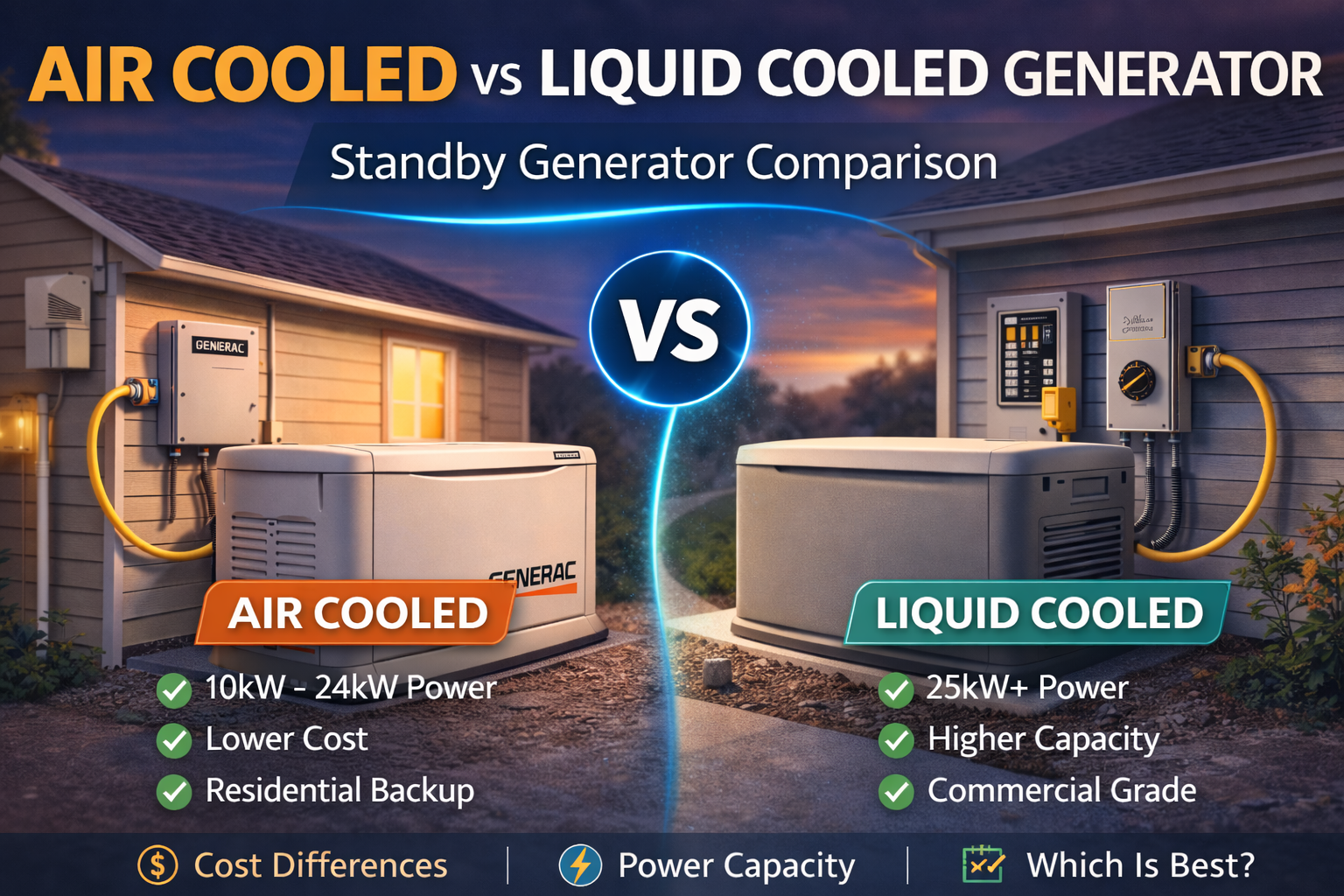
Air-cooled generators
• typically 10kW – 24kW
• lower cost
• simpler design
• common for residential homes
Liquid-cooled generators
• typically 25kW – 150kW+
• higher power capacity
• longer run times
• commercial-grade reliability
For most homes, air-cooled standby generators provide sufficient power, while large homes or commercial buildings may benefit from liquid-cooled systems.
Air Cooled vs Liquid Cooled Generator Comparison Chart
| Feature | Air Cooled Generator | Liquid Cooled Generator |
|---|---|---|
| Typical Power Range | 10kW – 24kW | 25kW – 150kW+ |
| Cooling Method | Engine fan | Radiator & coolant |
| Installation Cost | Lower | Higher |
| Generator Size | Compact | Larger |
| Best For | Residential homes | Large homes / commercial |
| Runtime Capability | Moderate | Long duration |
Both types provide reliable standby power when installed properly.
How Air Cooled Generators Work
Air-cooled generators use a fan system to circulate air around the engine and dissipate heat.
This system is similar to the cooling method used in:
• lawn mowers
• motorcycles
• small engines
Advantages include:
• simpler mechanical design
• lower purchase price
• easier maintenance
Because of their compact design, air-cooled generators are the most common choice for residential standby generator systems.
Many popular models such as the Generac Guardian Series use air-cooled engines.
How Liquid Cooled Generators Work
Liquid-cooled generators use a radiator and coolant system, similar to automobile engines.
The cooling system includes:
• radiator
• coolant pump
• engine coolant fluid
• cooling fan
Advantages include:
• better heat control
• longer run time capability
• higher power output
Liquid-cooled generators are typically used in large homes, businesses, or industrial installations where high power demand is required.
Power Capacity Differences
One of the biggest differences between these generator types is power capacity.
Air-cooled generators typically provide:
• 10kW – 24kW
This is enough to power:
• refrigerators
• lighting
• HVAC systems
• sump pumps
• electronics
However, larger homes with multiple HVAC systems may require generators exceeding 25kW, which often use liquid-cooled engines.
If you’re unsure how much power your home needs, see:
• What Size Generator Do I Need
• How Many Watts to Run a House
Cost Differences
Air-cooled generators are generally more affordable.
Typical costs include:
| Generator Type | Typical Cost |
|---|---|
| Air Cooled Standby Generator | $3,000 – $6,000 |
| Liquid Cooled Standby Generator | $10,000 – $25,000+ |
Installation costs also increase for larger liquid-cooled systems due to heavier equipment and more complex setup.
Learn more here:
👉 Whole House Generator Cost Guide
Example Home Backup Setup
A typical residential generator system includes:
• standby generator
• automatic transfer switch
• natural gas or propane connection
• electrical panel integration
When a power outage occurs:
- the transfer switch detects the outage
- the generator starts automatically
- electricity is restored to the home
Most residential systems restore power within 10–30 seconds.
Learn more here:
👉 Manual vs Automatic Transfer Switch
When Air Cooled Generators Are Best
Air-cooled generators are ideal for:
• most residential homes
• moderate electrical loads
• homeowners seeking lower cost systems
• typical backup power needs
For many homes, 20kW–24kW air-cooled generators provide complete home backup power.
When Liquid Cooled Generators Are Best
Liquid-cooled generators are better for:
• very large homes
• commercial buildings
• long-duration outages
• high electrical demand properties
These generators are built for heavy-duty continuous operation.
Related Guides
If you’re planning a standby generator system, these guides may help:
• Best Whole House Generator
• Whole House Generator Cost Guide
• Natural Gas vs Propane Generator Guide
• Manual vs Automatic Transfer Switch
• Generator Safety Guide
These resources explain generator sizing, installation, and safe operation.
FAQ
Are liquid cooled generators better?
Liquid-cooled generators are more powerful and designed for heavy-duty use, but most homes do not require this level of generator capacity.
What size generator requires liquid cooling?
Generators above 25kW typically use liquid-cooled engines.
Are air cooled generators reliable?
Yes. Most residential standby generators use air-cooled engines and provide reliable backup power for homes.
Which generator type lasts longer?
Liquid-cooled generators often have longer engine life due to better temperature control.
Are liquid cooled generators quieter?
They can be quieter under heavy load, but modern air-cooled standby generators are also designed for low noise operation.
Conclusion
Air-cooled and liquid-cooled generators both provide reliable backup power, but they serve different needs. Air-cooled generators are the most common choice for residential homes because they offer sufficient power, lower costs, and simpler installation.
Liquid-cooled generators are typically used for larger homes or commercial properties where higher power capacity and long runtime are required.
For most homeowners, choosing the right generator size and installation setup is more important than the cooling system itself.
To compare top standby generator models, see our Best Whole House Generator Guide.