
Backup Power Insight
When connecting a generator to a home electrical system, safety is the most important concern. Generators must be isolated from the utility grid to prevent dangerous backfeeding, which can damage equipment and put utility workers at risk.
Two of the most common methods used to safely connect generators to home electrical panels are generator interlock kits and transfer switches. Each method has advantages depending on generator size, installation cost, and how much of the home you want to power during outages.
Introduction
A generator can power essential appliances during outages, but it must be connected safely to your home’s electrical system. Simply plugging a generator into a wall outlet is extremely dangerous and can cause backfeeding into utility power lines.
Homeowners typically choose between two safe generator connection methods:
• generator interlock kits
• transfer switches
In this guide we’ll compare interlock vs transfer switch systems, explain how each works, and help you determine which option is best for your generator setup.
For a complete overview of generator electrical integration, see our 👉 Transfer Switch Guide.
Quick Answer
Interlock vs Transfer Switch
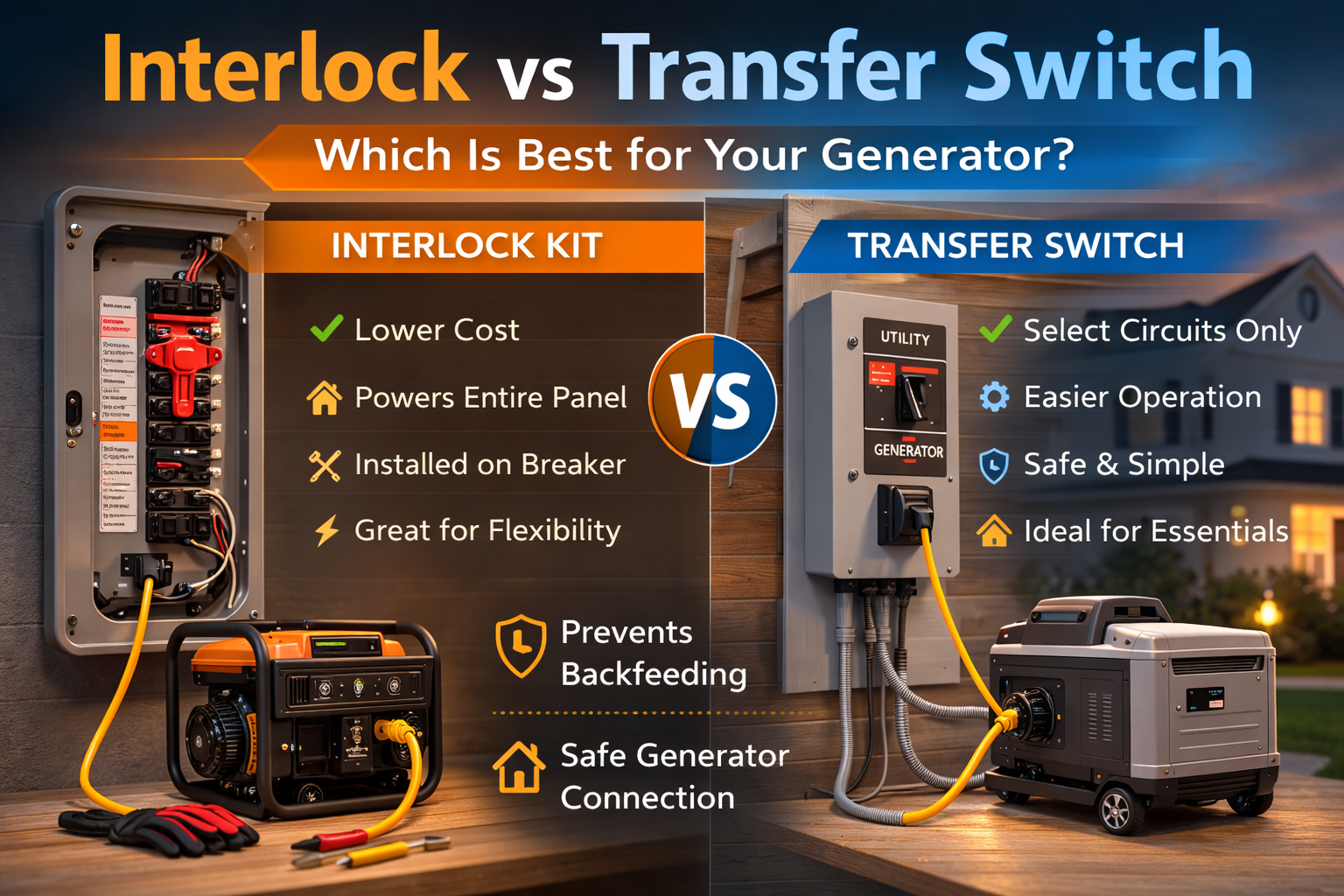
Both generator interlocks and transfer switches safely connect generators to home electrical systems.
Transfer switches
• power selected circuits
• easy circuit management
• common with portable generators
Interlock kits
• allow generator to power larger portions of the panel
• lower installation cost
• installed directly on the breaker panel
Both systems prevent dangerous electrical backfeeding, which is required for safe generator operation.
Interlock vs Transfer Switch Comparison Chart
| Feature | Transfer Switch | Interlock Kit |
|---|---|---|
| Circuit Control | Selected circuits only | Entire panel available |
| Installation | Separate switch panel | Installed on breaker panel |
| Cost | Higher | Lower |
| Generator Type | Portable or standby | Portable generators |
| Power Distribution | Limited circuits | Flexible circuit selection |
| Electrical Safety | Prevents backfeeding | Prevents backfeeding |
What Is a Transfer Switch?
A transfer switch is a device installed between your home’s electrical panel and the generator connection.
It allows homeowners to choose specific circuits to power during outages, such as:
• refrigerator
• lights
• sump pump
• internet router
Transfer switches work by isolating selected circuits from the utility grid and connecting them to generator power.
Benefits include:
• simple circuit control
• clear generator load management
• safe generator integration
Learn more about switch types in 👉 Manual vs Automatic Transfer Switch.
What Is a Generator Interlock Kit?
A generator interlock kit is installed directly on the main breaker panel.
The interlock mechanism prevents the main utility breaker and generator breaker from being turned on at the same time, which prevents backfeeding.
Unlike transfer switches, interlock systems allow homeowners to power any circuit in the panel, as long as the generator has enough capacity.
Advantages include:
• lower installation cost
• greater flexibility
• ability to power larger portions of the home
However, users must manually manage which appliances are running to avoid generator overload.
How Both Systems Prevent Backfeeding
Both transfer switches and interlock kits prevent electricity from flowing back into utility lines.
Backfeeding can:
• damage electrical equipment
• create fire hazards
• seriously endanger power company workers
These systems ensure generator power and utility power cannot operate simultaneously.
Learn more here: 👉 Backfeeding Explained.
Example Home Generator Setup
Here are two common generator connection setups.
Portable Generator + Transfer Switch
• portable generator
• manual transfer switch
• selected circuits powered
This setup powers essential appliances such as:
• refrigerator
• lights
• sump pump
• internet router
Portable Generator + Interlock Kit
• portable generator
• breaker panel interlock
• generator inlet box
This system allows the homeowner to power different circuits as needed, depending on generator capacity.
Cost Differences
Interlock kits are usually the more affordable option.
Typical cost ranges:
• Interlock kit: $50 – $300
• Transfer switch: $300 – $800+
Installation costs may vary depending on electrical panel type and wiring complexity.
Because interlock kits require fewer components, they are often chosen by homeowners looking for lower-cost generator integration.
When a Transfer Switch Is Best
Transfer switches are ideal when:
• powering specific essential circuits
• simple generator operation is preferred
• homeowners want clear load control
• portable generators are used occasionally
This method simplifies generator operation during outages.
When an Interlock Kit Is Best
Interlock kits are better when:
• powering multiple circuits
• lower installation cost is desired
• homeowners want more flexibility
• generator capacity is sufficient
They provide more control over which appliances operate during outages.
Related Guides
If you’re installing a generator system, these guides may help:
• Transfer Switch Guide
• Manual vs Automatic Transfer Switch
• Backfeeding Explained
• Generator Safety Guide
• What Size Generator Do I Need
These resources will help you plan a safe and reliable generator setup.
FAQ
Is an interlock better than a transfer switch?
Interlock kits are usually less expensive and allow greater circuit flexibility, while transfer switches provide simpler operation and dedicated circuit control.
Are generator interlock kits safe?
Yes. When installed correctly, interlock kits safely prevent backfeeding and meet electrical safety requirements.
Do transfer switches power the whole house?
Most transfer switches power selected circuits rather than the entire home.
Can an interlock power the whole house?
An interlock allows access to the entire electrical panel, but the generator must have enough capacity to handle the load.
Do generators require a transfer switch or interlock?
Yes. A generator should always be connected using a transfer switch or interlock system to prevent backfeeding and ensure safe operation.
Conclusion
Both generator interlock kits and transfer switches provide safe ways to connect generators to home electrical systems. Transfer switches offer simple operation and dedicated circuits, while interlock kits provide more flexibility and lower installation cost.
Choosing the right option depends on generator size, budget, and how you plan to distribute power during outages.
For more information about generator wiring and electrical integration, see our Transfer Switch Guide.