
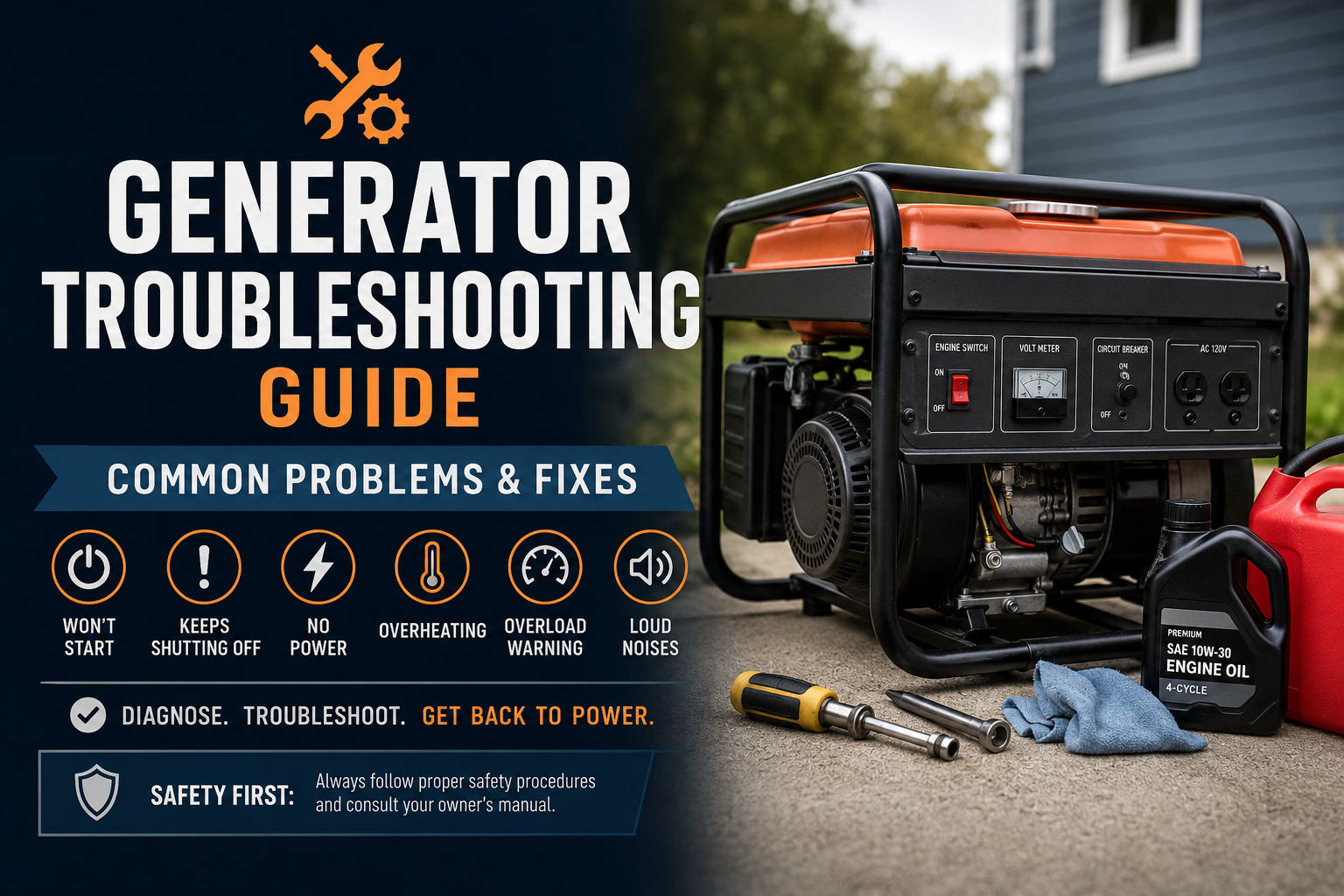
A generator can be a lifesaver during a power outage—until it suddenly stops working. Whether your generator won’t start, keeps shutting off, overheats, or runs without producing power, many problems have simple causes that can be diagnosed quickly.
Common generator issues are often caused by old fuel, dead batteries, low oil shutdown, clogged filters, overloaded circuits, poor maintenance, or worn-out parts. In many cases, catching the problem early can prevent bigger repairs later.
Common Warning Signs Something Is Wrong
- Generator won’t start
- Frequent shutdowns
- Overload warning lights
- Loud or unusual noises
- Fuel smells or leaks
- Generator runs but no power is produced
- Overheating or sputtering
Safety First
Always turn the generator off before inspecting it. Never run a generator indoors or in enclosed spaces, and avoid troubleshooting fuel or electrical issues if you smell gas, see sparks, or notice burning odors.
This guide will help you quickly diagnose the most common generator problems, understand what causes them, and learn what to check first before calling a professional.
Generator Won’t Start
A generator that won’t start is one of the most common problems homeowners face. In many cases, the issue is caused by something simple such as old fuel, a dead battery, low oil shutdown, a clogged carburetor, or a dirty spark plug. Before assuming the generator needs major repairs, there are several quick checks that can often get it running again.
Read Full Guide: Generator Won’t Start? 12 Common Causes & Fixes
Generator Keeps Shutting Off
If your generator starts but keeps shutting off after a few minutes, the problem may be related to low oil shutdown, overheating, fuel delivery issues, overload protection, or clogged filters. Intermittent shutdowns are often warning signs that something needs attention before a larger failure occurs.
Read Full Guide: Why Does My Generator Keep Shutting Off? (Fixes Explained)
Generator Overload Warning
A generator overload warning usually means the unit is trying to power more than it can safely handle. This can happen when too many appliances are connected, startup power demands are too high, or extension cords and connections are causing electrical strain. Ignoring overload warnings can lead to shutdowns or damage to the generator.
Read Full Guide: Generator Overload Warning: Causes, Fixes & Prevention
Generator Not Producing Power
If your generator starts and runs normally but isn’t producing electricity, the problem may be caused by a tripped breaker, damaged outlet, loose connection, overloaded circuit, or alternator issue. In many cases, a few quick checks can help identify the problem before assuming the generator needs major repairs.
Read Full Guide: Generator Not Producing Power? Here’s What to Check First
Generator Overheating
A generator that overheats can shut down unexpectedly and may suffer long-term damage if ignored. Common causes include overloaded circuits, blocked airflow, low oil levels, dirty air filters, or poor maintenance. Catching overheating problems early can help prevent costly repairs and keep your generator running safely.
Read Full Guide: Generator Overheating: Causes, Fixes & Prevention
Generator Making Loud Noise
While generators are never completely quiet, sudden loud noises, rattling, knocking, or excessive vibration can signal a problem. Common causes include loose components, overloaded circuits, engine issues, worn mufflers, or lack of maintenance. Catching unusual sounds early can help prevent bigger repairs later.
Read Full Guide: Why Is My Generator Making Loud Noise?
Generator Leaking Gas
A generator leaking gas should always be taken seriously. Fuel leaks can create fire hazards, dangerous fumes, and engine problems if left unchecked. Common causes include cracked fuel lines, loose fittings, damaged fuel tanks, or worn seals. If you smell gas or notice leaking fuel, turn the generator off immediately and avoid operating it until the issue is fixed.
Read Full Guide: Generator Leaking Gas: Causes, Risks & What to Do
Generator Runs But No Electricity
If your generator engine runs normally but no power reaches your appliances, the issue may be a tripped breaker, faulty outlet, damaged extension cord, overload protection, or alternator problem. A few simple troubleshooting steps can often help narrow down the cause.
Read Full Guide: Generator Runs But No Electricity? Troubleshooting Guide
How to Diagnose Generator Problems at Home
Not sure what’s wrong with your generator? A simple step-by-step troubleshooting process can help identify the issue quickly. Start by checking fuel, battery condition, oil levels, breakers, warning lights, and power output before moving to more advanced repairs.
Read Full Guide: How to Diagnose Common Generator Problems at Home
Prevent Generator Problems Before They Start
Regular maintenance is one of the best ways to avoid generator breakdowns. Simple steps like changing oil, using fuel stabilizer, checking spark plugs, cleaning air filters, and running the generator periodically can help prevent costly problems and extend equipment life.
Read Full Guide: Generator Maintenance Checklist to Prevent Breakdowns
When to Repair vs Replace a Generator
Sometimes a simple repair is all your generator needs—but in other cases, replacement may make more financial sense. Age, repair costs, reliability issues, and parts availability can all play a role in deciding whether to fix or replace your unit.
Helpful Resources:
- Generator Repair Cost Guide
- Is It Worth Fixing a Generator?
- Best Portable Generators
- Best Whole House Generators
Frequently Asked Questions
Why won’t my generator start?
The most common causes include old fuel, a dead battery, low oil shutdown, clogged carburetors, dirty spark plugs, or fuel delivery problems.
Why does my generator shut off after a few minutes?
Frequent shutdowns are often caused by overheating, low oil shutdown protection, clogged filters, overloads, or fuel issues.
Why is my generator running but not powering anything?
This is often caused by tripped breakers, faulty outlets, loose wiring, overload protection, or alternator problems.
What causes generator overload warnings?
Overload warnings usually happen when too many appliances are connected or startup wattage exceeds the generator’s capacity.
Can generators overheat?
Yes. Generators can overheat from poor airflow, overloaded circuits, dirty filters, low oil, or poor maintenance.
Need Replacement Recommendations?
If your generator is unreliable, outdated, or too expensive to repair, upgrading may be the better long-term option.
Explore our recommendations:
- Best Portable Generators
- Best Whole House Generators
- Best Generator Maintenance Products