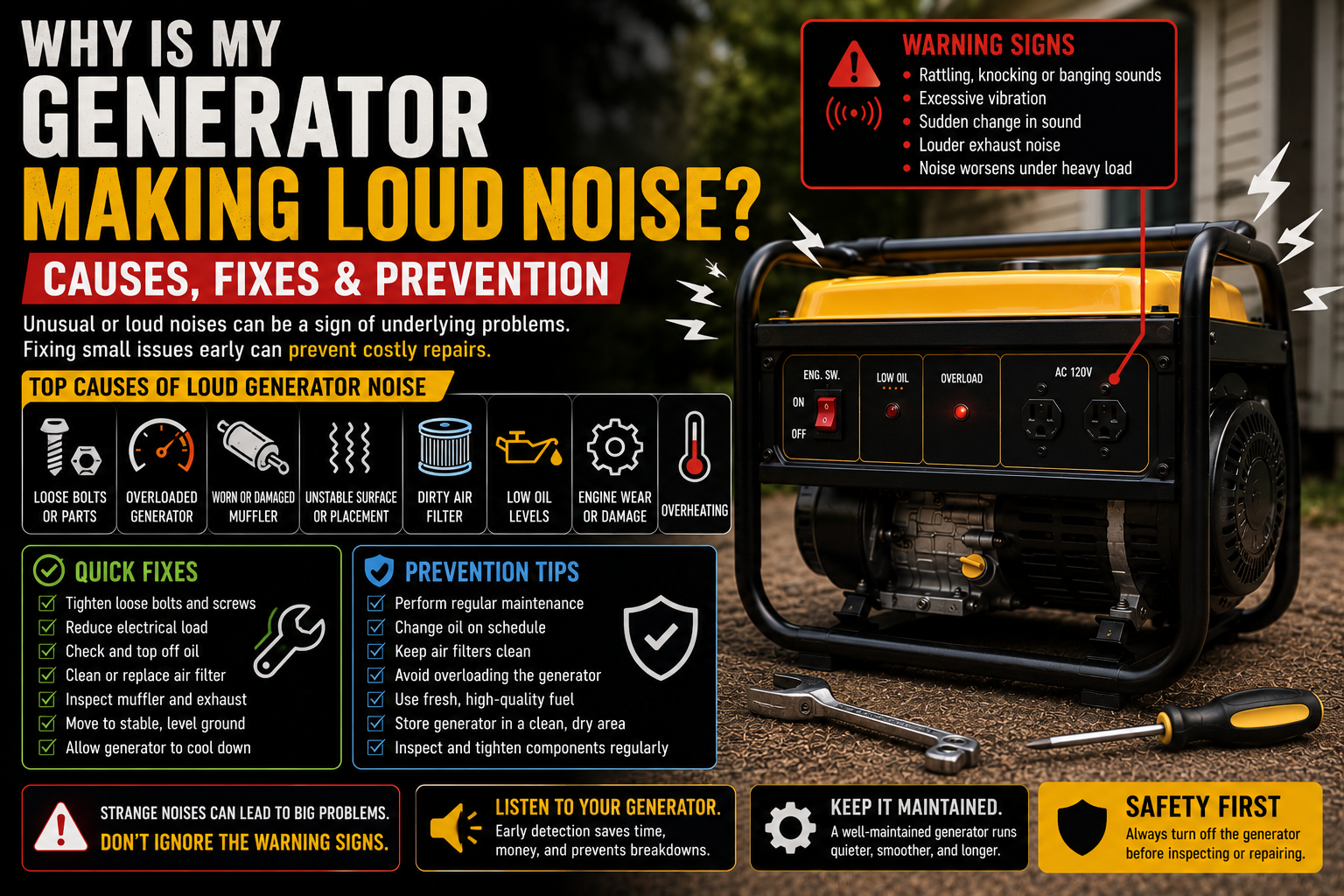
Why Is My Generator Making Loud Noise? Causes, Fixes & Prevention
If your generator is suddenly making loud noises, rattling, knocking, vibrating excessively, or sounding different than normal, the problem is often caused by loose components, overloads, worn mufflers, engine problems, poor maintenance, or unstable placement. While generators are naturally noisy, sudden or unusual sounds should never be ignored.
In many cases, loud generator noise is an early warning sign of a problem that can worsen over time. Catching the issue early may help prevent costly repairs or complete generator failure.
If you’re troubleshooting multiple issues, start with our Generator Troubleshooting Guide: Common Problems & Fixes for a full breakdown of common generator failures.
Signs & Symptoms of a Loud Generator Problem
Before troubleshooting, pay attention to the type of sound your generator is making.
Common warning signs include:
- Loud rattling or shaking
- Knocking or banging sounds
- Excessive vibration
- Squealing or whining noises
- Louder-than-normal exhaust noise
- Sudden change in sound while running
- Generator sounds worse under heavy load
Different noises often point to different problems. For example, rattling may suggest loose hardware, while knocking could signal engine trouble.
Top Reasons Your Generator Is Making Loud Noise
1. Loose Bolts or Components
Generators vibrate during operation, which can loosen parts over time.
Signs:
- Rattling sound
- Noise gets worse while running
Fix:
Inspect and tighten loose bolts, panels, and mounting hardware.
2. Overloaded Generator
Heavy electrical loads can make generators strain and sound louder.
Signs:
- Noise increases when appliances start
- Engine sounds stressed
Fix:
Reduce electrical demand.
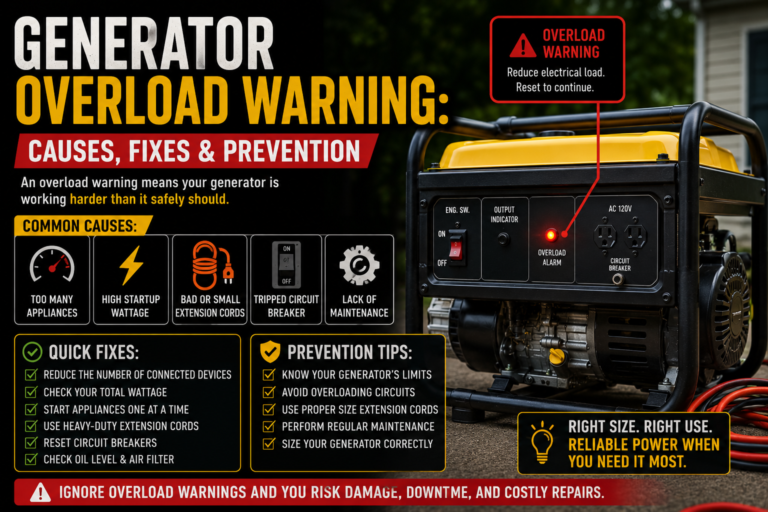
Related: Generator Overload Warning: Causes, Fixes & Prevention
3. Worn or Damaged Muffler
The muffler reduces engine noise.
Signs:
- Louder exhaust noise
- Metallic rattling
Fix:
Inspect for damage and replace if needed.
4. Unstable Surface or Poor Placement
Generators placed on uneven surfaces vibrate more.
Signs:
- Excessive shaking
Fix:
Move generator to stable, level ground.
5. Dirty Air Filter
Restricted airflow can strain the engine.
Signs:
- Rough running
- Loud operation
Fix:
Clean or replace the air filter.
6. Low Oil Levels
Low oil increases engine friction.
Signs:
- Knocking noises
- Hot engine
Fix:
Check and top off oil.
7. Engine Knocking or Internal Wear
Internal engine issues can create serious noises.
Signs:
- Metal knocking sounds
- Reduced performance
Fix:
Professional repair may be required.
8. Loose Exhaust Components
Loose exhaust systems rattle loudly.
Signs:
- Metallic vibration sounds
Fix:
Inspect mounting hardware.
9. Cooling Fan Problems
Damaged fans can create squealing or grinding sounds.
Signs:
- High-pitched noises
Fix:
Inspect fan assembly.
10. Overheating
An overheating generator often sounds strained.
Signs:
- Loud running before shutdown
Fix:
Reduce load and improve airflow.
Related: Generator Overheating: Causes, Fixes & Prevention
11. Old Fuel or Poor Combustion
Poor fuel quality affects engine performance.
Signs:
- Sputtering or rough sounds
Fix:
Replace old gasoline.
12. Poor Maintenance
Neglected generators tend to run louder over time.
Signs:
- Multiple strange sounds
Fix:
Perform regular maintenance.
Related: Generator Maintenance Checklist to Prevent Breakdowns
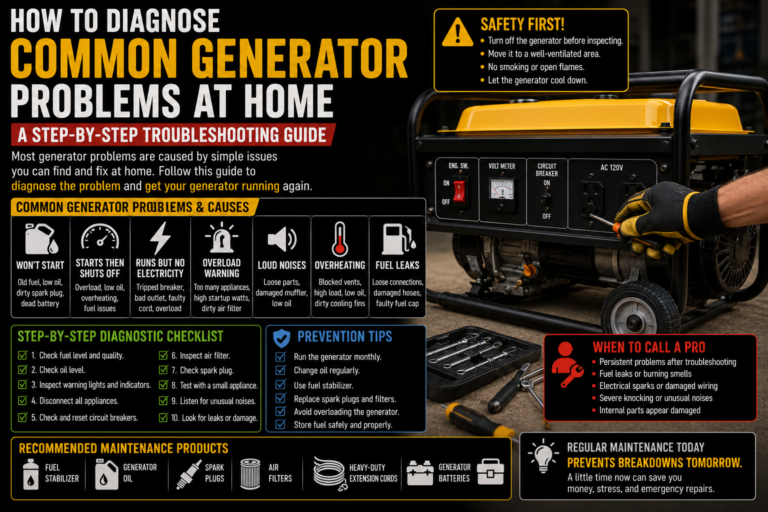
Step-by-Step Fixes
Before calling for repairs, try these troubleshooting steps.
Step 1: Turn the Generator Off
Allow it to cool before inspection.
Step 2: Check for Loose Hardware
Tighten visible bolts and panels.
Step 3: Inspect Oil Levels
Low oil commonly causes loud operation.
Step 4: Reduce Electrical Load
Disconnect unnecessary appliances.
Step 5: Check Air Filter
Replace dirty filters.
Step 6: Inspect Muffler and Exhaust
Look for damage or loose components.
Step 7: Move to Stable Ground
Ensure level placement.
When to Call a Professional
Consider professional repair if:
- Knocking sounds persist
- Metal grinding occurs
- Generator vibrates excessively
- Smoke appears
- Noise suddenly becomes severe
Stop operating the generator immediately if loud mechanical noises continue or burning smells develop.
Repair Cost Expectations
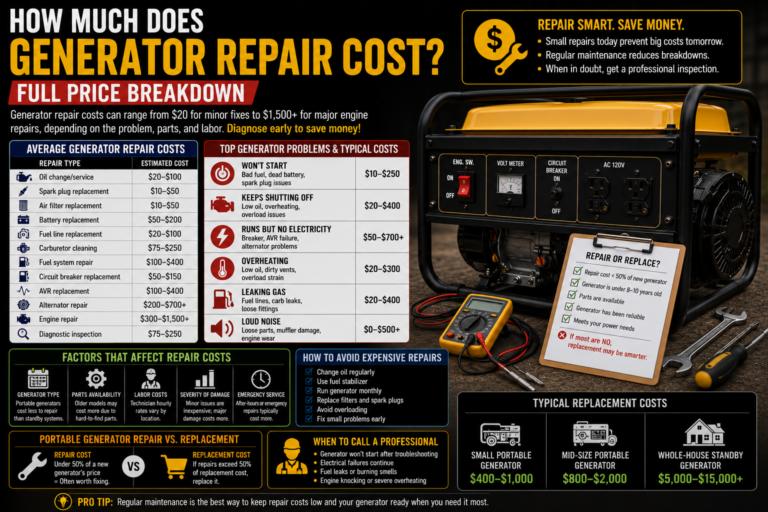
Generator noise issues range from simple fixes to engine repairs.
| Problem | Estimated Cost |
|---|---|
| Bolt tightening | $0–$50 |
| Air filter replacement | $10–$50 |
| Muffler replacement | $50–$200 |
| Exhaust repair | $75–$300 |
| Engine repair | $200–$1,000+ |
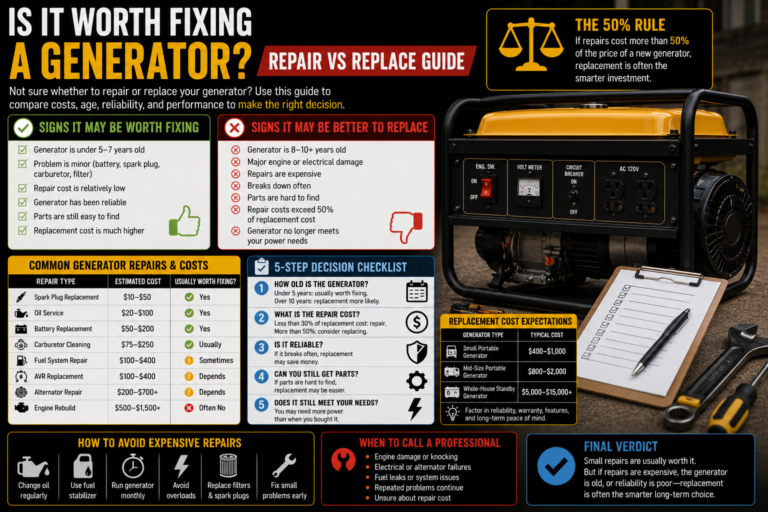
If major engine damage is suspected, replacement may sometimes be more cost-effective.
Related:
How Much Does Generator Repair Cost?
Is It Worth Fixing a Generator?
How to Prevent Generator Noise Problems
Simple maintenance habits can keep generators running smoothly.
- Tighten bolts regularly
- Change oil on schedule
- Clean air filters
- Avoid overloading
- Use fresh fuel
- Store generators properly
Related: Generator Maintenance Checklist to Prevent Breakdowns
Recommended Maintenance Products
Helpful products for reducing noise problems:
- Generator oil kits
- Replacement air filters
- Muffler repair kits
- Fuel stabilizer
- Vibration pads
- Generator maintenance kits
You can also browse our guide to the Best Generator Maintenance Products.
Related Troubleshooting Articles
Still troubleshooting? These guides may help:
- Generator Troubleshooting Guide: Common Problems & Fixes
- Generator Won’t Start? 12 Common Causes & Fixes
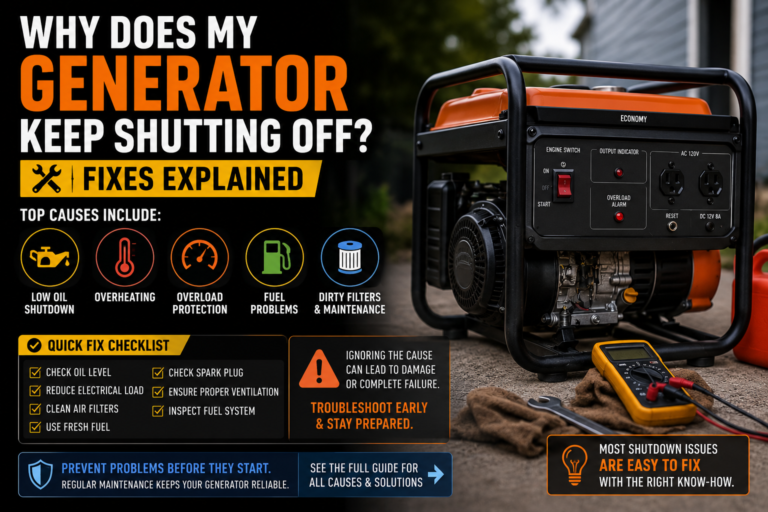
- Why Does My Generator Keep Shutting Off? (Fixes Explained)
- Generator Overload Warning: Causes, Fixes & Prevention
- Generator Overheating: Causes, Fixes & Prevention
Frequently Asked Questions
Why is my generator suddenly louder than normal?
Loose parts, overloads, worn mufflers, or maintenance problems are common causes.
Is it normal for generators to be loud?
Yes, generators naturally make noise, but sudden changes or excessive sounds are warning signs.
Why is my generator rattling?
Loose bolts, panels, or exhaust components are common causes.
Can low oil make a generator noisy?
Yes. Low oil increases engine friction and can lead to knocking sounds.
Should I stop using a noisy generator?
If the noise is sudden, metallic, or severe, stop using it and inspect the generator.
Final Verdict
Generators are never completely quiet, but unusual noises should not be ignored. In many cases, loud operation is caused by loose parts, overloads, dirty filters, or low oil—problems that can often be fixed quickly.
If loud noises continue after troubleshooting, professional repairs may be needed before the problem becomes more expensive.