How to Diagnose Common Generator Problems at Home
If your generator isn’t working properly, the good news is that many common problems can be diagnosed at home before paying for repairs. Most generator issues are caused by simple problems like old fuel, low oil, overloads, dirty filters, tripped breakers, bad extension cords, or poor maintenance.
The key to diagnosing a generator problem is identifying what symptom appears first. Does the generator fail to start? Shut off unexpectedly? Run without power? Make strange noises? Understanding the symptoms can help you quickly narrow down the cause.
If you’re troubleshooting multiple issues, start with our Generator Troubleshooting Guide: Common Problems & Fixes for a full breakdown of generator failures.
Signs & Symptoms of Common Generator Problems
Before troubleshooting, pay attention to what the generator is doing.
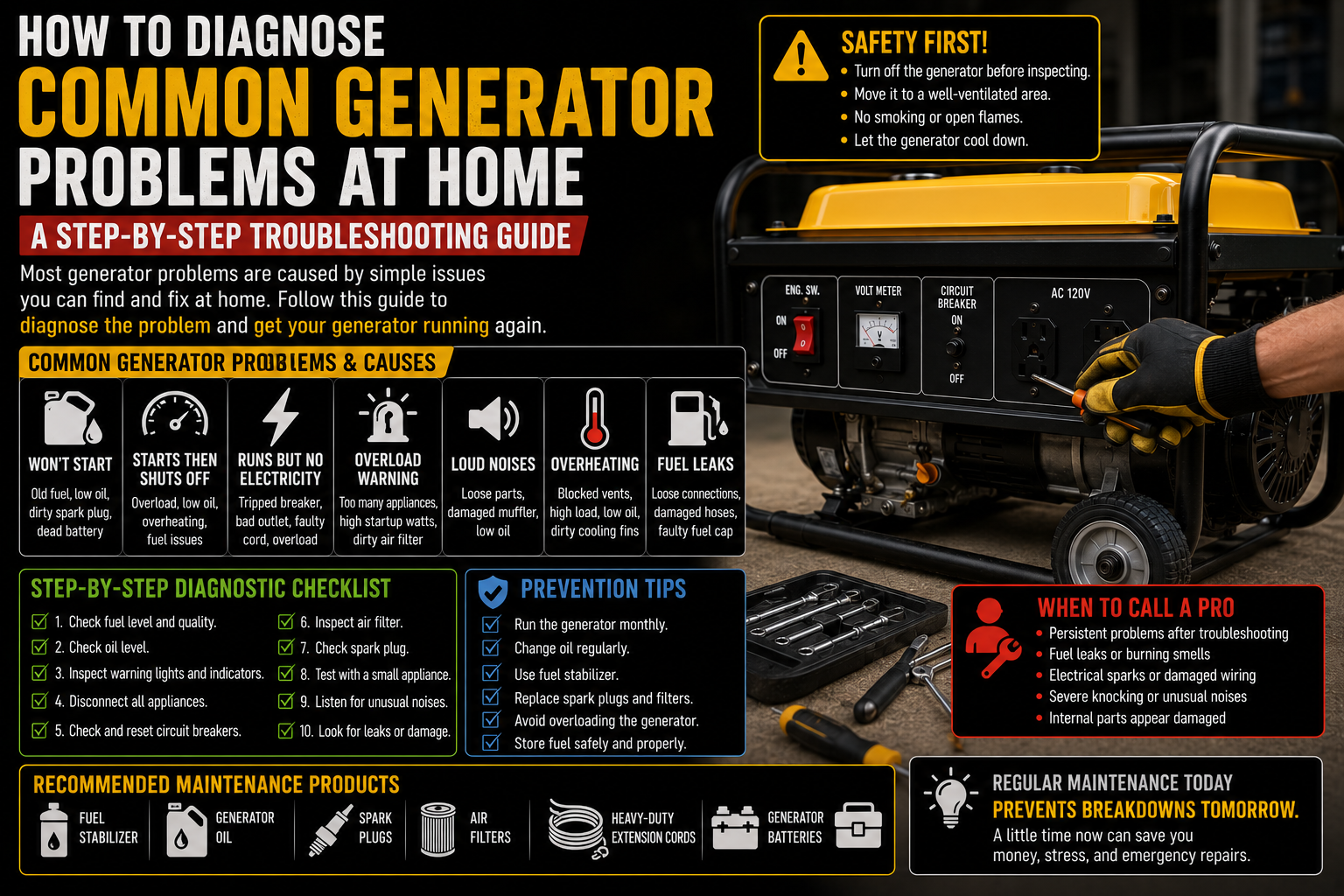
Common warning signs include:
- Generator won’t start
- Generator starts then shuts off
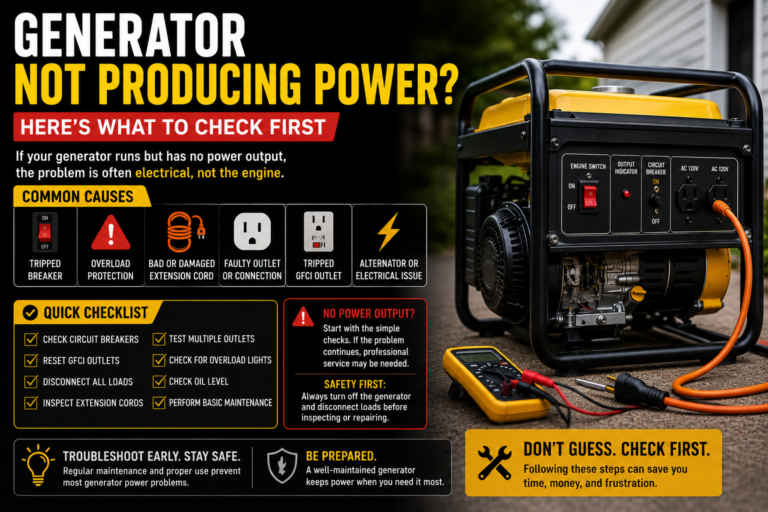
- Generator runs but produces no electricity
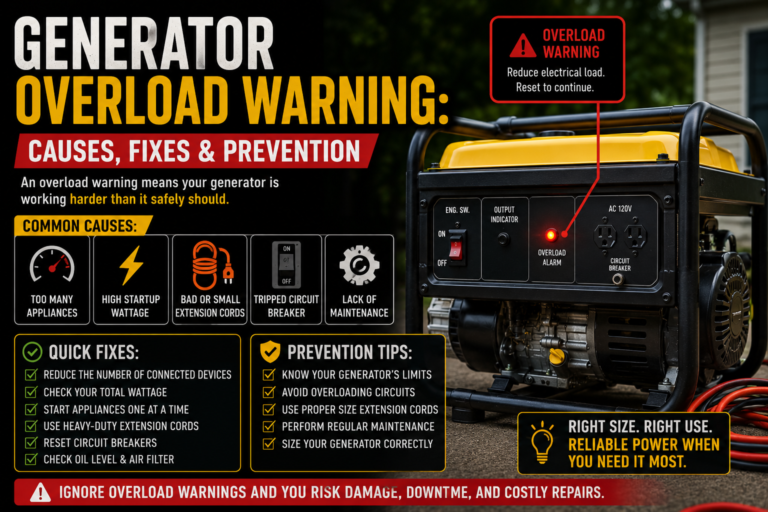
- Overload warning light appears
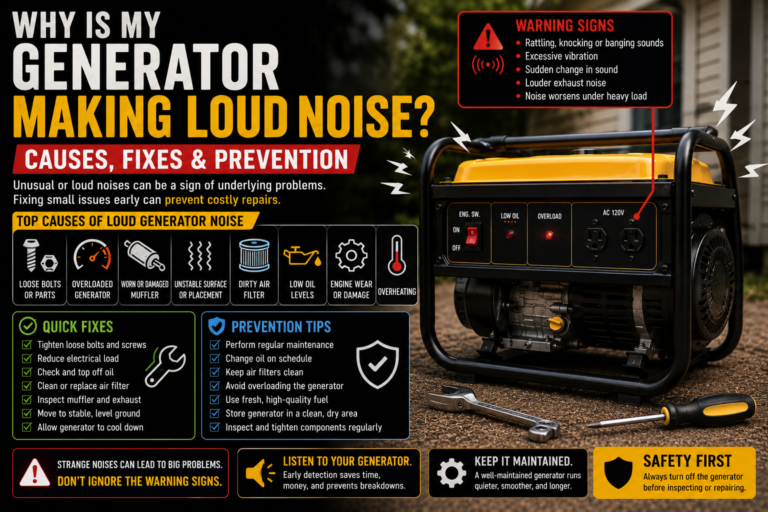
- Loud rattling or unusual noises
- Generator overheating or shutting down
- Fuel smell or gas leak
- Flickering or unstable power
The symptom you notice first usually points to the most likely cause.
Top Causes of Generator Problems at Home
1. Old or Bad Fuel
Old gasoline is one of the most common causes of generator failure.
Signs:
- Hard starting
- Rough running
- Stalling
Fix:
Drain stale fuel and refill with fresh gasoline.
2. Low Oil Shutdown
Most modern generators include low oil protection.
Signs:
- Generator shuts off unexpectedly
- Generator won’t restart
Fix:
Check and refill oil.
3. Overloaded Generator
Too many appliances may overload the unit.
Signs:
- Shutdown under load
- Overload warning light
Fix:
Disconnect appliances and reduce electrical demand.
Related: Generator Overload Warning: Causes, Fixes & Prevention
4. Dirty Air Filter
Restricted airflow can affect engine performance.
Signs:
- Rough running
- Weak output
Fix:
Clean or replace the air filter.
5. Spark Plug Problems
Bad spark plugs often cause startup problems.
Signs:
- Generator cranks but won’t start
Fix:
Replace worn spark plugs.
6. Tripped Circuit Breaker
Electrical protection systems may stop power output.
Signs:
- Generator runs but no electricity
Fix:
Reset the breaker.
Related: Generator Runs But No Electricity? Troubleshooting Guide
7. Faulty Extension Cord
Damaged cords reduce power delivery.
Signs:
- Appliances don’t work properly
Fix:
Use heavy-duty generator-rated cords.
8. Overheating
Blocked airflow or heavy loads may cause shutdowns.
Signs:
- Generator shuts off after 10–30 minutes
Fix:
Allow cooling and improve airflow.
Related: Generator Overheating: Causes, Fixes & Prevention
9. Loose Components
Vibration loosens hardware over time.
Signs:
- Loud rattling or vibration
Fix:
Inspect and tighten visible hardware.
Related: Why Is My Generator Making Loud Noise?
10. Fuel Leaks
Fuel system problems create safety risks.
Signs:
- Gas smell
- Visible leaks
Fix:
Turn off immediately and inspect fuel system.
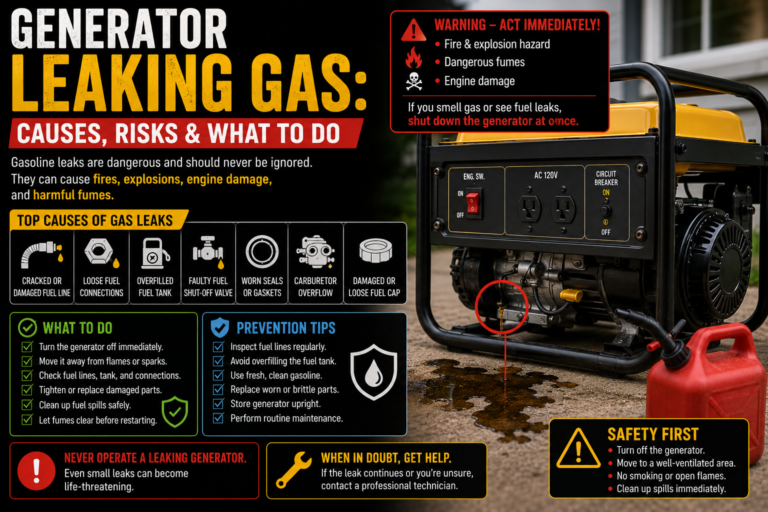
Related: Generator Leaking Gas: Causes, Risks & What to Do
11. Dead Battery (Electric Start Models)
Weak batteries can prevent operation.
Signs:
- Clicking sounds
Fix:
Charge or replace battery.
12. Poor Maintenance
Neglected generators are far more likely to fail.
Signs:
- Multiple recurring issues
Fix:
Follow a maintenance schedule.
Related: Generator Maintenance Checklist to Prevent Breakdowns
Step-by-Step Generator Diagnostic Checklist
Before calling a repair technician, follow this process.
Step 1: Check Fuel
Make sure fuel is fresh and flowing.
Step 2: Check Oil Levels
Low oil shutdown is common.
Step 3: Inspect Warning Lights
Look for overload or oil indicators.
Step 4: Disconnect Appliances
Remove electrical load during testing.
Step 5: Test Circuit Breakers
Reset tripped breakers.
Step 6: Inspect Air Filter
Clean dirty filters.
Step 7: Check Spark Plug
Replace worn plugs.
Step 8: Test Small Appliances First
Try low-wattage devices before heavy loads.
Step 9: Listen for Unusual Noises
Rattling or knocking may signal deeper issues.
Step 10: Look for Leaks or Damage
Inspect hoses, cords, and visible components.
When to Call a Professional
Consider professional repair if:
- Generator still won’t work after troubleshooting
- Fuel leaks continue
- Burning smells appear
- Electrical sparks occur
- Engine knocking develops
- Internal components appear damaged
Stop operating the generator immediately if smoke, sparks, or severe overheating occur.
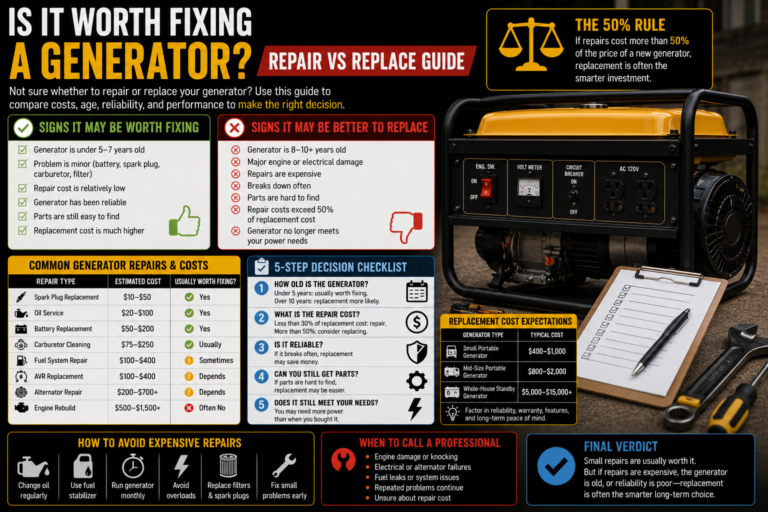
Repair Cost Expectations
Generator problems vary widely in cost.
| Problem | Estimated Cost |
|---|---|
| Spark plug replacement | $10–$50 |
| Oil service | $20–$100 |
| Air filter replacement | $10–$50 |
| Carburetor cleaning | $75–$250 |
| Alternator repair | $200–$700+ |
If repair costs become too high, replacement may make more sense.
Related:
How Much Does Generator Repair Cost?
Is It Worth Fixing a Generator?
How to Prevent Generator Problems
Routine maintenance prevents many breakdowns.
- Run the generator monthly
- Change oil regularly
- Use fuel stabilizer
- Replace spark plugs and filters
- Avoid overloading
- Store fuel safely
Related: Generator Maintenance Checklist to Prevent Breakdowns
Recommended Maintenance Products
Helpful products for preventing generator problems:
- Fuel stabilizer
- Generator oil kits
- Replacement spark plugs
- Heavy-duty extension cords
- Air filters
- Generator batteries
- Generator maintenance kits
You can also browse our guide to the Best Generator Maintenance Products.
Related Troubleshooting Articles
Still troubleshooting? These guides may help:
- Generator Troubleshooting Guide: Common Problems & Fixes
- Generator Won’t Start? 12 Common Causes & Fixes
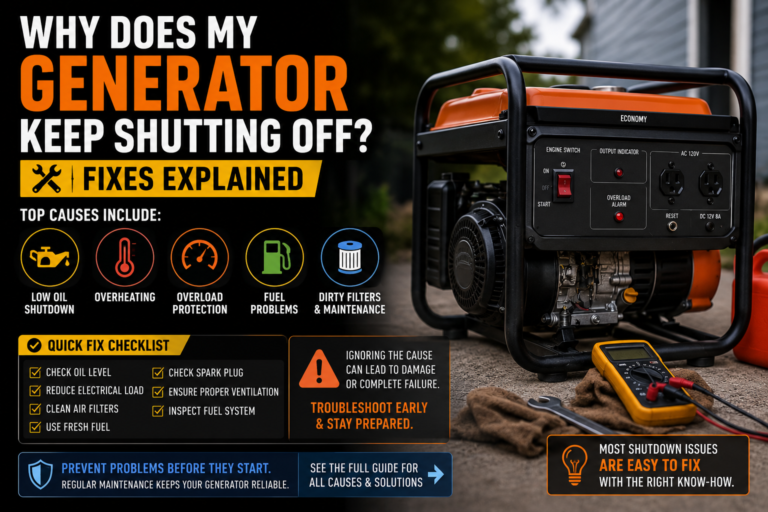
- Why Does My Generator Keep Shutting Off? (Fixes Explained)
- Generator Runs But No Electricity? Troubleshooting Guide
- Generator Overheating: Causes, Fixes & Prevention
Frequently Asked Questions
What is the first thing to check when a generator stops working?
Start with fuel, oil level, and warning lights.
Why does my generator run but not power anything?
A tripped breaker, overload protection, or electrical issue is often the cause.
Can bad fuel cause generator problems?
Yes. Old gasoline is one of the most common causes of generator failure.
Why does my generator keep shutting off?
Overheating, overloads, low oil, or fuel problems are common causes.
Can I troubleshoot a generator at home?
Yes. Many problems can be diagnosed safely using basic troubleshooting steps.
Final Verdict
Many generator problems can be diagnosed at home with a simple step-by-step process. Start with the basics—fuel, oil, breakers, filters, and warning lights—before assuming expensive repairs are needed.
If basic troubleshooting doesn’t solve the issue, professional repair or replacement may be the next step.