Generator Maintenance Checklist to Prevent Breakdowns
Regular generator maintenance is one of the best ways to prevent unexpected breakdowns, expensive repairs, and power failures during emergencies. The good news is that most maintenance tasks are simple and only take a few minutes to complete.
Many common generator problems—including startup failures, shutdowns, overheating, power loss, and poor performance—can often be prevented with routine oil changes, fuel care, battery checks, and filter replacements.
If you’re troubleshooting recurring issues, start with our Generator Troubleshooting Guide: Common Problems & Fixes for a complete breakdown of generator failures.
Signs Your Generator Needs Maintenance
Before problems appear, generators usually show warning signs.
Common symptoms include:
- Generator hard to start
- Generator shuts off unexpectedly
- Rough running or sputtering
- Loud noises or vibration
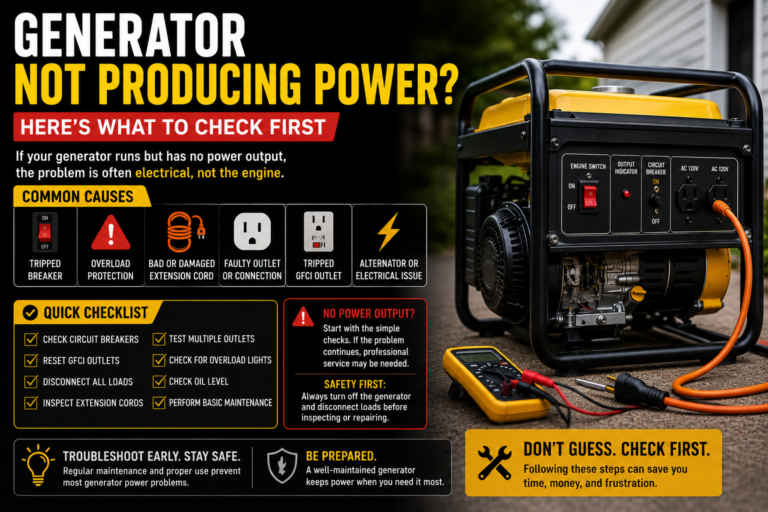
- Weak or inconsistent power output
- Fuel smell or leaking gas
- Warning lights appearing
Routine maintenance helps catch problems early before they become expensive repairs.
Top Causes of Generator Breakdowns
1. Old or Stale Fuel
Fuel breaks down over time and causes starting problems.
Signs:
- Hard starting
- Rough operation
Prevention:
Use fuel stabilizer and replace old fuel regularly.
2. Low or Dirty Oil
Oil keeps internal components lubricated and cool.
Signs:
- Overheating
- Unexpected shutdowns
Prevention:
Check oil before every major use and change it on schedule.
3. Dirty Air Filter
Blocked airflow affects performance.
Signs:
- Weak power output
- Rough running
Prevention:
Inspect and replace filters regularly.
4. Dead Battery (Electric Start Models)
Generator batteries weaken during storage.
Signs:
- Clicking sounds
- Weak starting
Prevention:
Test battery monthly.
5. Spark Plug Wear
Worn plugs make generators harder to start.
Signs:
- Misfires
- Startup trouble
Prevention:
Inspect and replace spark plugs yearly.
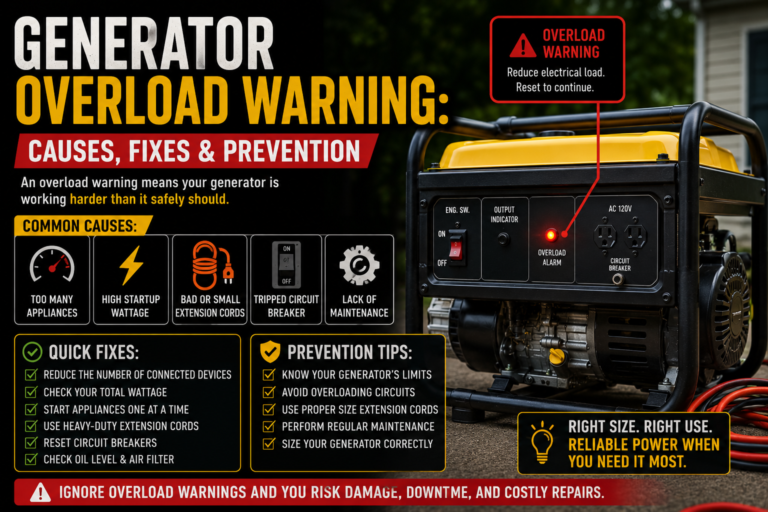
6. Overloading the Generator
Running too many appliances strains the engine.
Signs:
- Shutdowns under load
Prevention:
Know your wattage limits.
Related: Generator Overload Warning: Causes, Fixes & Prevention
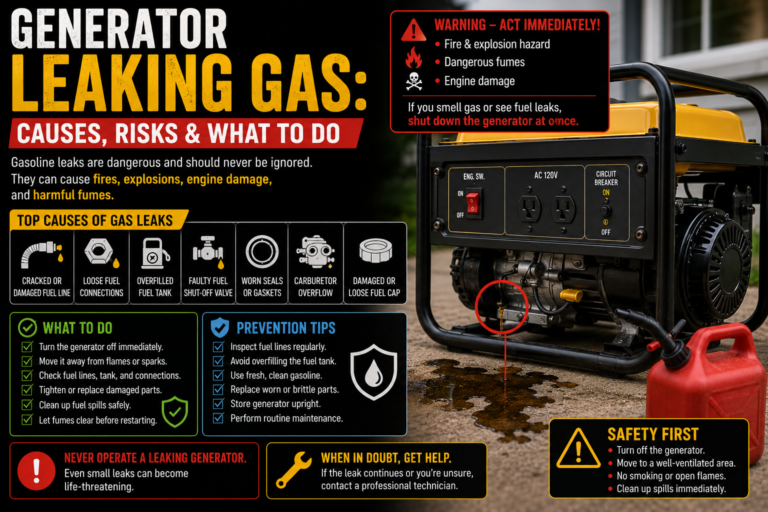
7. Fuel Leaks or Damaged Fuel Lines
Old fuel systems can crack over time.
Signs:
- Gas smell
- Visible leaks
Prevention:
Inspect fuel lines regularly.
Related: Generator Leaking Gas: Causes, Risks & What to Do
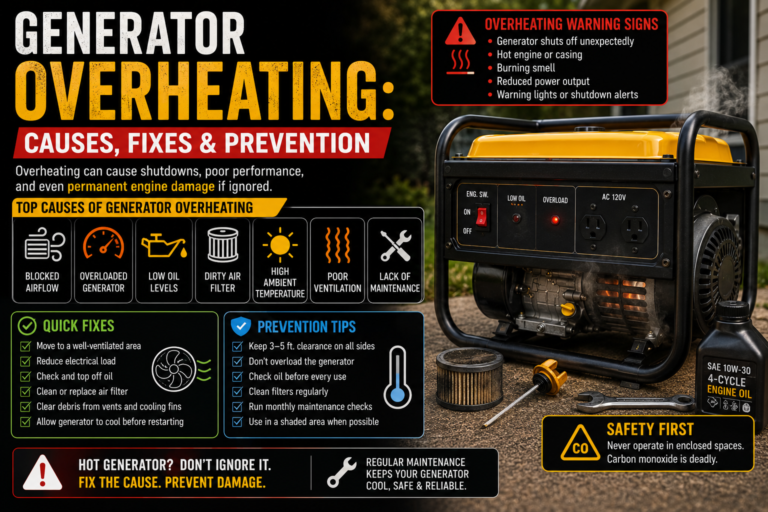
8. Dirty Cooling Vents
Blocked vents can cause overheating.
Signs:
- Generator shuts down hot
Prevention:
Keep vents clean.
Related: Generator Overheating: Causes, Fixes & Prevention
9. Moisture Exposure
Water damages outlets and electrical components.
Signs:
- Electrical problems
Prevention:
Store generators properly.
10. Lack of Regular Testing
Generators sitting too long often fail when needed most.
Signs:
- Hard starting after storage
Prevention:
Run the generator monthly.
Step-by-Step Generator Maintenance Checklist
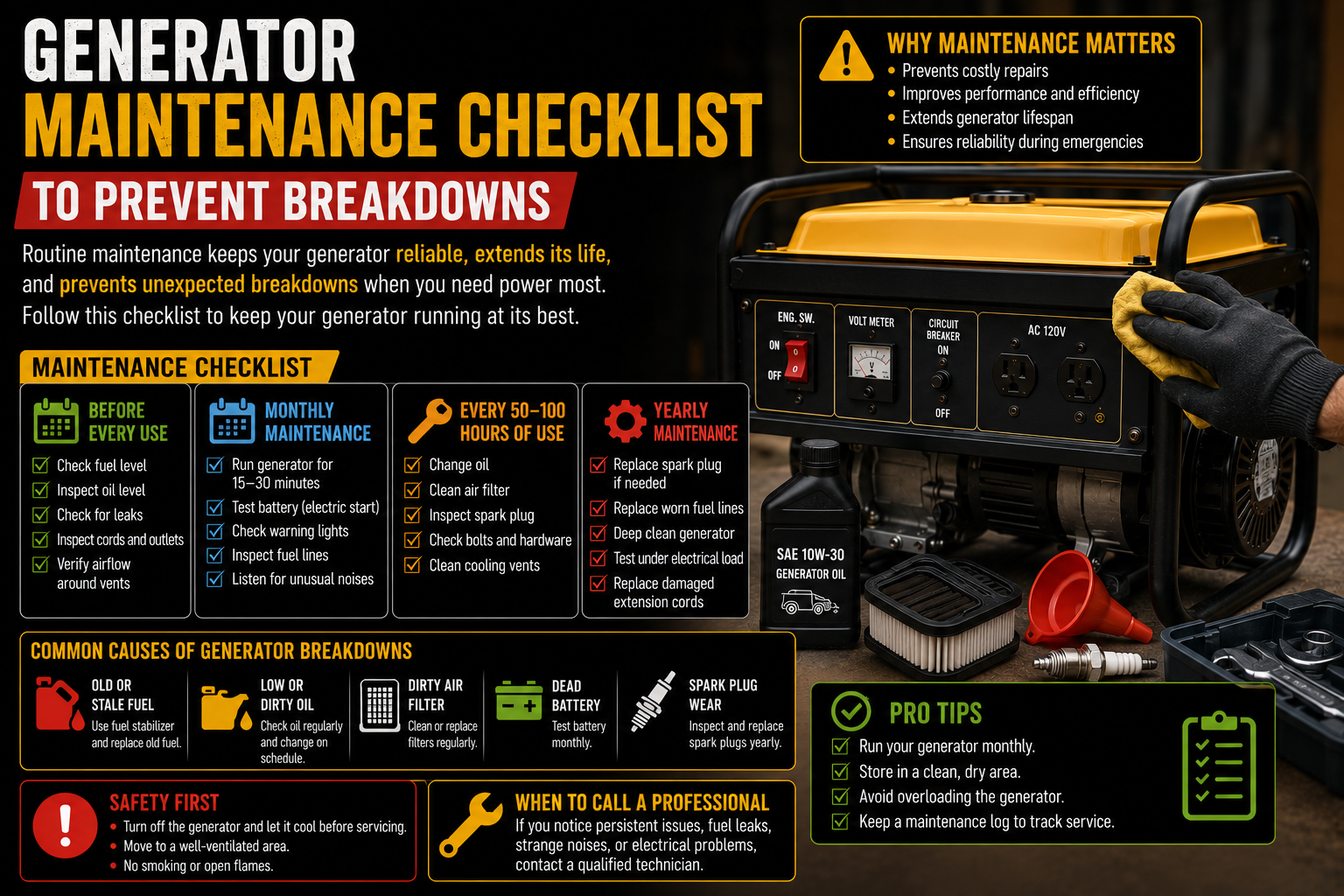
Follow this checklist to keep your generator reliable.
Before Every Use
✅ Check fuel level
✅ Inspect oil level
✅ Check for leaks
✅ Inspect cords and outlets
✅ Verify airflow around vents
Monthly Maintenance
✅ Run generator for 15–30 minutes
✅ Test battery (electric start models)
✅ Check warning lights
✅ Inspect fuel lines
✅ Listen for unusual noises
Every 50–100 Hours of Use
✅ Change oil
✅ Clean air filter
✅ Inspect spark plug
✅ Check bolts and hardware
✅ Clean cooling vents
Yearly Maintenance
✅ Replace spark plug if needed
✅ Replace worn fuel lines
✅ Deep clean generator
✅ Test under electrical load
✅ Replace damaged extension cords
When to Call a Professional
Consider professional maintenance if:
- Generator repeatedly shuts down
- Fuel leaks appear
- Electrical problems continue
- Engine knocking develops
- Generator struggles under normal load
A yearly professional inspection can help extend generator lifespan.
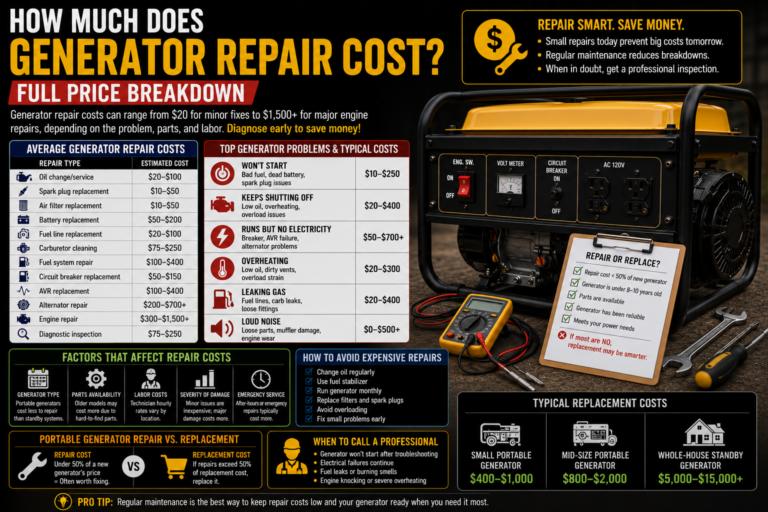
Maintenance Cost Expectations
Generator maintenance is usually inexpensive compared to repairs.
| Maintenance Item | Estimated Cost |
|---|---|
| Oil change | $20–$100 |
| Air filter replacement | $10–$50 |
| Spark plug replacement | $10–$40 |
| Battery replacement | $50–$200 |
| Annual inspection | $75–$250 |
Routine maintenance costs are far lower than emergency repairs.
Related:
How Much Does Generator Repair Cost?
Is It Worth Fixing a Generator?
How to Prevent Generator Breakdowns
Simple habits dramatically improve reliability.
- Run your generator monthly
- Use fresh fuel and stabilizer
- Change oil regularly
- Replace spark plugs and filters
- Avoid overloading
- Store generators in dry conditions
Small maintenance steps today can prevent major failures later.
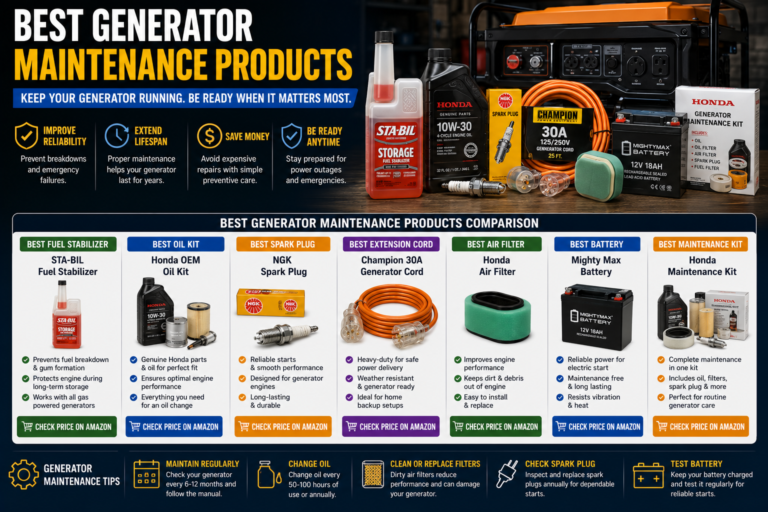
Recommended Maintenance Products
Helpful products for keeping generators running:
- Fuel stabilizer
- Generator oil kits
- Replacement spark plugs
- Heavy-duty extension cords
- Air filters
- Battery maintainers
- Generator maintenance kits
You can also browse our guide to the Best Generator Maintenance Products.
Related Troubleshooting Articles
Still troubleshooting? These guides may help:
- Generator Troubleshooting Guide: Common Problems & Fixes
- Generator Won’t Start? 12 Common Causes & Fixes
- Why Does My Generator Keep Shutting Off? (Fixes Explained)
- Generator Overheating: Causes, Fixes & Prevention
- How to Diagnose Common Generator Problems at Home
Frequently Asked Questions
How often should I maintain my generator?
Basic checks should happen monthly, while oil changes typically happen every 50–100 hours of use.
Should I run my generator every month?
Yes. Running it monthly helps prevent fuel system and battery issues.
What maintenance does a portable generator need?
Oil checks, spark plug inspections, air filter cleaning, fuel care, and monthly testing are most important.
Can poor maintenance damage a generator?
Yes. Neglect often causes overheating, startup failures, shutdowns, and expensive repairs.
How much does generator maintenance cost?
Most maintenance costs are inexpensive compared to major repairs.
Final Verdict
A reliable generator starts with routine maintenance. Most generator failures happen because of neglected oil, stale fuel, dirty filters, or lack of testing—problems that are easy and inexpensive to prevent.
Follow a simple maintenance checklist, test your generator regularly, and fix small issues early to avoid breakdowns when you need backup power the most.