
Power Planning Insight
When comparing solar generators or portable power stations, one of the most important specifications is the battery chemistry. Many homeowners see terms like lithium-ion or LiFePO4 and assume they are the same type of battery, but they actually perform very differently.
Understanding the differences between LiFePO4 batteries and traditional lithium-ion batteries can help you choose a solar generator that lasts longer, charges safely, and performs reliably during power outages or off-grid use.
👉For a complete breakdown of solar generators, see our Solar Generator Guide.
Introduction
Solar generators and portable power stations have become increasingly popular for backup power, camping, and emergency preparedness. Most modern units use lithium-based battery technology, but not all lithium batteries are built the same.
In this guide we’ll compare LiFePO4 vs lithium-ion batteries, explain how each type works, and help you understand which battery chemistry is best for solar generators, home backup systems, and portable power stations.
Quick Answer
LiFePO4 vs Lithium Ion Batteries
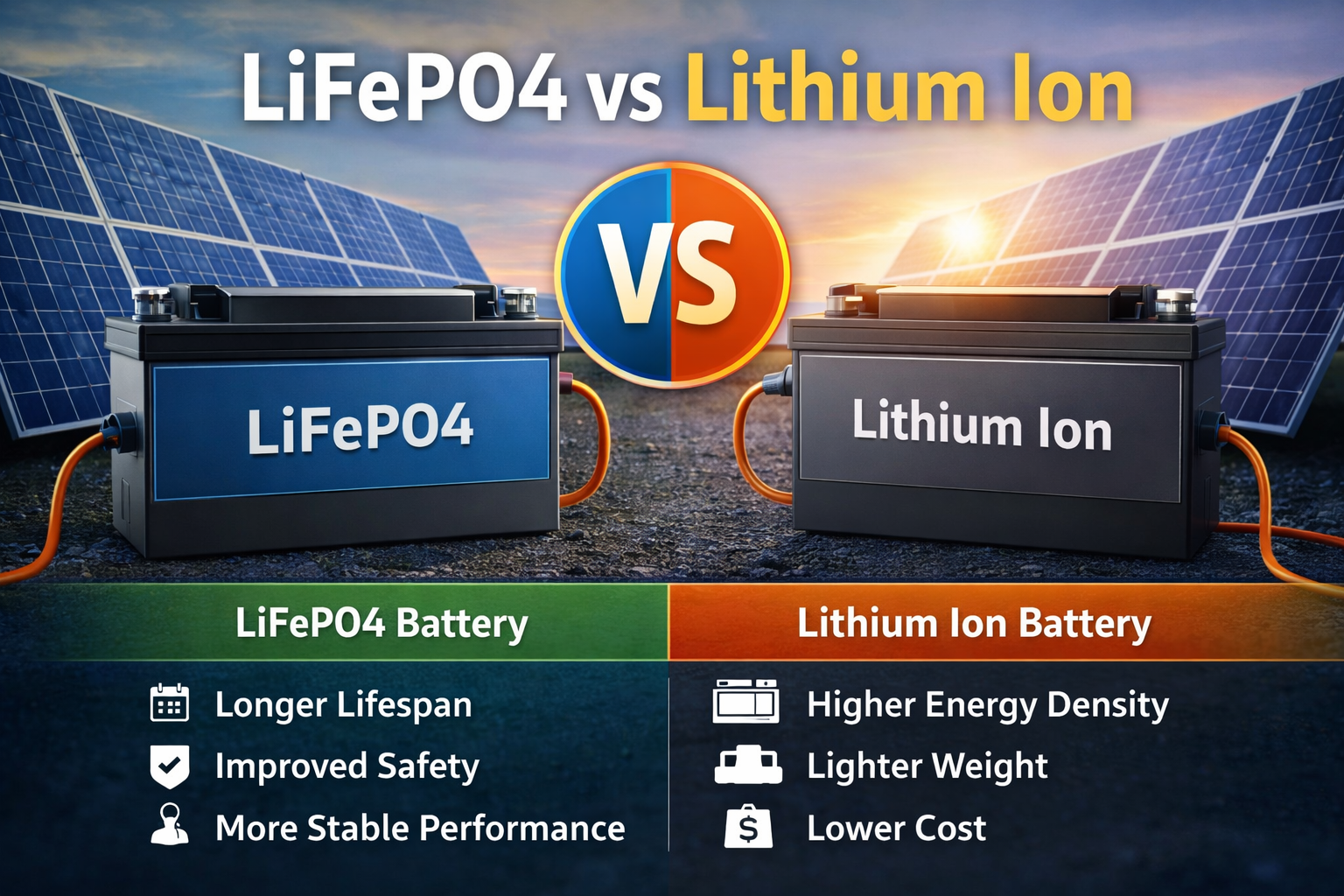
LiFePO4 batteries (Lithium Iron Phosphate) are generally better for solar generators and home backup systems because they offer:
• Longer lifespan (3,000–6,000 cycles)
• Improved thermal safety
• More stable performance
Lithium-ion batteries typically offer:
• Higher energy density
• Lighter weight
• Lower upfront cost
For most solar generators and backup power systems, LiFePO4 batteries are considered the better long-term option.
LiFePO4 vs Lithium Ion Comparison Chart
| Feature | LiFePO4 Battery | Lithium Ion Battery |
|---|---|---|
| Typical Lifespan | 3,000–6,000 cycles | 500–1,500 cycles |
| Safety | Very stable | Moderate |
| Energy Density | Lower | Higher |
| Weight | Slightly heavier | Lighter |
| Charging Speed | Fast | Fast |
| Cost | Higher upfront | Lower upfront |
| Best Use | Solar generators / home backup | Electronics / portable devices |
What Is a LiFePO4 Battery?
LiFePO4 stands for Lithium Iron Phosphate, a lithium battery chemistry designed for high durability and safety.
These batteries are widely used in:
• solar generators
• home energy storage systems
• electric vehicles
• marine power systems
The biggest advantage of LiFePO4 batteries is their long cycle life, meaning they can be charged and discharged thousands of times before losing capacity.
This makes them ideal for daily use in solar generators or off-grid power systems.
What Is a Lithium Ion Battery?
Traditional lithium-ion batteries are commonly used in:
• laptops
• smartphones
• power tools
• early portable power stations
They offer excellent energy density, meaning they can store more energy in a smaller and lighter battery.
However, lithium-ion batteries typically have a shorter lifespan compared to LiFePO4 batteries and may degrade faster with heavy use.
Why Battery Chemistry Matters for Solar Generators
When choosing a solar generator, battery chemistry affects several important factors:
Lifespan
LiFePO4 batteries typically last 4–6 times longer than traditional lithium-ion batteries.
Example:
• Lithium-ion: ~1,000 cycles
• LiFePO4: ~3,500–6,000 cycles
For frequent backup power use, this can mean years of additional battery life.
Safety
LiFePO4 batteries are known for excellent thermal stability, meaning they are less likely to overheat or experience thermal runaway.
This makes them particularly popular for home backup systems and indoor power stations.
Performance During High Loads
Solar generators often power appliances like:
• refrigerators
• CPAP machines
• small heaters
• TVs and electronics
LiFePO4 batteries handle high discharge loads more reliably, which helps maintain stable power output.
Example Solar Generator Use Case
Consider a homeowner using a solar generator during power outages.
Essential appliances might include:
• refrigerator
• lights
• internet router
• laptop or phone charging
A LiFePO4 battery system can handle thousands of charge cycles, making it ideal for regular emergency use.
Many newer solar generators now use LiFePO4 technology for this reason.
See also:
• Solar Generator for Home Backup
• What Size Solar Generator Do I Need
Estimate Your Backup Power Needs
Before choosing a solar generator, it helps to calculate the wattage of the appliances you plan to run.
Steps:
1️⃣ List essential appliances
2️⃣ Add their running watts
3️⃣ include startup surge appliances
4️⃣ choose a generator with sufficient battery capacity
Use our Appliance Wattage Chart and Generator Load Calculator to estimate your power requirements.
Related Guides
For more information about generators and backup power systems, see these guides:
• Solar Generator Guide
• Solar Generator vs Gas Generator
• Appliance Wattage Chart
• Generator Load Calculator
These guides can help you determine the best generator type and battery capacity for your home.
FAQ
Is LiFePO4 better than lithium ion?
Yes, for many applications. LiFePO4 batteries typically offer a longer lifespan, better safety, and more stable performance than traditional lithium-ion batteries.
Why do solar generators use LiFePO4 batteries?
Solar generators often use LiFePO4 batteries because they can handle thousands of charge cycles and provide safe, stable power for home backup and off-grid use.
Are LiFePO4 batteries safer?
LiFePO4 batteries are generally considered safer because they have greater thermal stability and are less likely to overheat compared to some lithium-ion batteries.
Do LiFePO4 batteries last longer?
Yes. Many LiFePO4 batteries last 3,000–6,000 cycles, while most lithium-ion batteries last 500–1,500 cycles.
Are lithium-ion batteries cheaper?
Traditional lithium-ion batteries usually have a lower upfront cost, but LiFePO4 batteries often provide better long-term value because they last longer.
Conclusion
When comparing LiFePO4 vs lithium-ion batteries, LiFePO4 technology offers several advantages for solar generators and home backup systems. These batteries provide longer lifespan, better safety, and reliable performance during heavy loads.
While lithium-ion batteries may offer lighter weight and lower upfront cost, LiFePO4 batteries are often the preferred choice for solar generators and energy storage systems designed for long-term use.
Before choosing a solar generator or backup power system, be sure to calculate your appliance wattage and compare battery technologies to ensure the system meets your power needs.