
Power Planning Tip
Installing a generator transfer switch is one of the safest and most reliable ways to connect a backup generator to your home. Without a transfer switch, powering household circuits during an outage can create serious safety risks such as electrical backfeeding or overloaded circuits.
A properly installed transfer switch allows homeowners to safely supply generator power to essential appliances like refrigerators, sump pumps, and lighting systems during outages.
Introduction
Portable and standby generators can provide critical backup electricity during storms and power outages. However, connecting a generator directly to your home’s electrical system requires proper equipment to ensure safe operation.
A generator transfer switch isolates generator power from utility power and safely directs electricity to selected circuits in your home.
In this guide, we’ll explain generator transfer switch installation, how the system works, and what steps are typically involved in setting up a safe generator connection.
For a full overview of transfer switch types and generator wiring, see our Transfer Switch Guide.
Quick Answer
How Do You Install a Generator Transfer Switch?
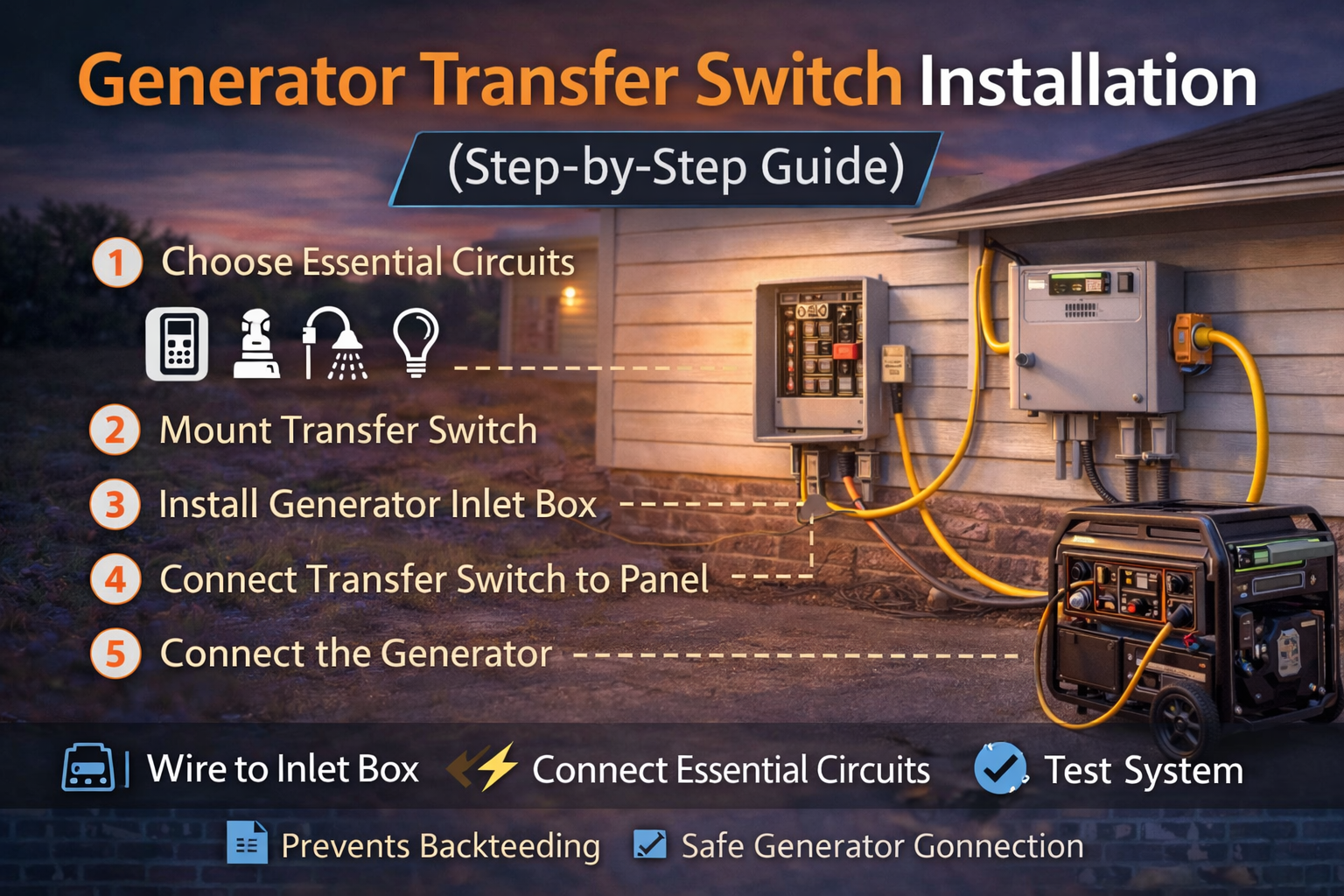
Installing a generator transfer switch typically involves:
• mounting the transfer switch near the electrical panel
• connecting selected circuits to the transfer switch
• installing a generator inlet box
• wiring the inlet to the transfer switch
• connecting the generator using a heavy-duty power cord
This setup allows a generator to safely power selected household circuits during outages.
Generator Transfer Switch Installation Overview
| Installation Step | Purpose |
|---|---|
| Mount Transfer Switch | Provides control point for generator circuits |
| Install Generator Inlet Box | Allows safe outdoor generator connection |
| Connect Circuits | Routes essential circuits through switch |
| Wire Generator Input | Supplies generator power to switch |
| Test System | Ensures proper operation during outages |
Following these steps ensures your generator system operates safely and meets electrical safety guidelines.
What Is a Generator Transfer Switch?
A transfer switch is a device installed between your electrical panel and selected household circuits.
It allows homeowners to safely switch those circuits from utility power to generator power during an outage.
Transfer switches prevent:
• electrical backfeeding
• generator overload
• unsafe wiring connections
They are one of the most common solutions used for portable generator installations.
Learn more about switch types in Manual vs Automatic Transfer Switch.
Step-by-Step Generator Transfer Switch Installation
1. Choose Essential Circuits
Most homeowners power only a few essential circuits during outages.
Common circuits include:
• refrigerator
• sump pump
• lighting circuits
• internet/router
• furnace blower
Selecting essential circuits helps prevent generator overload.
2. Mount the Transfer Switch
The transfer switch is typically installed next to the main electrical panel.
This location allows electricians to route selected circuits from the main panel into the transfer switch.
3. Install a Generator Inlet Box
A generator inlet box is mounted outside the home.
This box provides a safe connection point where the generator plugs into the house wiring system.
Benefits include:
• weather-protected connection
• safe outdoor generator placement
• proper electrical routing
4. Connect the Transfer Switch to the Panel
Selected circuits are rerouted from the main panel into the transfer switch.
This allows those circuits to receive power from either:
• the utility grid
• the generator
But never both at the same time.
5. Connect the Generator
When an outage occurs:
- start the generator
- plug the generator cord into the inlet box
- switch the selected circuits to generator power
This process allows your generator to power essential appliances safely.
Transfer Switch vs Interlock Installation
Some homeowners choose generator interlock kits instead of transfer switches.
Interlock systems are installed directly on the breaker panel and prevent the main breaker and generator breaker from operating at the same time.
See the full comparison here:
Interlock vs Transfer Switch
Both systems prevent dangerous electrical backfeeding.
Example Home Backup Setup
A common portable generator system includes:
• portable generator
• generator inlet box
• manual transfer switch
• heavy-duty generator cord
This setup allows homeowners to power critical appliances during outages without running extension cords throughout the house.
Installation Costs
Transfer switch installation costs vary depending on the complexity of the electrical system.
Typical cost ranges:
• Transfer switch: $300 – $800
• Professional installation: $500 – $2000+
Costs may increase if additional wiring or electrical panel upgrades are required.
Safety Considerations
Installing a transfer switch improves generator safety by preventing:
• electrical backfeeding
• overloaded circuits
• unsafe extension cord usage
Improper generator connections can be dangerous.
Learn more here: 👉 Generator Safety Guide
Related Guides
If you’re planning a generator installation, these guides may help:
• Transfer Switch Guide
• Manual vs Automatic Transfer Switch
• Interlock vs Transfer Switch
• Backfeeding Explained
• What Size Generator Do I Need
These resources help homeowners plan safe and reliable generator systems.
FAQ
Do I need an electrician to install a transfer switch?
In most cases, yes. Transfer switch installation involves electrical panel wiring and should follow local electrical codes.
Can I install a transfer switch myself?
Some homeowners install manual transfer switches themselves, but professional installation is recommended for safety and compliance.
How long does transfer switch installation take?
Installation usually takes 2–4 hours depending on the complexity of the electrical panel.
What size transfer switch do I need?
Transfer switches are sized based on the circuits you want to power and the generator’s capacity.
Can a transfer switch power the whole house?
Most transfer switches power selected circuits. Whole-house backup systems typically use standby generators with automatic transfer switches.
Conclusion
A generator transfer switch is one of the safest ways to connect a backup generator to your home electrical system. By isolating generator power from utility power, transfer switches prevent dangerous backfeeding and allow selected circuits to operate safely during outages.
Proper installation ensures your generator system operates reliably when you need it most.
For a complete overview of generator wiring and transfer switch options, visit our Transfer Switch Guide.