
Portable Generator Insight
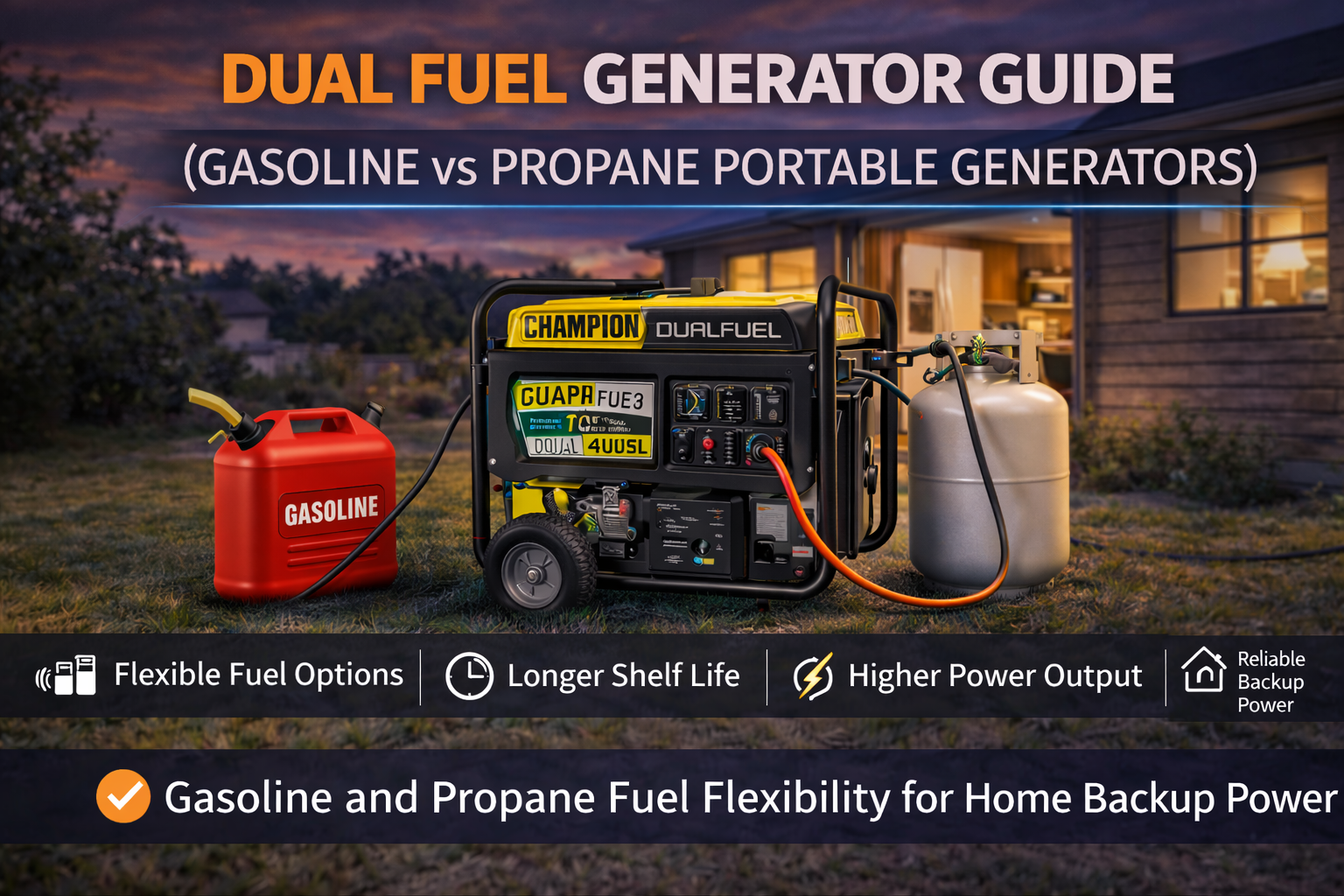
Dual fuel portable generators have become increasingly popular because they allow homeowners to run a generator using either gasoline or propane. This flexibility can be extremely valuable during power outages when one fuel source may be difficult to obtain.
Unlike traditional portable generators that rely only on gasoline, dual fuel generators provide backup fuel options, longer storage stability, and increased reliability during extended outages.
Introduction
Portable generators are one of the most common solutions for emergency backup power during storms, grid failures, and natural disasters. However, traditional generators run exclusively on gasoline, which can become difficult to store or obtain during emergencies.
Dual fuel portable generators solve this problem by allowing the generator to run on two different fuel sources: gasoline or propane. This added flexibility makes dual fuel generators a popular choice for homeowners who want reliable backup power without committing to a permanently installed standby generator.
In this guide we’ll explain how dual fuel generators work, compare gasoline vs propane operation, and help you decide if a dual fuel generator is the right choice for your backup power setup.
If you’re comparing generator models, see our Best Portable Generators Guide.
Quick Answer
What Is a Dual Fuel Generator?
A dual fuel generator is a portable generator that can run on either gasoline or propane.
Benefits include:
• flexible fuel options during emergencies
• propane fuel can be stored long-term
• gasoline provides higher power output
• improved reliability during extended outages
Many homeowners choose dual fuel generators because they offer more fuel flexibility than standard gasoline generators.
Dual Fuel Generator Comparison
| Feature | Gasoline Operation | Propane Operation |
|---|---|---|
| Power Output | Slightly higher | Slightly lower |
| Fuel Availability | Widely available | Easy long-term storage |
| Runtime | Depends on tank size | Depends on propane tank |
| Maintenance | May require stabilizer | Cleaner burning fuel |
Both fuel options can provide reliable power, but they each have advantages depending on your situation.
Why Fuel Flexibility Matters
During extended power outages, access to gasoline may be limited due to high demand or closed gas stations. Having a generator that can also run on propane provides an alternative fuel source.
Propane tanks can be stored for years without degrading, while gasoline must be treated with stabilizer to prevent deterioration.
Because of this, many homeowners keep propane tanks as emergency fuel reserves for dual fuel generators.
Gasoline vs Propane Performance
Dual fuel generators produce slightly different power levels depending on the fuel used.
Typical example:
| Fuel Type | Power Output |
|---|---|
| Gasoline | 7500 running watts |
| Propane | 6750 running watts |
Gasoline typically produces 5–10% more power, while propane burns cleaner and requires less engine maintenance.
Use Case Scenario
Example Home Backup Setup
A typical dual fuel generator setup might power:
• refrigerator
• sump pump
• lights
• microwave
• internet router
This setup usually requires 3000–4000 running watts, making generators in the 5000–7500 watt range a practical choice.
👉 See our 7500 Watt Generator Guide to learn more about generator sizing.
When Dual Fuel Generators Are Best
Dual fuel portable generators are ideal for:
• homeowners preparing for storms
• long-duration outages
• areas where gasoline supply may be limited
• emergency preparedness setups
Because of their flexibility, dual fuel generators are among the most recommended portable generators for home backup power.
Generator Setup and Safety
Portable generators should always be operated safely.
Important safety guidelines include:
• operate generators outdoors only
• place generators at least 20 feet from the house
• avoid running generators near windows or doors
• use heavy-duty extension cords or a transfer switch
Improper generator operation can lead to carbon monoxide hazards.
👉 See our Generator Safety Guide for more information.
Related Guides
If you’re planning a portable generator setup, these guides may help:
• Best Portable Generators
• 7500 Watt Generator Guide
• Inverter vs Conventional Generator
• Starting vs Running Watts Guide
• Generator Safety Guide
You can also explore the complete Portable Generators Hub for more buying guides and generator comparisons.
FAQ
Are dual fuel generators better than gasoline generators?
Dual fuel generators provide more flexibility because they can operate on both gasoline and propane.
Does propane reduce generator power?
Yes. Propane typically produces slightly less power than gasoline, usually around 5–10% lower output.
Can dual fuel generators run all household appliances?
Yes, as long as the generator provides enough wattage for the appliances being used.
Are dual fuel generators worth it?
Many homeowners consider dual fuel generators worth the cost because they offer greater fuel flexibility during emergencies.
Conclusion
Dual fuel portable generators provide one of the most flexible backup power solutions available for homeowners. By allowing generators to run on either gasoline or propane, they provide multiple fuel options during power outages and emergencies.
For many homeowners preparing for storms or grid outages, dual fuel generators offer a reliable and practical backup power solution.
To compare generator models and features, visit our Best Portable Generators Guide.