
Backup Power Insight
A 7500-watt generator is one of the most popular portable generator sizes for homeowners because it provides enough power to run essential appliances during an outage without the cost of a full standby generator system.
Generators in the 7500-watt range can typically power refrigerators, sump pumps, lights, small kitchen appliances, and even some air conditioning units depending on starting watt requirements.
👉 For a complete breakdown of portable generators, see our Portable Generators Guide.
Introduction
Power outages can disrupt essential household systems such as refrigeration, heating, internet, and lighting. A 7500 watt portable generator offers a reliable backup power solution that can keep many important appliances running during emergencies.
However, determining exactly what a generator can power depends on the running watts and starting watts of your appliances. Motor-driven equipment such as refrigerators, pumps, and air conditioners require additional power when they start.
In this guide we’ll explain what a 7500 watt generator can run, provide appliance wattage examples, and help you estimate if this generator size is right for your home.
Quick Answer
What Can a 7500 Watt Generator Run?
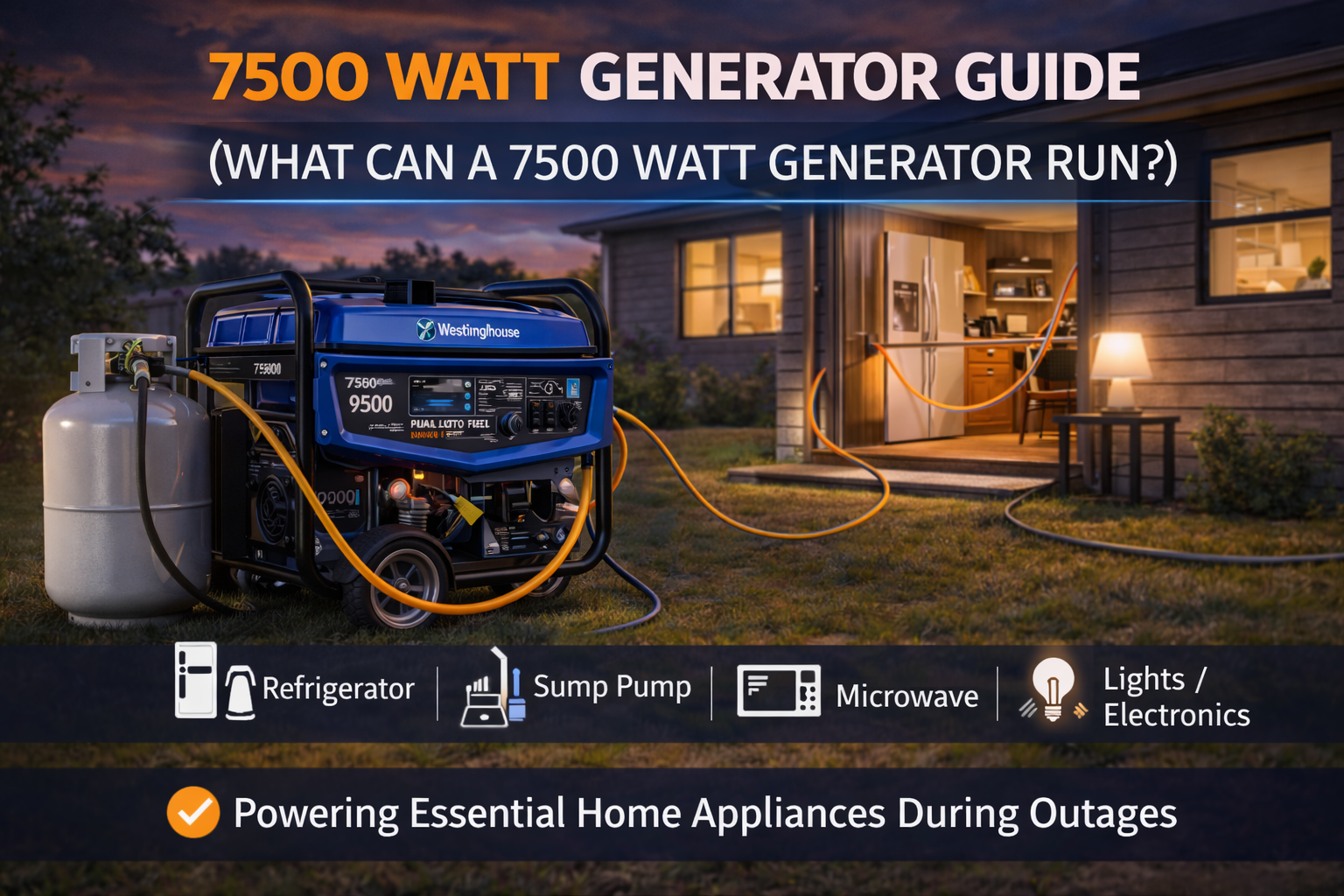
A 7500-watt generator can typically power:
• refrigerator or freezer
• sump pump
• microwave
• lights and electronics
• television and internet equipment
• small window air conditioner
Most homes can run several essential appliances simultaneously with a generator in this size range.
Example Appliance Load Chart
| Appliance | Running Watts | Starting Watts |
|---|---|---|
| Refrigerator | 700 | 2000 |
| Sump Pump | 800 | 1500 |
| Microwave | 1000 | 1000 |
| Lights (multiple rooms) | 400 | 400 |
| Internet Router | 100 | 100 |
| Television | 150 | 150 |
Estimated running load:
3,150 watts
Recommended generator size:
7500 watts provides comfortable capacity with surge allowance
Why Starting Watts Matter
Many household appliances contain electric motors that require extra power when they first start. This surge power is known as starting watts.
For example:
• refrigerators may use 700 running watts but up to 2000 starting watts
• sump pumps may use 800 running watts but 1500 starting watts
If a generator cannot supply enough surge power, appliances may fail to start or the generator may trip its overload protection.
👉 Learn more in our Starting vs Running Watts Guide.
Common Appliances a 7500 Watt Generator Can Run
A generator of this size can usually run several appliances simultaneously.
Typical combinations include:
Essential Home Backup
• refrigerator
• sump pump
• lights
• internet router
• microwave
This setup typically requires 3,000–4,000 watts.
Emergency Kitchen Setup
• refrigerator
• microwave
• coffee maker
• lights
This setup typically requires 2,500–3,500 watts.
Small Cooling Setup
Some homes may run a small window air conditioner along with essential appliances.
However, central air systems typically require larger generators.
When a 7500 Watt Generator Is Ideal
7500-watt generators are often chosen for:
• essential home backup power
• moderate appliance loads
• portable generator setups
• emergency storm preparedness
Many homeowners consider this size generator the best balance of power and affordability.
Portable Generator Setup Example
A typical portable generator setup includes:
• 7500-watt generator
• heavy-duty extension cords or generator inlet box
• transfer switch or interlock kit
• gasoline or propane fuel supply
During a power outage:
- the generator is started outside the home
- appliances are connected through extension cords or a transfer switch
- the generator supplies power to essential circuits
👉 Learn more in our Generator Transfer Switch Installation Guide.
Estimate Your Generator Size
If you’re unsure whether a 7500-watt generator is large enough for your home, use our Generator Load Calculator to estimate total appliance wattage.
This tool helps you:
• calculate running watts
• account for startup surge
• choose the correct generator size
Related Guides
If you’re planning a backup power system, these guides may help:
• Best Portable Generators
• Portable Generators Guide
• Starting vs Running Watts Guide
• Appliance Wattage Chart
• Generator Safety Guide
These resources explain generator sizing, power requirements, and safe operation.
FAQ
Is a 7500 watt generator enough for a house?
A 7500-watt generator can power essential appliances such as refrigerators, sump pumps, lights, and small kitchen appliances.
Can a 7500 watt generator run central air?
Most central air conditioning systems require larger generators, often 10,000–15,000 watts or more.
How many appliances can a 7500 watt generator run?
Most setups allow 3–6 essential appliances depending on wattage requirements.
How long will a 7500 watt generator run?
Many portable generators in this range run 8–12 hours per tank of fuel depending on load.
Conclusion
A 7500 watt generator is one of the most versatile portable generator sizes for homeowners. It provides enough power to run essential appliances during outages while remaining portable and relatively affordable.
By calculating appliance wattage and accounting for starting power requirements, homeowners can determine whether a 7500-watt generator is the right solution for their backup power needs.
If you want to compare generator models, see our Best Portable Generators Guide.