
Backup Power Safety Tip
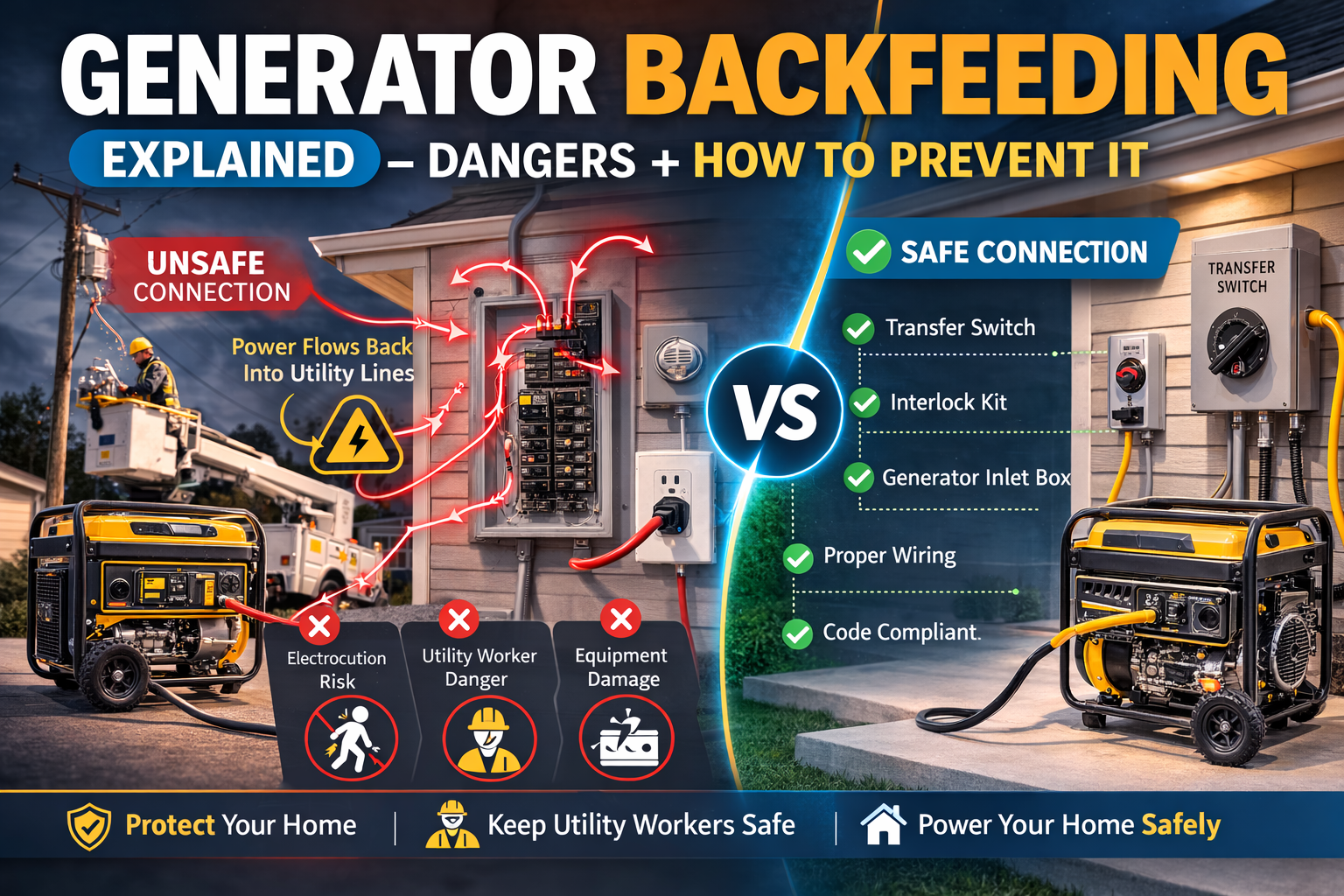
One of the most dangerous mistakes people make when using a generator is connecting it to a home electrical system without proper isolation from the utility grid. This mistake is known as generator backfeeding, and it can create serious electrical hazards.
Backfeeding can send electricity from a generator back through power lines, potentially injuring utility workers, damaging electrical equipment, and causing fires. Understanding how backfeeding occurs—and how to prevent it—is essential for safe generator operation.
Introduction
Generators provide reliable backup power during outages, but they must be connected to home electrical systems correctly. Improper generator connections can allow electricity to flow in unintended directions, which can create extremely dangerous situations.
This guide explains what generator backfeeding is, why it happens, and how to prevent it when using portable or standby generators. Proper electrical integration using transfer switches or interlock kits ensures generators supply power safely during outages.
For a complete overview of generator wiring and connection methods, see or 👉 Transfer Switch Guide.
Quick Answer
What Is Generator Backfeeding?
Generator backfeeding occurs when electricity from a generator flows backward into utility power lines instead of staying inside the home’s electrical circuits.
Backfeeding can happen when:
• generators are connected directly to household outlets
• electrical panels lack proper isolation equipment
• transfer switches or interlocks are not used
The safest way to prevent backfeeding is by installing a transfer switch or interlock system that isolates generator power from the utility grid.
Generator Backfeeding Overview
| Topic | Explanation |
|---|---|
| What Backfeeding Is | Generator power flowing into utility lines |
| Why It’s Dangerous | Can electrocute utility workers |
| When It Happens | Improper generator connections |
| How to Prevent It | Transfer switch or interlock system |
| Safe Generator Setup | Generator inlet box + proper wiring |
Understanding these concepts helps homeowners avoid dangerous generator installation mistakes.
How Generator Backfeeding Happens
Backfeeding usually occurs when someone attempts to power a home by plugging a generator into a wall outlet using a homemade cord.
This practice is sometimes called “suicide cord” wiring, and it allows electricity to travel backward through the home’s electrical panel and into utility lines.
This situation can cause:
• energized utility lines during outages
• electrical overloads
• damaged generators and appliances
Backfeeding can occur even with small portable generators.
Why Backfeeding Is Dangerous
Backfeeding creates several serious safety risks.
Risk to Utility Workers
During power outages, utility crews assume power lines are not energized.
If a generator backfeeds electricity into those lines, workers could be exposed to live voltage, which can result in severe injury or death.
Fire Hazards
Backfeeding can overload circuits or send power through wiring not designed to handle generator electricity.
This can lead to:
• overheated wires
• damaged electrical panels
• potential house fires
Equipment Damage
Improper generator connections can damage:
• generators
• appliances
• electrical panels
Power surges or incorrect wiring can permanently damage electrical systems.
How to Prevent Generator Backfeeding
Backfeeding is completely preventable with proper generator integration.
Safe generator connection methods include:
Transfer Switch
A transfer switch isolates the generator from the utility grid and safely powers selected circuits.
Benefits include:
• safe generator connection
• controlled circuit distribution
• electrical code compliance
See our guide: 👉 Generator Transfer Switch Installation
Interlock Kit
A generator interlock kit installs directly on the breaker panel and prevents the main breaker and generator breaker from operating at the same time.
Advantages include:
• lower installation cost
• full panel access
• safe generator isolation
Learn more here: 👉 Interlock vs Transfer Switch
Example Safe Generator Setup
A typical portable generator system might include:
• portable generator
• generator inlet box
• manual transfer switch or interlock kit
• heavy-duty generator cord
During an outage:
- the generator is started outside
- the generator is connected to the inlet box
- circuits are switched to generator power
This setup ensures generator electricity stays within the home and never feeds back into utility lines.
Common Generator Wiring Mistakes
Many generator accidents occur because of incorrect installation.
Common mistakes include:
• plugging generators into wall outlets
• bypassing transfer switches
• using homemade wiring cords
• operating generators without proper isolation
Avoiding these mistakes helps prevent electrical hazards.
Related Guides
If you’re planning a generator installation, these guides may help:
• Transfer Switch Guide
• Generator Transfer Switch Installation
• Manual vs Automatic Transfer Switch
• Interlock vs Transfer Switch
• Generator Safety Guide
These articles explain how to safely connect and operate generators during power outages.
FAQ
What is backfeeding with a generator?
Backfeeding occurs when generator electricity flows backward into utility power lines instead of powering only household circuits.
Is generator backfeeding illegal?
In many areas, improper generator connections that allow backfeeding violate electrical codes and safety regulations.
How do you prevent generator backfeeding?
Installing a transfer switch or generator interlock kit isolates generator power from the utility grid and prevents backfeeding.
Can plugging a generator into a wall outlet cause backfeeding?
Yes. Plugging a generator into a household outlet can send electricity back into utility lines and create dangerous conditions.
Are transfer switches required for generators?
Most electrical codes require generators to use transfer switches or other approved isolation methods when connected to household circuits.
Conclusion
Generator backfeeding is one of the most dangerous mistakes homeowners can make when connecting backup power systems. Improper generator wiring can send electricity into utility power lines, creating serious safety hazards for both homeowners and utility workers.
Using transfer switches, interlock kits, and proper generator inlet connections ensures generators operate safely during outages while preventing dangerous electrical backfeeding.
For more information on generator wiring and installation, see our Transfer Switch Guide.