
Power Planning Insight
Installing a generator is more than simply purchasing the equipment and placing it outside the home. Backup generators must meet local electrical codes, fuel supply requirements, and safety guidelines to ensure the system operates safely and reliably.
Whether you’re installing a portable generator connection or a whole house standby generator, proper installation planning prevents electrical hazards, ensures reliable power during outages, and keeps your system compliant with local building regulations.
Introduction
Generators are one of the most reliable ways to protect your home from power outages, but installing a generator requires more than simply plugging it in. Most generator installations involve electrical integration, fuel supply connections, and proper placement to meet safety standards.
In this guide we’ll explain the generator installation requirements for home backup power, including electrical connection methods, generator placement rules, and common installation components.
For a full overview of safe generator connections, see our Generator Safety Guide.
Quick Answer
What Are the Requirements to Install a Generator?
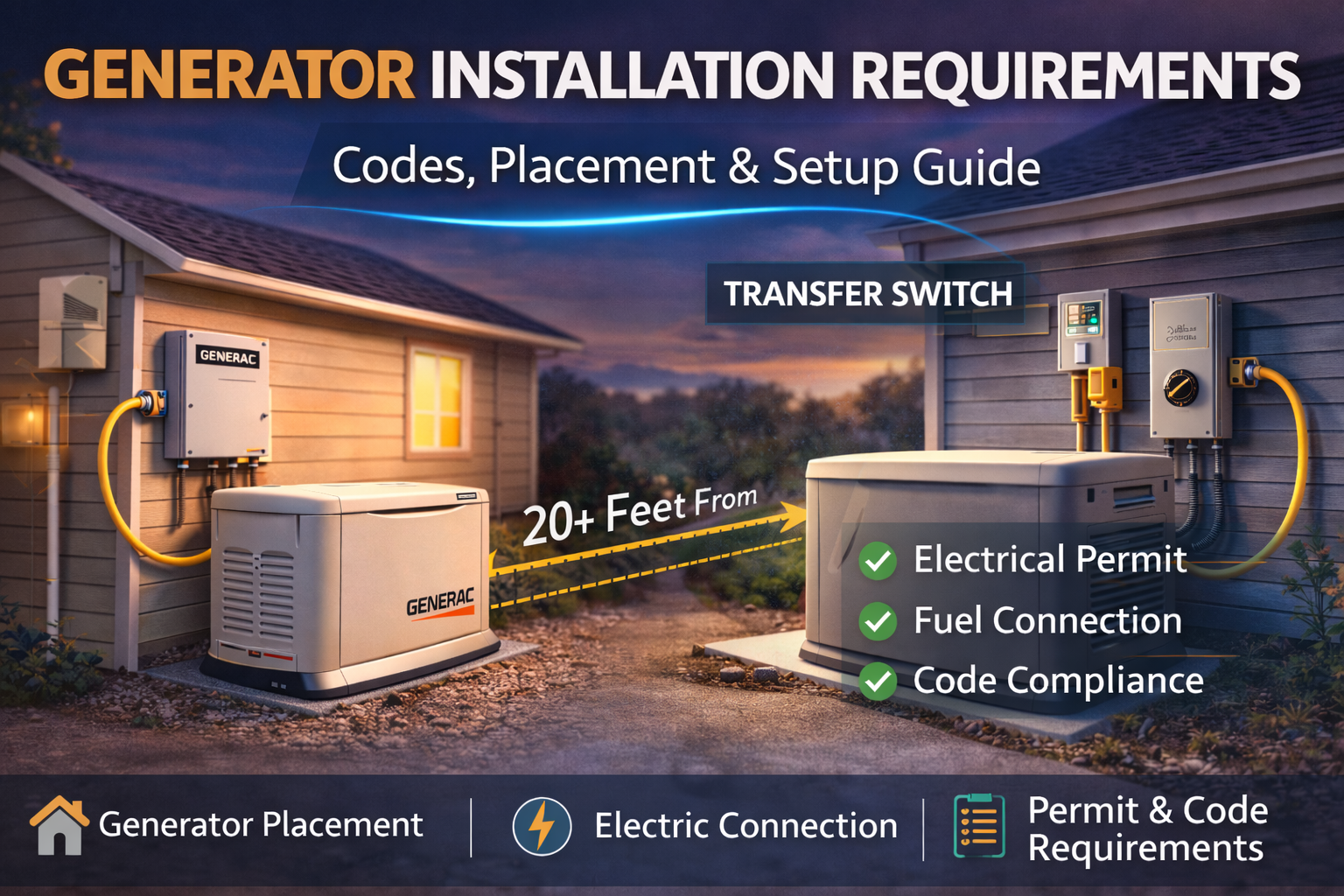
Typical generator installation requirements include:
• generator placement at least 20 feet from the home
• transfer switch or interlock system
• generator inlet box or automatic transfer switch
• proper electrical permits and inspections
• fuel connection (natural gas, propane, or gasoline)
These requirements ensure generators operate safely and comply with electrical codes.
Generator Installation Requirements Overview
| Requirement | Purpose |
|---|---|
| Generator Placement | Prevents exhaust hazards |
| Transfer Switch or Interlock | Prevents backfeeding |
| Generator Inlet Box | Safe power connection |
| Fuel Supply | Continuous generator operation |
| Electrical Permit | Code compliance |
Meeting these requirements ensures a safe and reliable backup power system.
Generator Placement Requirements
Proper generator placement is one of the most important installation rules.
Most manufacturers and safety organizations recommend placing generators:
• at least 20 feet from the home
• away from doors and windows
• on a stable outdoor surface
• with exhaust directed away from the building
This helps prevent carbon monoxide exposure, which is one of the most serious generator hazards.
👉 Learn more in Generator Safety Guide.
Electrical Connection Requirements
Generators must be connected safely to the home’s electrical system.
Common methods include:
Transfer Switch Installation
Transfer switches allow generators to power selected circuits safely.
Benefits include:
• safe isolation from utility power
• controlled electrical loads
• code-compliant generator integration
Learn more here:
👉 Generator Transfer Switch Installation
Interlock Kit Installation
Interlock kits mount directly on the electrical panel and prevent the main breaker and generator breaker from operating at the same time.
Advantages include:
• lower installation cost
• flexible circuit usage
• safe generator integration
See our comparison:
👉 Interlock vs Transfer Switch
Fuel Supply Requirements
Generators require a reliable fuel supply to operate during outages.
Common fuel sources include:
Natural Gas
Advantages:
• continuous fuel supply
• no refueling required
• ideal for standby generators
Propane
Advantages:
• long-term storage
• reliable backup supply
• common in rural areas
Learn more here:
👉 Natural Gas vs Propane Generator Guide
Example Home Generator Installation
A typical residential standby generator system includes:
• standby generator unit
• automatic transfer switch
• natural gas or propane fuel line
• electrical panel integration
During an outage:
- the transfer switch detects power loss
- the generator starts automatically
- power is restored to the home
Most systems restore electricity within 10–30 seconds.
Generator Size Planning Tool
Use this quick tool to estimate generator size required for installation planning.
Estimate Generator Size for Your Home
Enter the appliances you want to power and calculate total running wattage.
(Example loads)
| Appliance | Running Watts |
|---|---|
| Refrigerator | 700 |
| Microwave | 1000 |
| Lights | 300 |
| Sump Pump | 800 |
| Internet Router | 100 |
Estimated load: 2800 watts
Recommended generator size: 4000–5000 watts
For a full appliance list see:
Generator Installation Size Calculator
Before installing a generator, it helps to estimate how much power your essential appliances require. Use this calculator to add your running watts, account for startup surge, and estimate the generator size needed for safe installation planning.
Generator Installation Size Calculator
Add the appliances you want to power during an outage. This tool estimates your total running watts, highest starting watts, and a recommended generator size for installation planning.
Appliances
| Appliance | Running W | Starting W | Qty | Remove |
|---|
Results
Note: This is a planning estimate only. Actual generator installation requirements depend on your electrical panel, transfer switch or interlock setup, fuel source, and local code requirements.
Example Installation Scenario
Many homeowners install generators to power essential circuits during outages.
Typical priority appliances include:
• refrigerator
• lighting
• internet router
• furnace blower
• sump pump
This setup usually requires 3000–5000 running watts, making portable generators or small standby systems suitable.
For whole home coverage see:
Common Generator Installation Mistakes
Many generator problems occur due to improper installation.
Common mistakes include:
• plugging generators into wall outlets
• installing generators too close to buildings
• failing to install transfer switches
• using undersized extension cords
Avoiding these mistakes helps ensure reliable backup power.
Related Guides
If you’re planning a generator system, these guides may help:
• Generator Safety Guide
• Generator Transfer Switch Installation
• Interlock vs Transfer Switch
• What Size Generator Do I Need
• Best Whole House Generator
These articles explain generator sizing, installation, and safe operation.
FAQ
Do generators require permits?
Many areas require electrical permits for standby generator installation.
How far must a generator be from a house?
Most guidelines recommend at least 20 feet from doors, windows, and vents.
Do portable generators require transfer switches?
Yes. A transfer switch or interlock kit is required when connecting generators to household circuits.
Can I install a generator myself?
Portable generator setups may be DIY, but standby generators usually require professional installation.
How much does generator installation cost?
Installation costs typically range from $2,000 to $6,000 depending on generator size and electrical complexity.
Conclusion
Proper generator installation ensures safe and reliable backup power during outages. Key installation requirements include safe generator placement, electrical integration using transfer switches or interlock kits, and a reliable fuel supply.
By following installation guidelines and local electrical codes, homeowners can ensure their generator system provides dependable emergency power when it’s needed most.
For a complete guide to generator sizing and installation planning, see our What Size Generator Do I Need Guide.