
Installation Insight
One of the most overlooked parts of generator installation is noise compliance. While generators provide essential backup power during outages, they can produce significant sound levels that may violate local noise ordinances or disturb nearby neighbors.
Before installing a generator, it’s important to understand local noise limits, placement considerations, and ways to reduce generator noise. Planning for these factors helps ensure your generator installation remains compliant with local regulations while minimizing disturbance.
Introduction
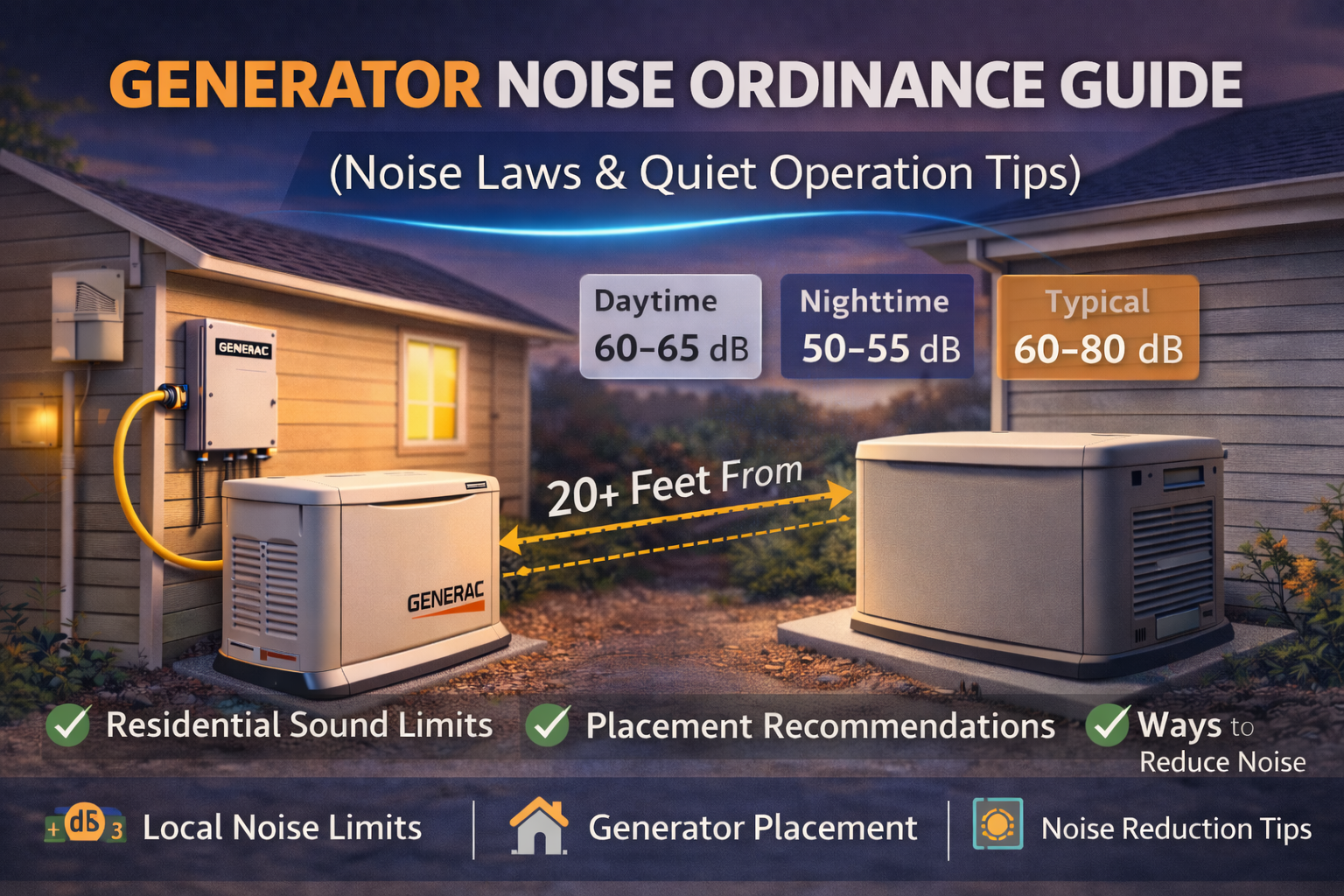
Backup generators are becoming increasingly common in residential neighborhoods, especially in areas prone to storms or unreliable electrical grids. However, generators can produce noise levels ranging from 60 to 80 decibels, depending on generator size and load.
Because of this, many cities and homeowner associations regulate generator noise through local noise ordinances that limit sound levels during certain hours.
In this guide we’ll explain generator noise ordinance considerations, including typical sound limits, placement recommendations, and practical ways to reduce generator noise.
For installation placement rules, see our Generator Pad & Placement Guide.
Quick Answer
Do Generator Noise Ordinances Exist?
Yes. Many cities regulate generator noise through local ordinances that limit sound levels near residential properties.
Typical guidelines include:
• 60–65 dB daytime limits in residential areas
• 50–55 dB nighttime limits
• restrictions on generator operation outside emergency use
• placement requirements to reduce noise impact
Following placement and installation guidelines helps reduce generator noise and avoid ordinance violations.
Generator Noise Levels Overview
| Generator Type | Typical Noise Level |
|---|---|
| Small inverter generator | 50–60 dB |
| Portable generator | 65–75 dB |
| Whole house standby generator | 60–70 dB |
| Large commercial generator | 70–85 dB |
For reference:
• normal conversation = 60 dB
• vacuum cleaner = 70 dB
• lawn mower = 85 dB
Most residential standby generators operate within acceptable neighborhood noise ranges when properly installed.
Why Noise Ordinances Matter
Generator noise regulations exist to prevent excessive sound disturbances in residential neighborhoods.
Noise violations can result in:
• warnings from local authorities
• fines for ordinance violations
• complaints from neighbors
• HOA compliance issues
Understanding local noise limits before installing a generator helps prevent these problems.
How Generator Placement Affects Noise
Generator placement significantly affects perceived noise levels.
Placement guidelines that help reduce noise include:
• locating generators away from bedrooms and windows
• placing generators behind structures or fences
• directing exhaust away from neighboring homes
• installing generators on stable pads that reduce vibration
Learn more in our Generator Pad & Placement Guide.
Ways to Reduce Generator Noise
Several strategies can reduce generator noise while maintaining safe operation.
Choose a Quiet Generator
Modern standby generators often include noise-reduction enclosures designed to reduce sound levels.
Inverter generators are typically the quietest portable options.
Increase Distance from the Home
Sound decreases significantly with distance.
Placing generators 20 feet or more from the home can greatly reduce perceived noise.
Install Sound Barriers
Fences, landscaping, and sound barriers can help block generator noise from reaching nearby homes.
Examples include:
• privacy fences
• acoustic barriers
• dense landscaping
Install Vibration-Reducing Pads
Generator pads help stabilize equipment and reduce vibration noise.
See our Generator Pad & Placement Guide.
Example Residential Generator Setup
A typical standby generator installation includes:
• standby generator
• generator pad
• automatic transfer switch
• natural gas or propane connection
During an outage:
- the transfer switch detects power loss
- the generator starts automatically
- electricity is restored to the home
Modern standby generators are designed to operate at relatively low noise levels compared to older models.
Learn more in Best Whole House Generator Guide.
Generator Noise and HOA Rules
Homeowner associations sometimes have additional noise restrictions beyond city ordinances.
HOA rules may regulate:
• generator placement
• operating hours
• installation appearance
• sound limits
Checking HOA rules before installing a generator helps prevent compliance issues.
Related Guides
If you’re planning a generator installation, these guides may help:
• Generator Pad & Placement Guide
• Generator Installation Requirements
• Generator Safety Guide
• Best Whole House Generator
• Generator Transfer Switch Installation
These resources explain generator sizing, installation, and safe operation.
FAQ
Are generators allowed in residential areas?
Yes. Most areas allow generators, but they must comply with local noise ordinances and installation regulations.
How loud is a whole house generator?
Most residential standby generators operate between 60 and 70 decibels during normal operation.
Can generator noise be reduced?
Yes. Proper placement, sound barriers, and vibration pads can significantly reduce generator noise.
Do generators violate noise ordinances?
Generators used during emergencies are typically allowed, but excessive noise during normal operation may violate local rules.
Are inverter generators quieter?
Yes. Inverter generators are generally quieter than traditional portable generators.
Conclusion
Generator noise ordinances are an important consideration when installing backup power systems in residential neighborhoods. Understanding local noise limits and choosing proper generator placement can help prevent complaints and ordinance violations.
By selecting quieter generator models and following safe installation practices, homeowners can ensure reliable backup power while minimizing noise impact.
For more information on generator installation planning, see our Generator Installation Requirements Guide.