What Size Generator for a 1500 Sq Ft House? (Wattage Guide + Chart)
Power Planning Tip
One of the most common mistakes homeowners make when buying a generator is assuming the size of the house determines the generator size. In reality, generators power appliances and electrical loads, not square footage. I’ve seen many homeowners purchase generators that were either far too large or too small simply because they didn’t calculate the appliances they actually needed during a power outage.
The good news is that estimating the right generator size for a 1,500 square foot house is fairly simple once you understand running watts, starting watts, and which appliances matter most during an outage.
👉 For a complete breakdown of generator sizing, see our Generator Sizing Guide.
As an Amazon Associate, I earn from qualifying purchases. This comes at no extra cost to you.
Introduction
Choosing the correct generator size for a 1,500 sq ft house depends on which appliances and systems you want to power during a power outage. Some homeowners only need enough power for essentials like a refrigerator, lights, and internet, while others want to run larger appliances like well pumps or air conditioners.
In this guide we’ll break down the typical wattage requirements for a 1,500 square foot home, show example appliance loads, and explain how to estimate the generator size that will keep your household running safely during an outage.
Quick Answer
What Size Generator for a 1500 Sq Ft House?
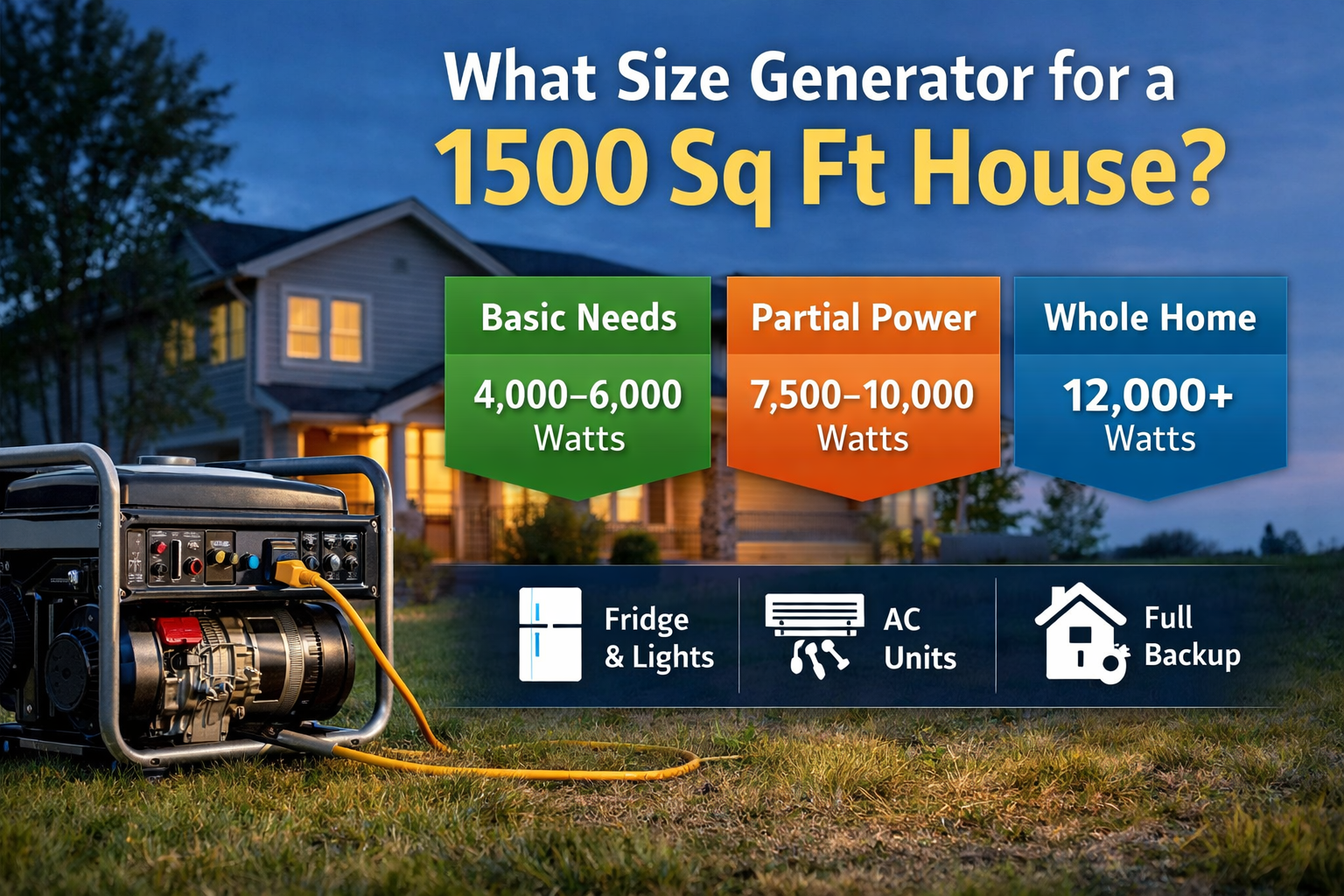
Most homes around 1,500 square feet typically require:
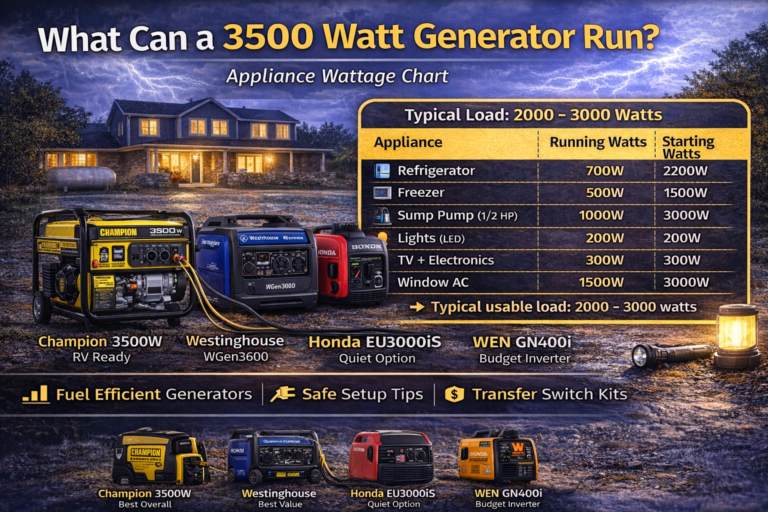
• 4,000–6,000 watts for essential appliances
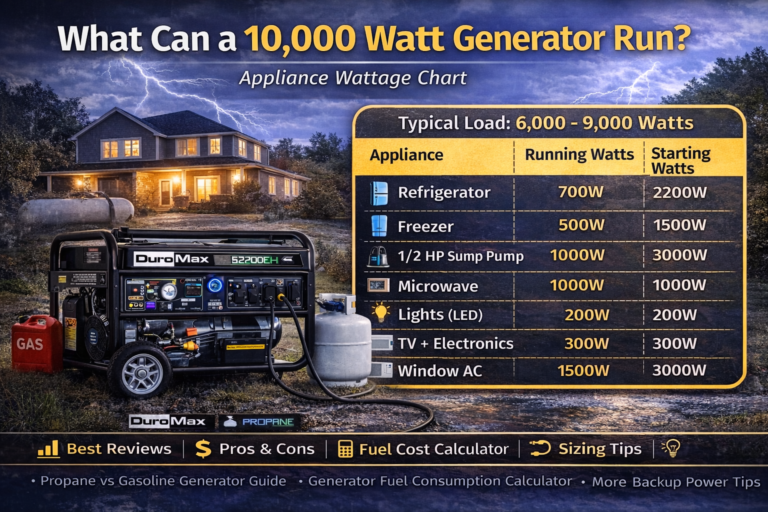
• 7,500–10,000 watts for larger appliances and partial home coverage
• 12,000+ watts for near whole-house power including central AC
The exact generator size depends on the appliances you plan to run and their starting watt requirements.
For a deeper explanation of how wattage is calculated, see our complete Generator Sizing Guide.
Example Appliance Load Chart
Below is a typical emergency power setup for a 1,500 sq ft home.
| Appliance | Running Watts | Starting Watts |
|---|---|---|
| Refrigerator | 700 | 2000 |
| Microwave | 1000 | 1000 |
| Lights (several rooms) | 300 | 300 |
| Internet Router + Modem | 100 | 100 |
| Sump Pump | 800 | 1500 |
| TV / Electronics | 200 | 200 |
Estimated running load: ~3100 watts
Recommended generator size: 5000–6500 watts
To estimate your own setup, use our Generator Load Calculator.
Why Generator Wattage Matters
Many appliances require additional electricity when they first start running. This temporary spike is known as starting watts or surge watts.
For example, a refrigerator may use only 700 running watts, but when the compressor starts it can require 2,000 watts or more for a few seconds.
If a generator cannot handle this surge demand, several problems can occur:
• the generator overloads
• breakers trip
• appliances fail to start
Understanding the difference between running and starting watts is critical when choosing generator size.
You can learn more in our detailed guide on Starting vs Running Watts.
Common Appliances in a 1500 Sq Ft Home
The appliances that typically consume the most electricity during outages include:
Refrigerators and Freezers
Refrigerators usually require 600–800 running watts and up to 2,000 starting watts.
See: Generator for Refrigerator
Sump Pumps
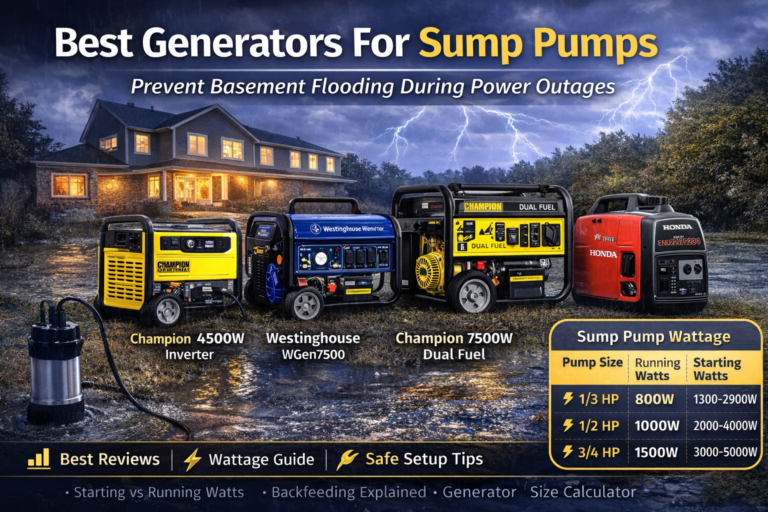
Sump pumps protect homes from flooding but require significant surge power.
Typical demand:
• 800 running watts
• 1500 starting watts
See: Generator for Sump Pump
Window Air Conditioners
Small AC units may require:
• 1200 running watts
• 2000+ starting watts
Central air conditioners can require 3,500–6,000 starting watts, which dramatically increases generator size requirements.
Example Emergency Setup
Many homeowners prioritize just a few critical appliances during outages.
Typical emergency setup:
• refrigerator
• microwave
• lights
• internet/router
• sump pump
• phone charging
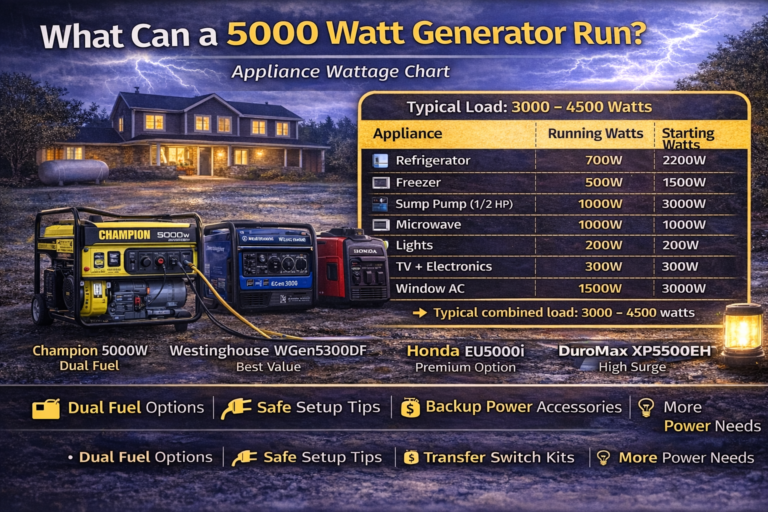
This setup usually requires 3000–4000 running watts, making a 5000 watt generator a very practical choice for many 1500 sq ft homes.
See also:
• What Can a 5000 Watt Generator Run
• Appliance Wattage Chart
Estimate Your Generator Size
The easiest way to determine the correct generator size is by adding up the wattage of the appliances you plan to run.
Steps:
1️⃣ List essential appliances
2️⃣ Add their running watts
3️⃣ Include starting watt surge appliances
4️⃣ Choose a generator with extra capacity
Use our Generator Load Worksheet or the Generator Load Calculator to estimate your home’s power needs quickly.
Links to Related Guides
For more generator sizing help, read these guides:
• Generator Sizing Guide
• Appliance Wattage Chart
• Starting vs Running Watts
• Generator Load Worksheet
These resources will help you estimate generator capacity more accurately and avoid overload problems.
FAQ
Can a 5000 watt generator run a 1500 sq ft house?
A 5000 watt generator can usually power essential appliances such as a refrigerator, lights, microwave, router, and small electronics in a 1500 sq ft home. However, it may not support large appliances like central air conditioning or electric water heaters.
What size generator is needed to run a refrigerator and freezer?
Most refrigerator and freezer combinations require 1500–2500 running watts and up to 3000–4000 starting watts. A 4000–6000 watt generator is usually sufficient for this setup.
How many watts does a typical house use during an outage?
Most homes running only essential appliances require 3000–5000 running watts during a power outage. Larger systems like air conditioners, well pumps, or electric dryers increase this requirement.
Is square footage the best way to size a generator?
No. Generator sizing should be based on appliance wattage, not house size. Square footage only provides a rough guideline.
What appliances use the most power in a home?
The largest household electrical loads usually include:
• central air conditioning
• electric water heaters
• well pumps
• electric dryers
• electric furnaces
These appliances can significantly increase the generator size needed for whole-house backup.
Conclusion
Choosing the correct generator size for a 1,500 square foot house requires understanding the electrical demands of your essential appliances. Most homeowners only need 4,000–6,000 watts to run refrigerators, lights, and small appliances during outages, while larger appliances may require generators in the 7,500–10,000 watt range.
By calculating both running watts and starting watts, homeowners can select a generator that provides reliable backup power without overloading the system.
For a complete breakdown of generator capacity and appliance loads, visit our Generator Sizing Guide and use the Generator Load Calculator to estimate your exact power needs.