
Installation Insight
Where you place a generator is just as important as the generator you buy. In our generator placement guide, we show how improper placement can lead to dangerous carbon monoxide buildup, electrical hazards, and even code violations.
Most generator manufacturers require specific placement distances, mounting surfaces, and ventilation clearances to ensure the generator operates safely during outages. A properly installed generator pad also protects the equipment from vibration, moisture, and long-term structural damage.
Introduction
Generators provide reliable backup power during outages, but installing them in the correct location is essential for safety and proper operation. Generator placement affects everything from exhaust ventilation to electrical wiring and local building code compliance.
In this guide we’ll explain generator pad requirements, safe generator placement distances, and the best surfaces for installing portable and standby generators.
If you’re planning a full standby system, see our Generator Installation Requirements Guide.
Quick Answer
Where Should a Generator Be Placed?
Most generator installation guidelines recommend:
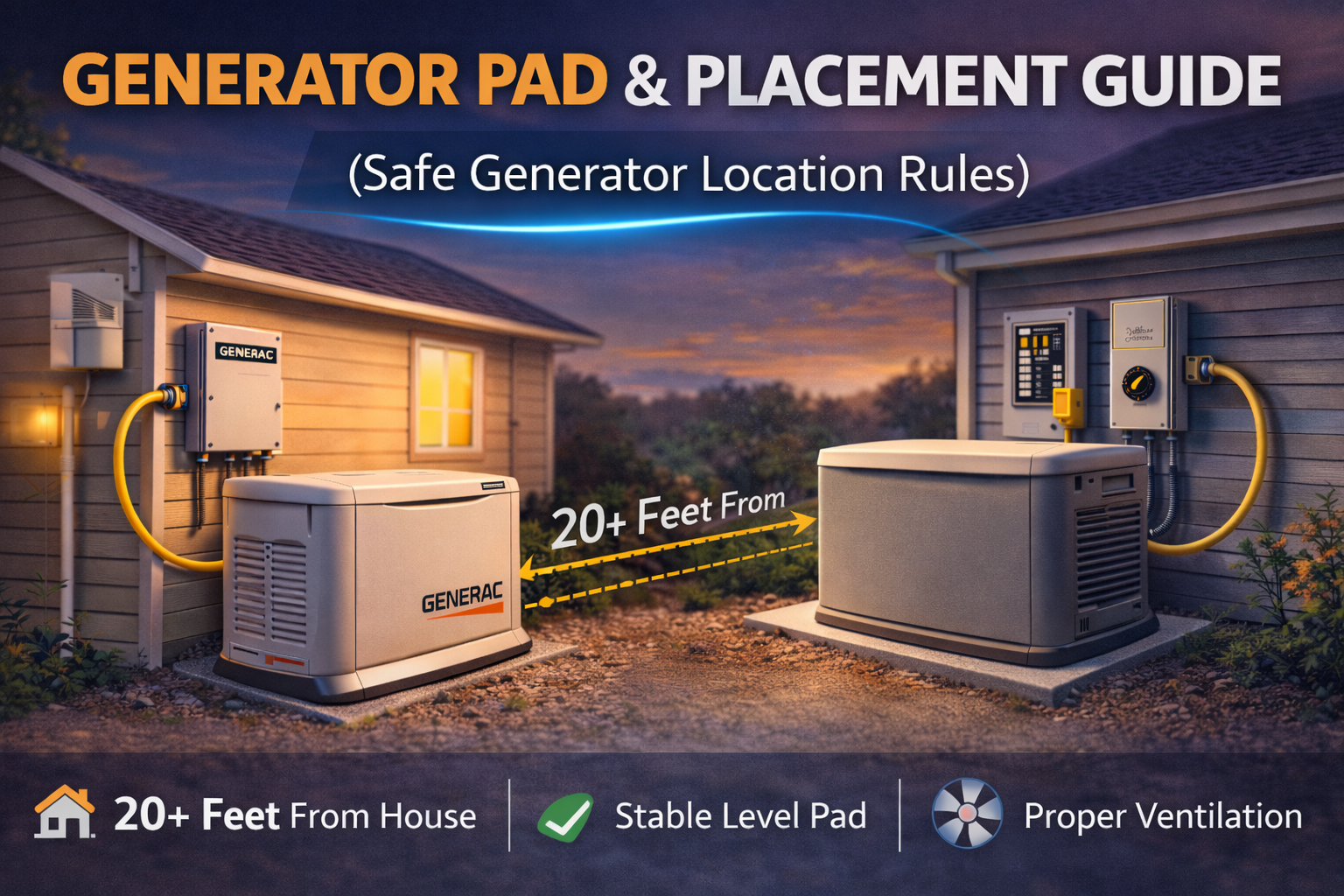
• at least 20 feet from the house
• positioned away from doors, windows, and vents
• installed on a stable generator pad such as concrete or composite
• located where exhaust flows away from the home
These placement rules help prevent carbon monoxide exposure and protect generator equipment.
Generator Placement Overview
| Placement Factor | Recommended Guideline |
|---|---|
| Distance From House | 20 feet preferred |
| Surface Type | Concrete or composite pad |
| Ventilation | Exhaust directed away from building |
| Elevation | Above ground water level |
| Clearance | At least 3 feet on all sides |
Proper placement ensures safe operation and long generator lifespan.
Why Generator Placement Matters
Generator placement affects both safety and performance.
Incorrect placement can cause:
• carbon monoxide exposure
• overheating from poor airflow
• electrical wiring problems
• noise issues near windows or living areas
Following placement guidelines ensures generators operate safely during extended outages.
Learn more in our Generator Safety Guide.
Generator Pad Requirements
Generators should always be installed on a solid, level pad.
The generator pad serves several purposes:
• stabilizes the generator
• reduces vibration
• protects the unit from moisture
• prevents shifting during operation
Common generator pad materials include:
Concrete Pads
Concrete is the most common installation surface for standby generators.
Advantages:
• strong and durable
• weather resistant
• stable for heavy generators
Composite Generator Pads
Many modern standby generators include pre-formed composite pads.
Benefits include:
• lightweight installation
• corrosion resistance
• easier setup
These pads are often used for residential standby generator systems.
Generator Distance Requirements
Placement distance is one of the most important safety rules.
Most manufacturers recommend generators be placed:
• 20 feet from doors and windows
• 5 feet from exterior walls (minimum clearance)
• away from vents and air intake openings
These distances help prevent exhaust gases from entering the home.
Generator Ventilation Requirements
Generators produce exhaust gases that must be safely dispersed.
Placement should ensure:
• unobstructed airflow
• exhaust directed away from the home
• no enclosure trapping exhaust gases
Portable generators should never be operated inside garages or enclosed spaces.
Example Generator Installation Layout
A typical standby generator installation includes:
• standby generator mounted on pad
• automatic transfer switch
• fuel connection (natural gas or propane)
• electrical panel integration
When a power outage occurs:
- the transfer switch detects the outage
- the generator starts automatically
- electricity is restored to the home
Learn more in Generator Transfer Switch Installation.
Common Generator Placement Mistakes
Improper generator placement can create serious hazards.
Common mistakes include:
• placing generators too close to windows
• operating generators inside garages
• installing generators on uneven ground
• blocking generator ventilation
Avoiding these mistakes improves both safety and generator performance.
Portable Generator Placement Tips
Portable generators should be placed:
• outdoors only
• at least 20 feet from the house
• on flat ground
• protected from rain using generator tents or covers
These precautions reduce carbon monoxide risk and equipment damage.
Related Guides
If you’re planning a generator installation, these guides may help:
• Generator Installation Requirements
• Generator Safety Guide
• Generator Transfer Switch Installation
• Interlock vs Transfer Switch
• What Size Generator Do I Need
These resources explain generator sizing, installation, and safe electrical integration.
FAQ
How far should a generator be from a house?
Most safety guidelines recommend placing generators at least 20 feet away from doors, windows, and vents.
What should a generator sit on?
Generators should sit on a level concrete or composite pad to prevent vibration and movement.
Can generators be placed next to a house?
Some standby generators can be installed closer than 20 feet, but manufacturer guidelines and local codes must be followed.
Do generators require a concrete pad?
Not always. Some standby generators include composite pads, but many installations use concrete for stability.
Can portable generators sit on grass?
It is better to place generators on solid, level surfaces such as concrete, gravel, or generator pads.
Conclusion
Proper generator pad installation and safe placement are essential for reliable backup power. Installing generators on stable surfaces and maintaining safe distances from buildings helps prevent carbon monoxide exposure, improves airflow, and protects generator equipment.
Following manufacturer guidelines and local installation codes ensures your generator system operates safely when power outages occur.
For more information on generator setup and electrical integration, see our Generator Installation Requirements Guide.