
Backup Power Insight
Review our portable generator sizing guide. We know that choosing the correct portable generator size is one of the most important decisions when preparing for power outages. Many homeowners either purchase generators that are too small to run essential appliances or overspend on generators that provide far more power than needed.
Understanding generator wattage requirements, starting power, and appliance loads allows homeowners to select a generator that can reliably power critical devices such as refrigerators, sump pumps, lights, and internet equipment.
Portable Generator Sizing Guide Introduction
Portable generators provide an affordable and flexible way to keep essential appliances running during power outages. However, determining the right generator size requires understanding how much electricity your appliances actually use.
Most appliances require two types of power:
• running watts – the electricity needed to keep an appliance operating
• starting watts – the surge of electricity needed when the appliance first starts
In this portable generator sizing guide, we’ll explain how to size a portable generator, provide appliance wattage examples, and show you how to estimate the generator size required for your home.
If you’re comparing generator types, see our Inverter vs Conventional Generator Guide.
Quick Answer
What Size Portable Generator Do You Need?
Most homes require the following generator sizes for emergency backup power:
• 2000–3000 watts – electronics, small appliances
• 4000–6000 watts – essential household appliances
• 7000–9000 watts – multiple appliances during outages
• 10,000+ watts – heavy loads or large homes
Many homeowners choose 5000–7500 watt portable generators to run essential appliances during outages.
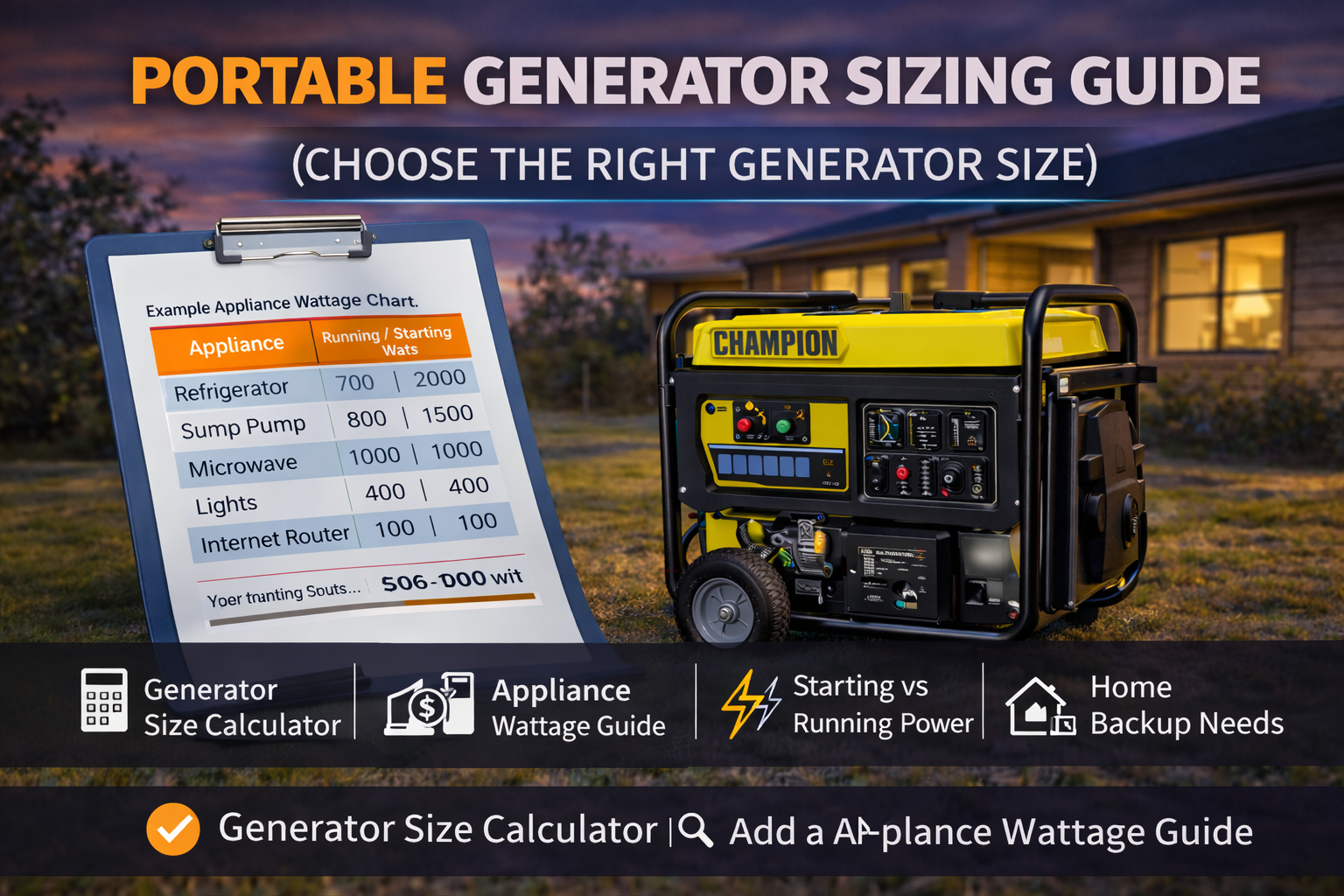
Example Appliance Load Chart
| Appliance | Running Watts | Starting Watts |
|---|---|---|
| Refrigerator | 700 | 2000 |
| Sump Pump | 800 | 1500 |
| Microwave | 1000 | 1000 |
| Lights | 400 | 400 |
| Internet Router | 100 | 100 |
Estimated running load:
3,000 watts
Recommended generator size:
5000–7500 watts
Why Starting Watts Matter
Appliances that use electric motors require extra power when they first start.
Examples include:
• refrigerators
• sump pumps
• air conditioners
• power tools
For example:
A refrigerator may require 700 running watts, but it can briefly require 2000 watts when the compressor starts.
If a generator cannot handle this surge, the generator may overload or trip its breaker.
👉 Learn more in our Starting vs Running Watts Guide.
Use Case Scenario
Example Emergency Power Setup
Many homeowners prioritize essential appliances during outages:
• refrigerator
• sump pump
• lights
• microwave
• internet router
This setup typically requires 3000–4000 running watts, which makes a 5000–7500 watt generator a practical choice.
👉 See our 7500 Watt Generator Guide to learn more.
Portable Generator Sizing Calculator
Use this calculator to total your appliance wattage, account for startup surge, and estimate the portable generator size you need for backup power.
Portable Generator Sizing Calculator
Add the appliances you want to run during an outage. This tool estimates your total running watts, surge watts, and a recommended generator size.
Appliances
| Appliance | Running W | Starting W | Qty | Remove |
|---|
Results
Note: These are planning estimates only. Actual appliance startup loads vary by model and age. Always check your appliance labels or manufacturer specs for best accuracy.
To explore generator options, see our Best Portable Generators Guide.
Generator Size Recommendations
| Generator Size | Typical Use |
|---|---|
| 2000W | Electronics and camping |
| 3000W | Small appliances |
| 5000W | Essential home appliances |
| 7500W | Multiple appliances |
| 10,000W | Large homes or heavy loads |
Portable generators in the 7500 watt range are one of the most popular sizes for emergency home backup.
Generator Safety Considerations
Portable generators must always be operated safely.
Important safety guidelines include:
• operate generators outdoors only
• place generators 20 feet from the house
• avoid running generators near windows or vents
• use heavy-duty extension cords
👉 See our Generator Safety Guide for more information.
Related Guides
If you’re planning a portable generator setup, these guides may help:
• Best Portable Generators
• 7500 Watt Generator Guide
• Inverter vs Conventional Generator
• Starting vs Running Watts Guide
• Dual Fuel Generator Guide
You can also explore the Portable Generators Hub for more buying guides and generator comparisons.
FAQ
What size portable generator is best for home backup?
Most homes use 5000–7500 watt generators to power essential appliances during outages.
Can a portable generator run a house?
Portable generators can power essential appliances but usually cannot power the entire house.
How do I calculate generator size?
Add the running wattage of all appliances you want to power and choose a generator that can handle starting surge loads.
Is a 7500 watt generator enough?
Yes, a 7500 watt generator can run several essential appliances simultaneously.
Conclusion
Choosing the correct portable generator size ensures your generator can safely power essential appliances during outages. By calculating running watts and accounting for starting surge loads, homeowners can select a generator that provides reliable backup power without overspending.
For generator recommendations and comparisons, see our Best Portable Generators Guide.