
Introduction
Choosing the right backup power system can be confusing, especially when deciding between a solar vs gas generator. Both options provide electricity during outages, but they work very differently and are designed for different situations.
Some homeowners prefer solar generators for their quiet operation and renewable energy, while others rely on gas generators for higher power output and longer runtime. Understanding the differences between these two backup power solutions can help you choose the system that best fits your needs.
In this guide, we’ll compare solar generators vs gas generators, explain how each type works, and help you determine which option is better for emergency power, home backup, or portable use.
👉 For a complete breakdown of solar generators, see our Solar Generator Guide.
Quick Answer
Solar vs Gas Generator: Which Is Better?
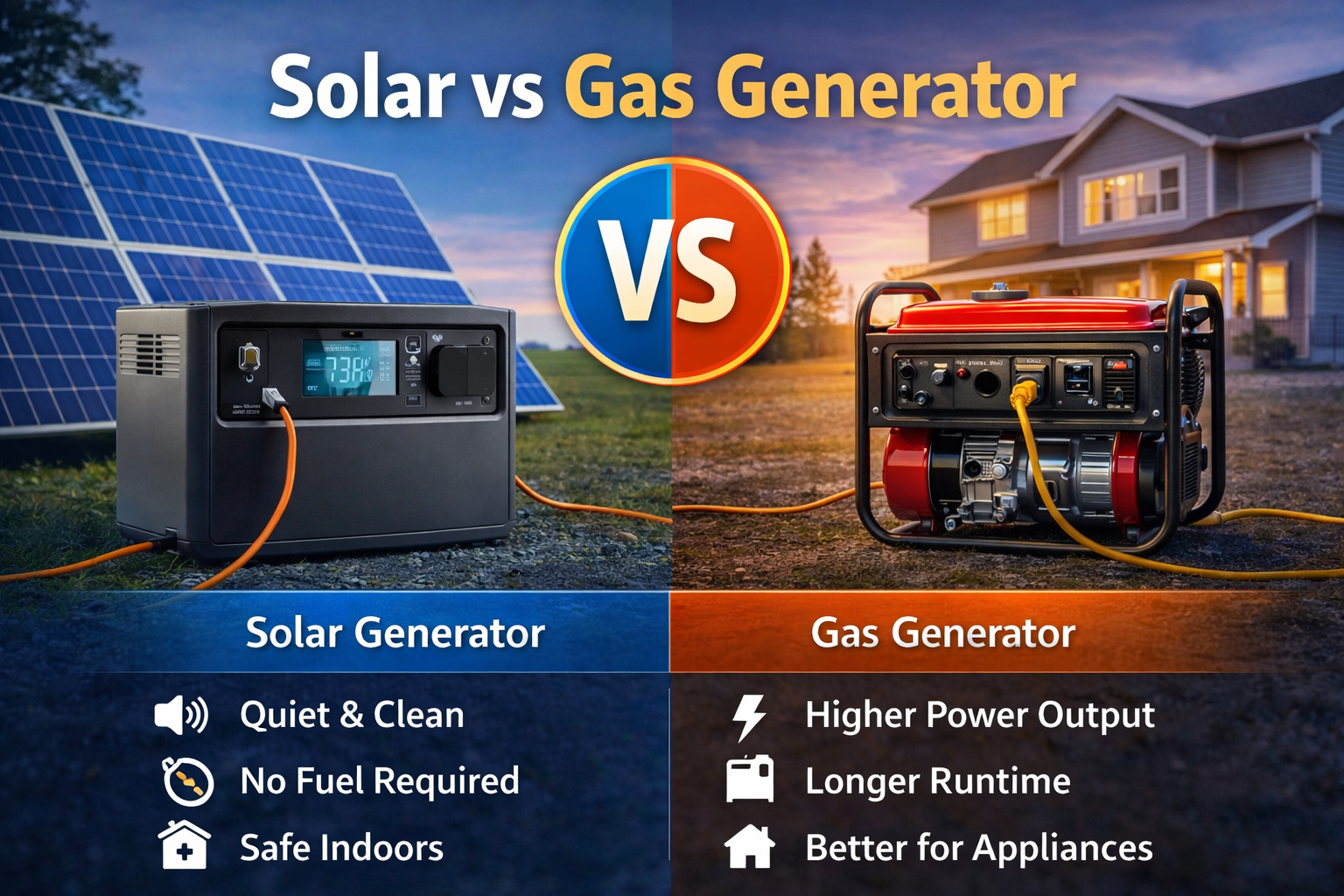
Both solar generators and gas generators provide backup power, but they serve different purposes.
Solar generators
• quiet operation
• no fuel required
• safe for indoor use
• ideal for electronics and small appliances
Gas generators
• higher power output
• longer runtime with fuel
• better for large appliances
• ideal for whole-home backup or heavy loads
Solar generators are usually best for portable power and small backup systems, while gas generators are better for high-wattage emergency power.
Solar vs Gas Generator Comparison Chart
| Feature | Solar Generator | Gas Generator |
|---|---|---|
| Power Source | Solar panels + battery | Gasoline |
| Noise | Very quiet | Loud |
| Fuel Cost | Free sunlight | Ongoing fuel cost |
| Maintenance | Minimal | Regular maintenance |
| Indoor Use | Safe | Not safe indoors |
| Power Output | Lower | Higher |
| Runtime | Limited by battery | Continuous with fuel |
What Is a Solar Generator?
A solar generator is a portable power system that stores electricity in a battery and can recharge using solar panels.
Typical components include:
• lithium battery
• inverter
• charge controller
• solar panel input
Solar generators produce clean electricity with no emissions, making them safe for indoor use and ideal for powering smaller devices during outages.
Common uses include:
• emergency backup power
• camping and RV use
• charging electronics
• small appliances like refrigerators
Battery type also matters for solar generators. Many newer models use LiFePO4 batteries, which offer longer lifespan and improved safety compared to traditional lithium-ion batteries.
Learn more: LiFePO4 vs Lithium Ion Batteries
What Is a Gas Generator?
A gas generator uses a gasoline-powered engine to produce electricity. These generators are widely used for emergency power during storms, construction sites, and whole-house backup systems.
Gas generators typically provide:
• higher wattage output
• longer runtime with fuel
• ability to power heavy appliances
However, they require fuel storage and must always be operated outdoors due to carbon monoxide risks.
Typical uses include:
• running refrigerators and freezers
• powering sump pumps
• operating power tools
• whole-house backup systems
Power Output Differences
One of the biggest differences between solar and gas generators is power capacity.
Most portable solar generators provide:
• 500–2000 watts of continuous power
Some larger units can reach:
• 3000–4000 watts
Gas generators, on the other hand, commonly provide:
• 5000–10000 watts
This allows them to power larger appliances such as:
• air conditioners
• well pumps
• electric heaters
See also: What Can a 5000 Watt Generator Run
Runtime and Fuel Considerations
Solar generators rely on battery storage, which means runtime depends on battery capacity.
Example:
A 1000Wh solar generator might run:
• a refrigerator for several hours
• small electronics for a full day
Gas generators can run continuously as long as fuel is available, making them useful during extended outages.
However, they require:
• fuel storage
• refueling
• engine maintenance
Example Emergency Setup
Many homeowners combine both systems for flexibility.
Example setup:
• solar generator for electronics and lighting
• gas generator for large appliances
Essential appliances during outages may include:
• refrigerator
• lights
• internet router
• phone charging
• sump pump
Solar generators are excellent for quiet overnight power, while gas generators can handle larger loads during the day.
Estimate Your Backup Power Needs
Before choosing a generator, calculate the wattage of the appliances you plan to run.
Steps:
1️⃣ List essential appliances
2️⃣ Add running watts
3️⃣ include startup surge appliances
4️⃣ choose a generator with sufficient power
Use our Appliance Wattage Chart or Generator Load Calculator to estimate your backup power requirements.
Related Guides
For more help choosing the right backup power system, see these guides:
• Generator Sizing Guide
• LiFePO4 vs Lithium Ion Batteries
• What Size Generator for a House
• Appliance Wattage Chart
These resources help you determine the best generator size and battery capacity for your home.
FAQ
Are solar generators better than gas generators?
Solar generators are better for quiet, clean, portable power. Gas generators are better for high power output and running large appliances.
Can a solar generator run a refrigerator?
Yes. Many solar generators can run a refrigerator for several hours depending on battery capacity and starting watt requirements.
Are gas generators more powerful?
Yes. Gas generators typically provide much higher wattage output than solar generators and can power larger appliances.
Are solar generators safe indoors?
Yes. Solar generators produce no emissions and are safe for indoor use.
Gas generators must always be used outdoors because they produce carbon monoxide.
Which generator is best for home backup?
For small appliances and electronics, solar generators are a good option. For powering multiple large appliances, a gas generator is usually more practical.
Conclusion
Both solar generators and gas generators provide reliable backup power, but they serve different purposes. Solar generators offer quiet operation, renewable energy, and safe indoor use, making them ideal for small appliances and portable power. Gas generators provide higher wattage output and longer runtime, making them better suited for heavy electrical loads and whole-home backup systems.
Before choosing a generator, calculate your appliance wattage and consider your power needs during outages to determine whether a solar generator, gas generator, or combination of both is the best solution.