Generator Not Producing Power? Here’s What to Check First
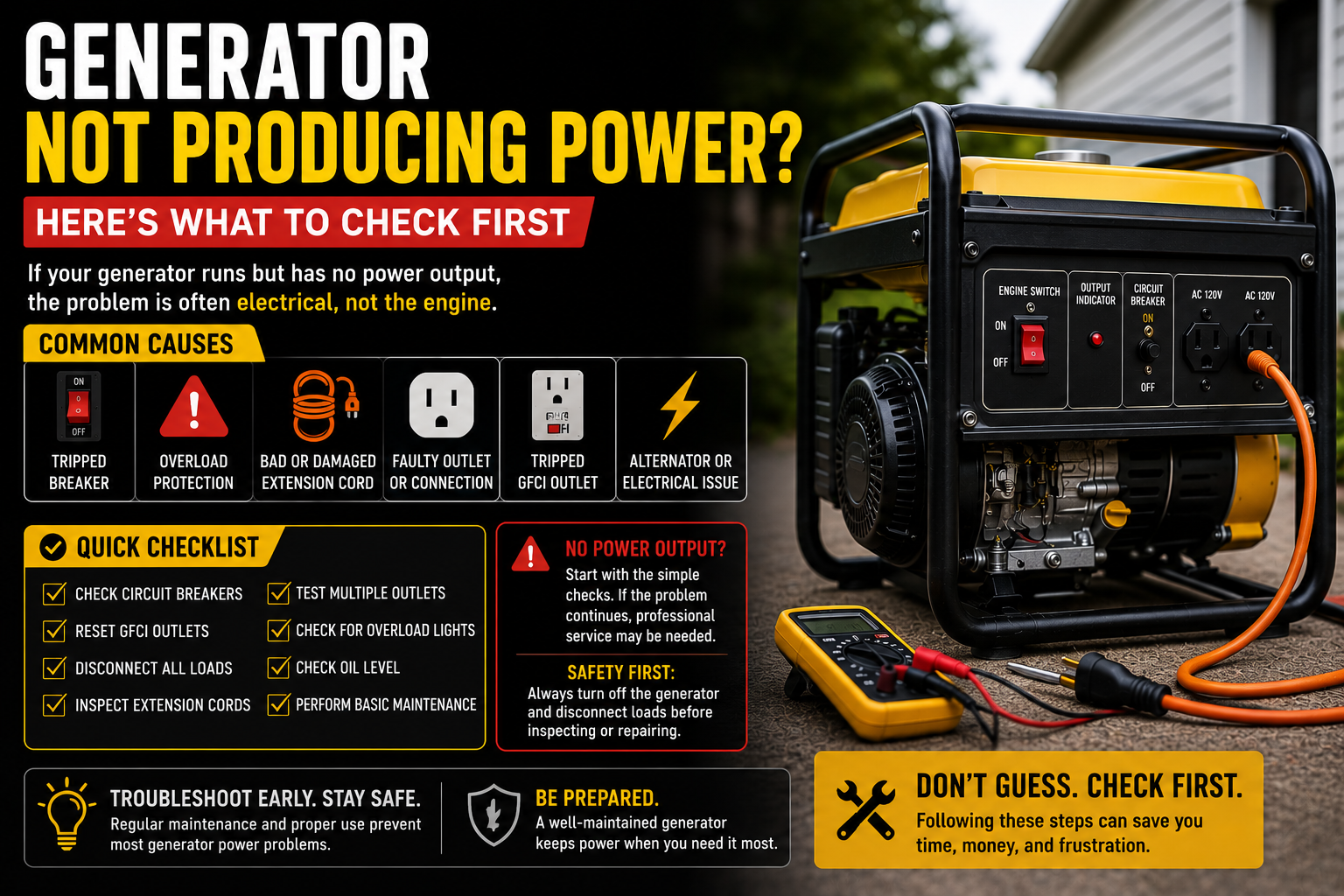
If your generator starts and runs normally but isn’t producing electricity, the problem is often caused by a tripped breaker, faulty outlet, overloaded circuit, damaged extension cord, or alternator issue. In many cases, the fix is surprisingly simple and can be diagnosed at home before paying for repairs.
A generator that runs but produces no power is frustrating, especially during an outage. The good news is that many power problems are electrical safety shutdowns or minor connection issues rather than major engine failures.
If you’re troubleshooting multiple problems, start with our Generator Troubleshooting Guide: Common Problems & Fixes for a complete breakdown of common generator failures.
Signs & Symptoms Your Generator Is Not Producing Power
Before troubleshooting, pay attention to what the generator is doing.
Common warning signs include:
- Generator engine runs normally but outlets have no power
- Appliances won’t turn on
- Breakers trip repeatedly
- Flickering or inconsistent power
- Warning lights appear
- Generator powers some devices but not others
- Extension cords feel hot or stop working
Understanding these symptoms can help narrow down the cause much faster.
Top Reasons Your Generator Is Not Producing Power
1. Tripped Circuit Breaker
Many generators have built-in breakers that automatically trip to prevent electrical damage.
Signs:
- Generator running normally
- Outlets suddenly stop working
Fix:
Locate the breaker and reset it after disconnecting electrical loads.
2. Overload Protection Activated
Too many appliances can trigger overload shutdown systems.
Signs:
- Generator runs but appliances lose power
- Overload light appears
Fix:
Reduce appliance load and reconnect devices gradually.
Related: Generator Overload Warning: Causes, Fixes & Prevention
3. Faulty or Damaged Extension Cord
Undersized or damaged cords may prevent power delivery.
Signs:
- Cord feels hot
- Power cuts in and out
Fix:
Switch to a heavy-duty generator-rated extension cord.
Related: Best Generator Extension Cords
4. Bad Outlet or Loose Connection
Sometimes the issue is the outlet—not the generator.
Signs:
- One outlet works while another doesn’t
Fix:
Test multiple outlets and inspect plugs for damage.
5. GFCI Outlet Tripped
Some generators include GFCI-protected outlets.
Signs:
- No power from protected outlets
Fix:
Press the reset button on the outlet.
6. Low Voltage Output
A struggling generator may produce weak or unstable power.
Signs:
- Lights flicker
- Appliances run poorly
Fix:
Reduce load and check maintenance items.
7. Automatic Voltage Regulator (AVR) Failure
The AVR helps regulate steady power output.
Signs:
- Generator runs perfectly but no usable electricity
Fix:
Professional replacement may be required.
8. Damaged Alternator
The alternator creates electrical power.
Signs:
- Engine works normally
- No electrical output
Fix:
Professional diagnosis is usually needed.
9. Loose Internal Wiring
Vibration can loosen electrical connections over time.
Signs:
- Intermittent power
Fix:
Inspect visible connections if safe to do so.
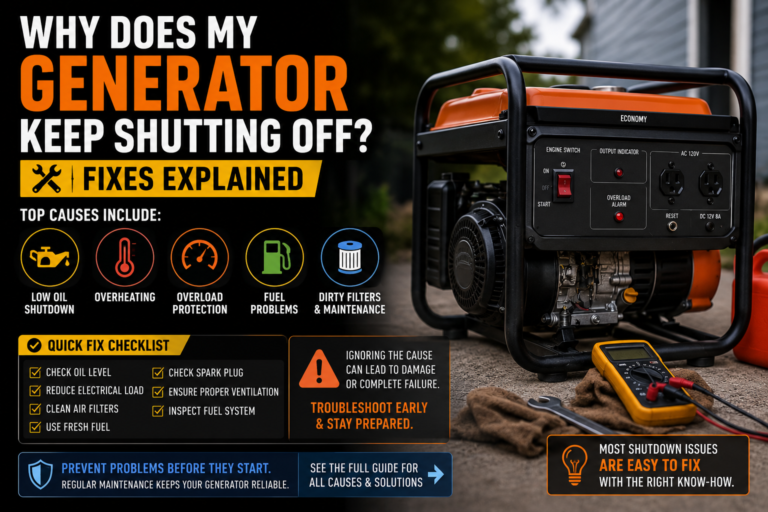
10. Low Oil or Protection Mode
Some generators reduce performance or activate protection systems.
Signs:
- Warning lights
- Sudden power loss
Fix:
Check oil level and restart.
Related: Why Does My Generator Keep Shutting Off? (Fixes Explained)
11. Dirty Air Filter or Poor Maintenance
Poor engine performance can affect power generation.
Signs:
- Rough running
- Weak electrical output
Fix:
Replace filters and perform maintenance.
Related: Generator Maintenance Checklist to Prevent Breakdowns
12. Internal Electrical Failure
Sometimes deeper electrical components fail.
Signs:
- Persistent no-power issue
Fix:
Professional repair may be necessary.
Step-by-Step Fixes
Before calling for repairs, follow this checklist.
Step 1: Check Circuit Breakers
Reset any tripped breakers.
Step 2: Disconnect All Appliances
Remove loads and restart the generator.
Step 3: Test Multiple Outlets
Try different generator outlets.
Step 4: Check Extension Cords
Swap cords if possible.
Step 5: Reset GFCI Outlets
Press reset buttons.
Step 6: Inspect Warning Lights
Check overload or oil indicators.
Step 7: Test Small Devices First
Plug in low-wattage devices before large appliances.
Step 8: Perform Basic Maintenance
Check oil, air filters, and spark plugs.
When to Call a Professional
Consider professional repair if:
- Generator runs but never produces power
- Burning smells appear
- Wiring damage is visible
- Breakers constantly trip
- Alternator or AVR problems are suspected
Stop using the generator immediately if sparks, smoke, or electrical burning smells occur.
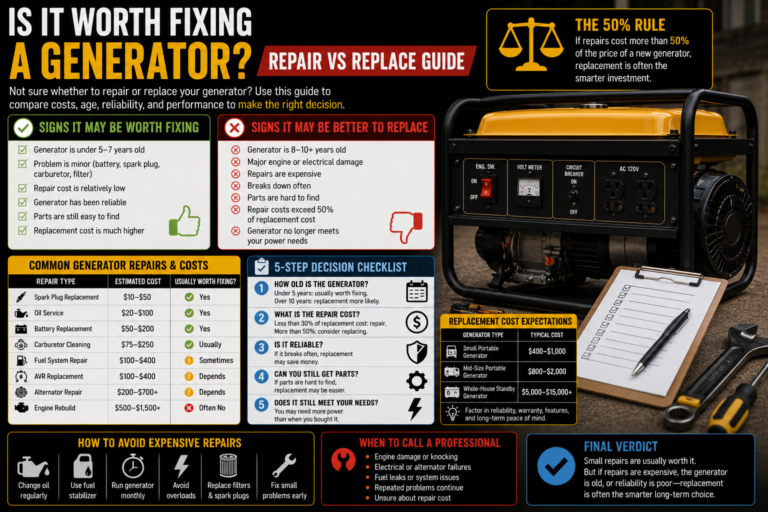
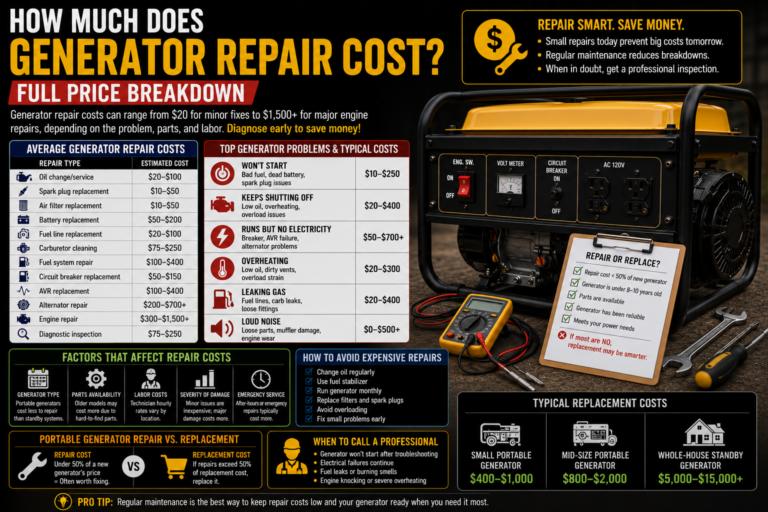
Repair Cost Expectations
Generator power problems range from simple fixes to larger electrical repairs.
| Problem | Estimated Cost |
|---|---|
| Breaker replacement | $50–$150 |
| Extension cord replacement | $30–$100 |
| AVR replacement | $100–$400 |
| Alternator repair | $200–$700+ |
| Electrical diagnostics | $75–$250 |
If major electrical components fail, replacement may sometimes be more cost-effective.
Related:
How Much Does Generator Repair Cost?
Is It Worth Fixing a Generator?
How to Prevent Generator Power Problems
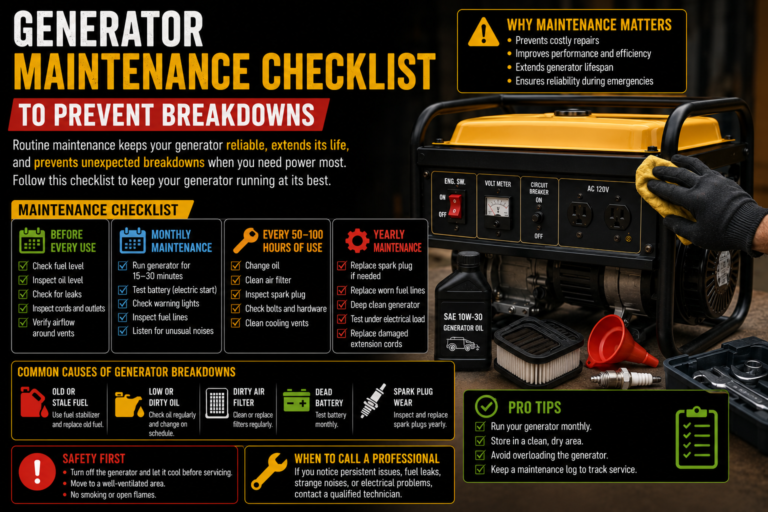
Regular maintenance helps prevent no-power situations.
- Avoid overloading circuits
- Use heavy-duty extension cords
- Test generators monthly
- Replace worn plugs and filters
- Keep oil levels maintained
- Protect outlets from moisture
Related: Generator Maintenance Checklist to Prevent Breakdowns
Recommended Maintenance Products
Helpful products for preventing power issues:
- Heavy-duty generator extension cords
- Generator watt meters
- Replacement circuit breakers
- Generator oil kits
- Spark plugs
- Fuel stabilizer
- Multimeters for testing power output
You can also browse our guide to the Best Generator Maintenance Products.
Related Troubleshooting Articles
Still troubleshooting? These guides may help:
- Generator Troubleshooting Guide: Common Problems & Fixes
- Generator Won’t Start? 12 Common Causes & Fixes
- Why Does My Generator Keep Shutting Off? (Fixes Explained)
- Generator Overload Warning: Causes, Fixes & Prevention
- Generator Overheating: Causes, Fixes & Prevention
Frequently Asked Questions
Why is my generator running but not producing electricity?
The most common causes are tripped breakers, overload protection, faulty outlets, bad extension cords, or alternator problems.
Can a generator run without producing power?
Yes. The engine can operate normally while electrical components fail.
Why does my generator have power at some outlets but not others?
A bad outlet, tripped breaker, or GFCI reset issue may be the cause.
Can overload protection stop a generator from producing power?
Yes. Overload protection often disconnects electrical output to prevent damage.
Is it expensive to fix a generator with no power?
Sometimes. Small fixes are inexpensive, but alternator or AVR repairs can cost several hundred dollars.
Final Verdict
If your generator is running but not producing power, don’t assume it’s completely broken. Many issues are caused by tripped breakers, overloads, damaged cords, or minor maintenance problems that can be fixed quickly.
Start with simple troubleshooting first. If power still doesn’t return, internal electrical components may need professional repair—or it may be time to consider a replacement generator.