Generator Carbon Monoxide Safety: Hidden Dangers Explained
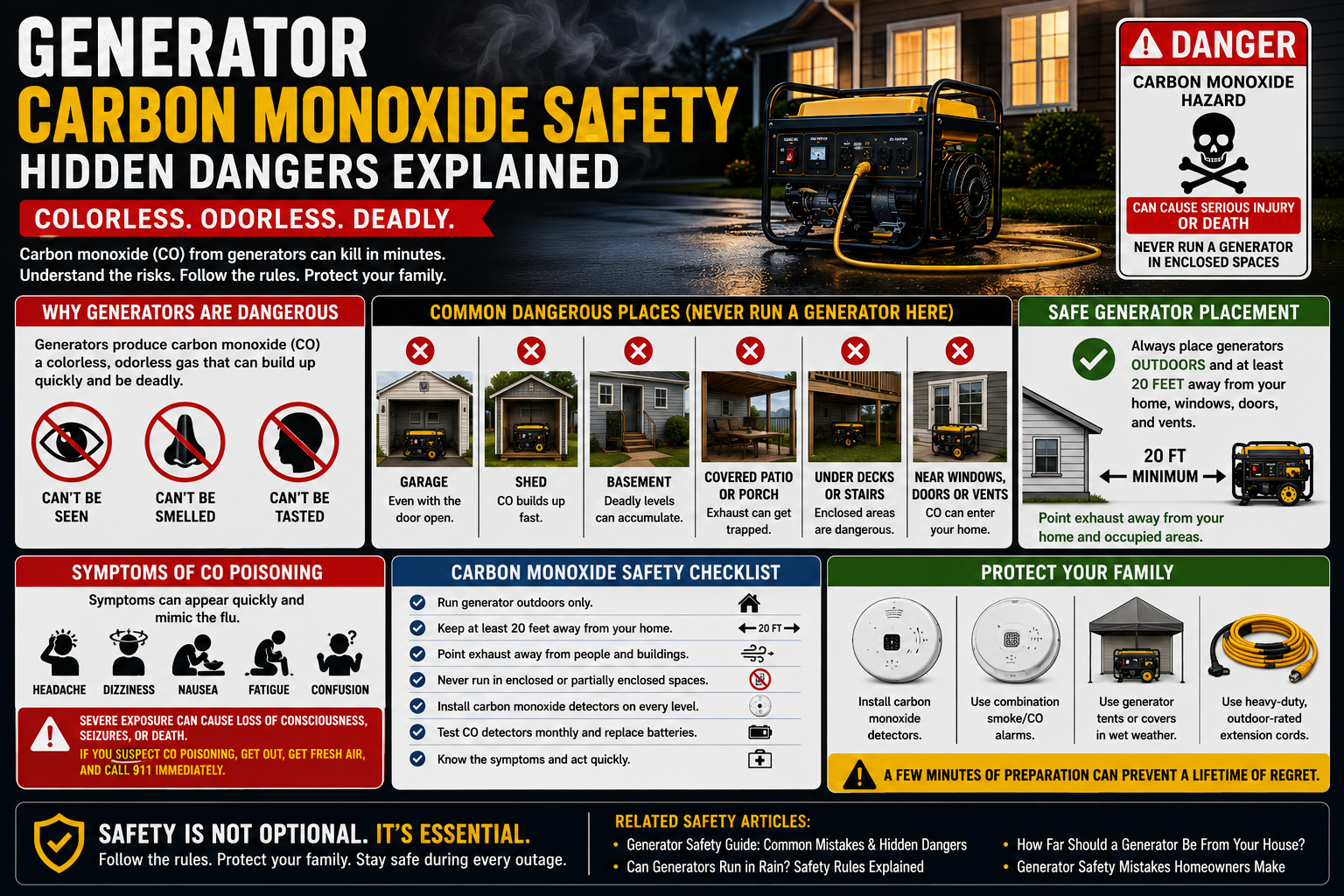
Carbon monoxide (CO) poisoning is one of the deadliest risks associated with generator use. Every year, people are seriously injured or killed because generators were operated too close to homes, inside garages, or in poorly ventilated areas.
The most dangerous part? Carbon monoxide is colorless, odorless, and impossible to see or smell.
Even a small portable generator can produce enough carbon monoxide to become deadly within minutes.
The good news is that carbon monoxide poisoning is almost completely preventable when generators are used correctly.
If you’re learning generator safety basics, start with our Generator Safety Guide: Common Mistakes & Hidden Dangers for a complete overview.
Quick Answer
Never operate a generator inside your home, garage, basement, shed, crawlspace, or near windows and doors. Always place generators outdoors and at least 20 feet away from your home whenever possible.
Install battery-powered or hardwired carbon monoxide detectors near sleeping areas and test them regularly.
Signs of Carbon Monoxide Exposure
Carbon monoxide poisoning symptoms often resemble the flu.
Early warning signs include:
- Headache
- Dizziness
- Nausea
- Fatigue
- Weakness
- Confusion
- Shortness of breath
Severe exposure may cause:
- Vomiting
- Loss of coordination
- Loss of consciousness
- Seizures
- Death
If multiple people in the home suddenly feel sick during a power outage, leave the house immediately and call emergency services.
Why Are Generators So Dangerous?
Generators burn gasoline, propane, natural gas, or diesel fuel.
During operation they produce exhaust gases containing carbon monoxide.
Unfortunately:
- CO cannot be seen.
- CO cannot be smelled.
- CO cannot be tasted.
People often don’t realize they are being exposed until symptoms become severe.
Portable generators can produce carbon monoxide levels many times higher than vehicle exhaust.
Top Carbon Monoxide Safety Mistakes Homeowners Make
1. Running a Generator Inside a Garage
This is one of the most common and dangerous mistakes.
Even with the garage door open:
- Carbon monoxide can accumulate quickly.
- Exhaust gases can enter the home.
- Deadly concentrations may develop within minutes.
Never operate a generator inside a garage.
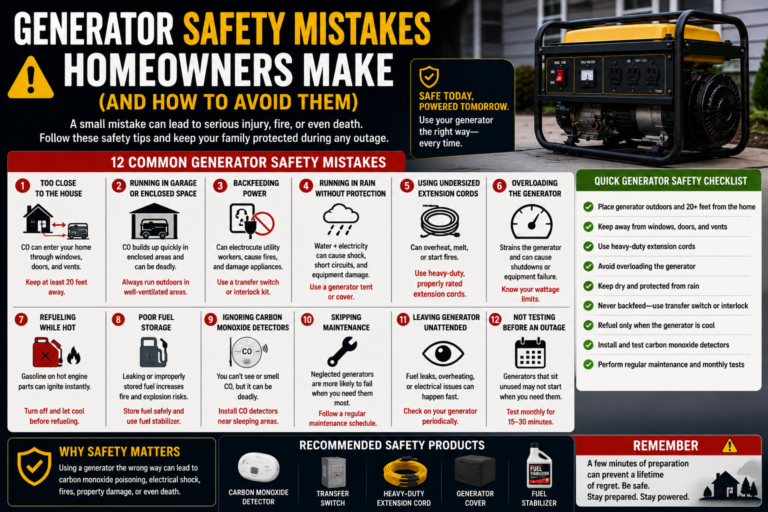
Related: Generator Safety Mistakes Homeowners Make (And How to Avoid Them)
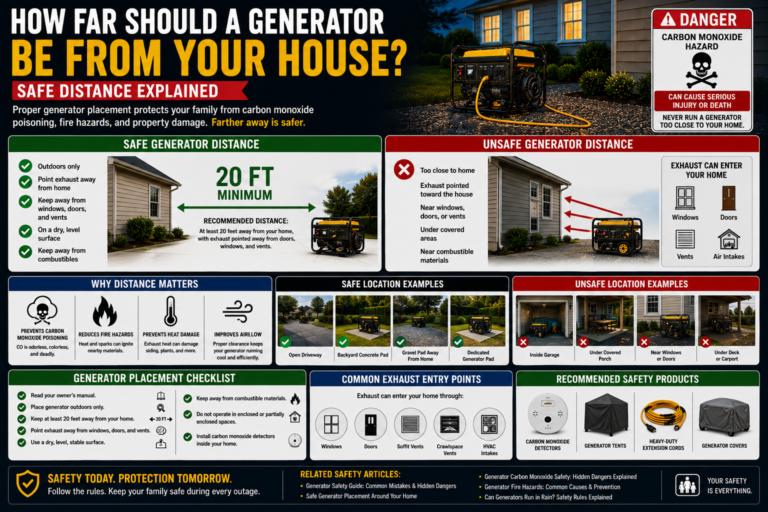
2. Running a Generator Too Close to the House
Carbon monoxide can easily enter through:
- Doors
- Windows
- Soffit vents
- Attic vents
- Crawlspace vents
The closer the generator is to the home, the greater the risk.
Safety Tip:
Keep generators at least 20 feet away whenever possible.
Related: How Far Should a Generator Be From Your House?
3. Operating Under Covered Patios or Porches
Semi-enclosed spaces trap exhaust gases.
Dangerous areas include:
❌ Covered patios
❌ Breezeways
❌ Carports
❌ Porches
❌ Under decks
Always operate generators in open outdoor areas.
4. Using a Generator Inside a Shed
Many homeowners place generators inside sheds to protect them from weather.
This is extremely dangerous.
Carbon monoxide can build quickly and leak into nearby living spaces.
Related: Can Generators Run in Rain? Safety Rules Explained
5. Ignoring Carbon Monoxide Detectors
Every home using a generator should have functioning CO detectors.
Install detectors:
✅ Near bedrooms
✅ On every level of the home
✅ According to manufacturer recommendations
Test alarms monthly.
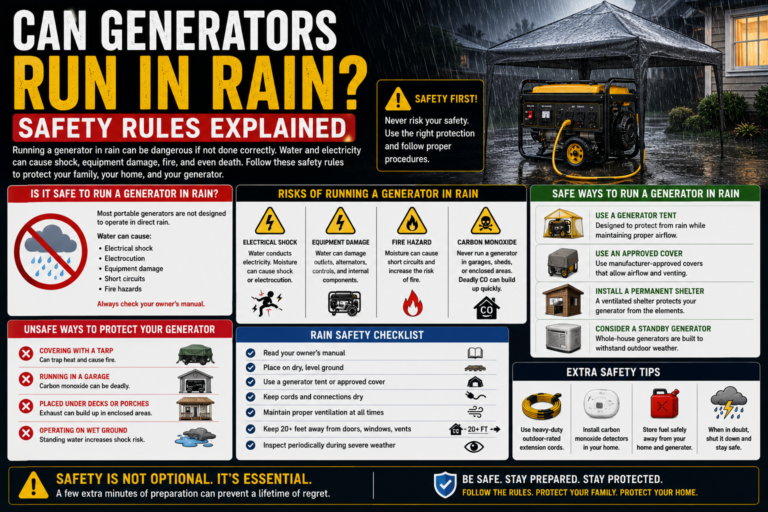
6. Moving a Generator Indoors During Rain
Rainstorms often tempt homeowners to move generators into garages or enclosed spaces.
Never do this.
Use:
- Generator tents
- Weatherproof covers
- Outdoor shelters designed for generators
Related: Can Generators Run in Rain? Safety Rules Explained
7. Leaving Windows Open Near the Generator
Open windows may pull exhaust gases directly into the home.
Always position generators so exhaust points away from:
- Doors
- Windows
- Air intakes
- HVAC equipment
Step-by-Step Carbon Monoxide Safety Checklist
Follow this checklist every time you operate a generator.
Step 1: Move Generator Outdoors
Never run generators indoors.
Step 2: Maintain Safe Distance
Keep generators at least 20 feet away from the home.
Step 3: Check Exhaust Direction
Point exhaust away from occupied areas.
Step 4: Install Carbon Monoxide Detectors
Verify detectors are working before an outage occurs.
Step 5: Test Detector Batteries
Replace batteries regularly.
Step 6: Avoid Enclosed Spaces
Never use generators in garages, sheds, or basements.
Step 7: Monitor Family Members
Watch for symptoms during extended outages.
What To Do If a Carbon Monoxide Alarm Sounds
If your carbon monoxide alarm activates:
- Turn off the generator immediately if safe to do so.
- Evacuate everyone from the home.
- Move to fresh air outdoors.
- Call emergency services.
- Seek medical attention if symptoms are present.
Never ignore a carbon monoxide alarm.
When to Seek Medical Help
Seek immediate medical attention if anyone experiences:
- Severe headache
- Confusion
- Vomiting
- Difficulty breathing
- Fainting
- Loss of consciousness
Carbon monoxide poisoning is a medical emergency.
Recommended Carbon Monoxide Safety Products
Helpful products for safer generator operation:
- Carbon monoxide detectors
- Combination smoke/CO detectors
- Generator tents
- Heavy-duty extension cords
- Generator covers
You can also browse our guide to the Best Generator Covers (Weather Protection).
Related Safety Articles
Continue learning generator safety:
- Generator Safety Guide: Common Mistakes & Hidden Dangers
- Generator Safety Mistakes Homeowners Make
- Can Generators Run in Rain? Safety Rules Explained
- Safe Generator Placement Around Your Home
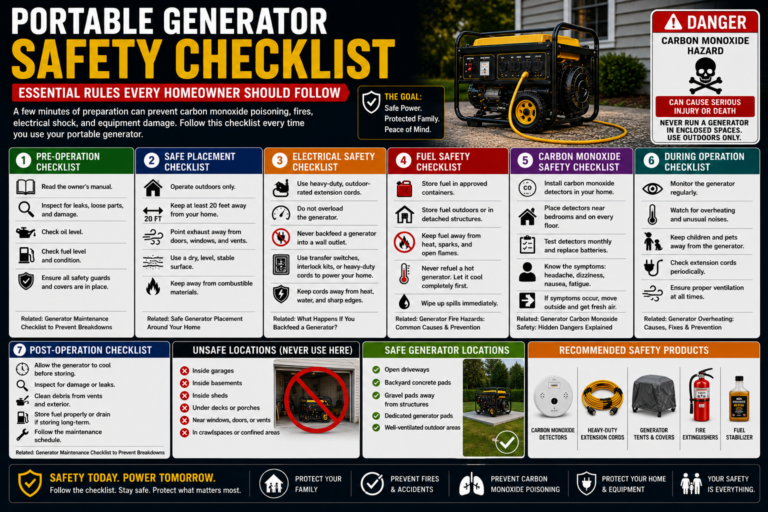
- Portable Generator Safety Checklist
Frequently Asked Questions
Can generator fumes enter a house?
Yes. Carbon monoxide can enter through windows, doors, vents, and other openings.
How far should a generator be from a house?
Most safety guidance recommends at least 20 feet away whenever possible.
Is it safe to run a generator in a garage with the door open?
No. Carbon monoxide can still build rapidly and enter the home.
Do I need a carbon monoxide detector if I own a generator?
Absolutely. Every home using a generator should have functioning CO detectors.
Can carbon monoxide poisoning happen quickly?
Yes. Dangerous levels can develop within minutes.
Final Verdict
Carbon monoxide poisoning is one of the most serious generator dangers homeowners face. The risk is invisible, odorless, and potentially deadly—but it is also highly preventable.
Always run generators outdoors, keep them far from the home, install carbon monoxide detectors, and never move generators indoors during bad weather.
When it comes to carbon monoxide, there are no safe shortcuts.