
Safe Generator Placement Around Your Home: Complete Safety Guide
Where you place your generator can make the difference between safe operation and a serious emergency. Poor generator placement can increase the risk of carbon monoxide poisoning, fires, electrical hazards, noise complaints, and equipment damage.
Unfortunately, many homeowners unknowingly place generators in dangerous locations during power outages.
The good news is that safe generator placement is simple once you understand a few basic rules.
This guide explains where generators should—and should not—be placed around your home.
If you’re learning generator safety basics, start with our Generator Safety Guide: Common Mistakes & Hidden Dangers for a complete overview.
Quick Answer
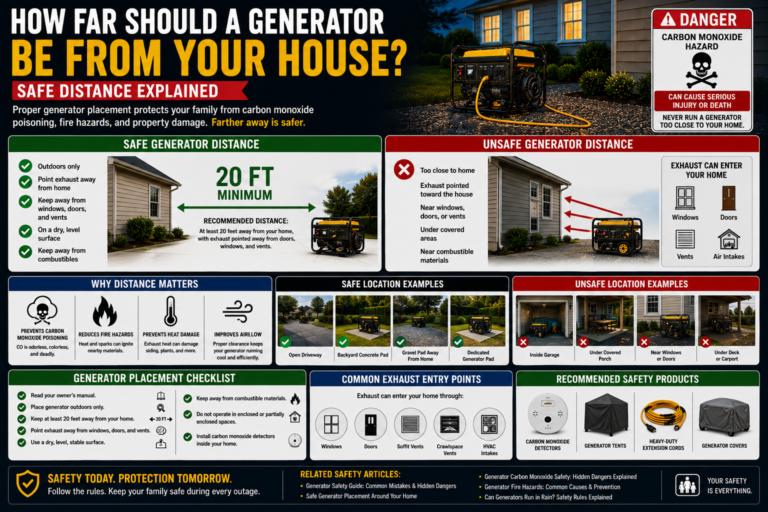
Generators should always be operated outdoors, in a dry, well-ventilated area, and at least 20 feet away from your home whenever possible.
The generator exhaust should always point away from:
- Doors
- Windows
- Vents
- Garage openings
- Occupied areas
Never run generators inside garages, sheds, basements, or enclosed spaces.
Warning Signs Your Generator Placement Is Unsafe
Look for these common warning signs:
- Generator located inside a garage
- Generator operating under a covered patio
- Generator less than 10–20 feet from the home
- Exhaust pointed toward windows or doors
- Generator sitting in standing water
- Fuel stored next to generator
- Generator near combustible materials
If any of these apply, relocate your generator immediately.
Top Generator Placement Mistakes
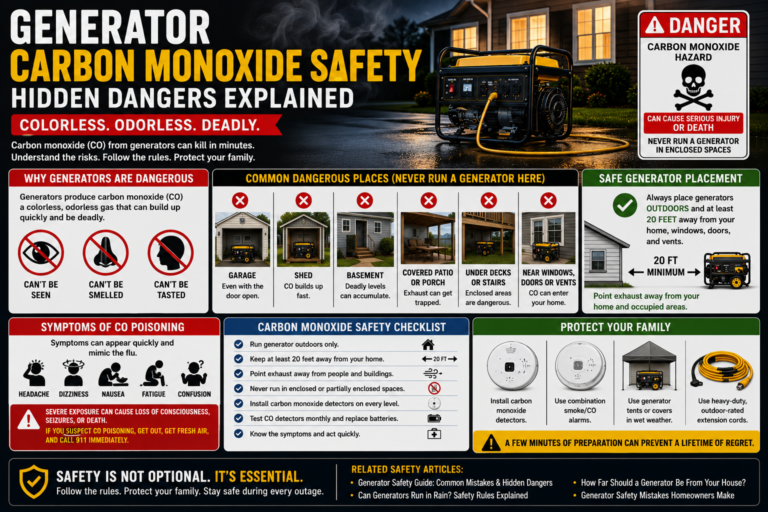
1. Running a Generator Inside a Garage
This is one of the most dangerous mistakes homeowners make.
Even with the garage door open:
- Carbon monoxide can accumulate rapidly
- Exhaust gases can enter the home
- Deadly conditions may develop within minutes
Never run a generator inside a garage.
Related: Generator Carbon Monoxide Safety: Hidden Dangers Explained
2. Placing a Generator Too Close to the House
Generators should never be placed directly outside windows or doors.
Carbon monoxide can enter through:
- Open windows
- Door gaps
- Attic vents
- Crawlspace vents
- HVAC intakes
As a general rule:
Place generators at least 20 feet away from the home whenever possible.
Related: How Far Should a Generator Be From Your House?
3. Operating Under Covered Patios or Porches
Covered outdoor spaces may trap dangerous exhaust gases.
Avoid operating generators:
❌ Under decks
❌ On covered porches
❌ In breezeways
❌ Under carports
Always choose open outdoor areas.
Related: Generator Carbon Monoxide Safety: Hidden Dangers Explained
4. Placing the Generator Near Combustible Materials
Generators produce heat and sparks.
Keep generators away from:
- Dry leaves
- Firewood
- Gas cans
- Mulch
- Grass clippings
- Flammable liquids
Related: Generator Fire Hazards: Common Causes & Prevention
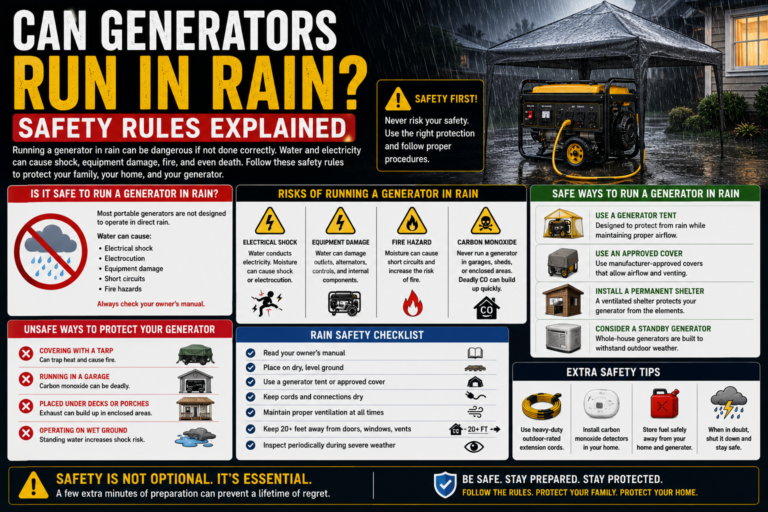
5. Operating in Wet Areas
Water and electricity create serious hazards.
Avoid:
- Standing water
- Flood-prone locations
- Wet ground
Use generator tents or approved weather protection if needed.
Related: Can Generators Run in Rain? Safety Rules Explained
6. Blocking Airflow Around the Generator
Generators require unrestricted airflow for cooling.
Blocked airflow may cause:
- Overheating
- Shutdowns
- Fire hazards
- Reduced lifespan
Maintain clearance around all sides of the generator.
Related: Generator Overheating: Causes, Fixes & Prevention
Where Should You Place a Generator?
A safe generator location should be:
✅ Outdoors only
✅ Dry and level
✅ At least 20 feet from the home
✅ Well ventilated
✅ Away from combustible materials
✅ Protected from flooding
✅ Accessible for refueling and maintenance
Safe Generator Placement Examples
Good Locations
✔ Open driveway area
✔ Backyard concrete pad
✔ Gravel pad away from the home
✔ Designated generator pad
Bad Locations
❌ Garage
❌ Basement
❌ Shed
❌ Covered porch
❌ Carport
❌ Near windows or doors
Step-by-Step Generator Placement Checklist
Before starting your generator:
Step 1: Move Generator Outdoors
Never operate indoors.
Step 2: Measure Distance
Aim for at least 20 feet from the home.
Step 3: Check Exhaust Direction
Point exhaust away from people and structures.
Step 4: Verify Ventilation
Choose an open area with good airflow.
Step 5: Remove Combustible Materials
Clear leaves, fuel containers, and debris.
Step 6: Inspect Ground Conditions
Use a dry, stable surface.
Step 7: Protect Against Weather
Use an approved generator tent or weather cover if necessary.
What About Whole-House Standby Generators?
Standby generators follow manufacturer and local code requirements.
Typical installation guidelines include:
- Concrete or composite pad installation
- Minimum clearance from structures
- Clearance from windows and vents
- Local code compliance
Always follow manufacturer instructions and local building codes.
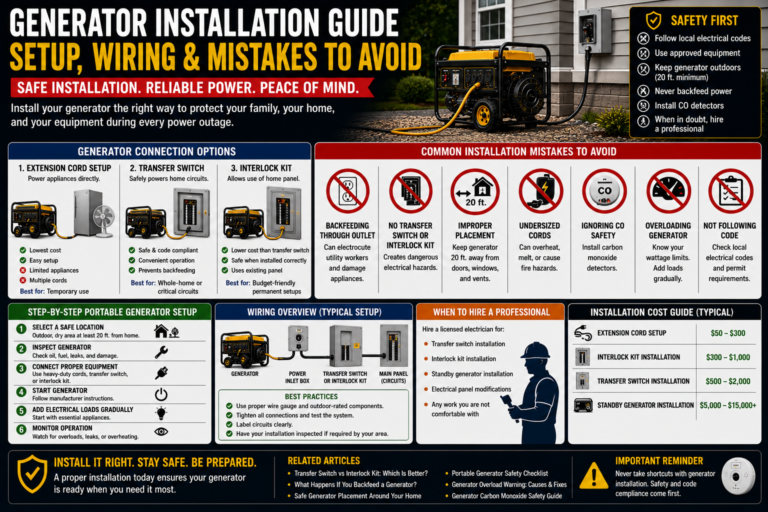
Related: Generator Installation Guide: Setup, Wiring & Mistakes to Avoid
When to Call a Professional
Consult a professional if:
- Installing a standby generator
- Unsure about local code requirements
- Installing a transfer switch
- Planning permanent generator placement
Professional installation ensures code compliance and safety.
Recommended Generator Safety Products
Helpful products for safer generator placement:
- Generator tents
- Generator covers
- Carbon monoxide detectors
- Heavy-duty extension cords
- Generator pads
- Fuel stabilizer
You can also browse our guide to the Best Generator Covers (Weather Protection).
Related Safety Articles
Continue learning generator safety:
- Generator Safety Guide: Common Mistakes & Hidden Dangers
- Generator Carbon Monoxide Safety: Hidden Dangers Explained
- Can Generators Run in Rain? Safety Rules Explained
- Generator Fire Hazards: Common Causes & Prevention
- Generator Safety Mistakes Homeowners Make
Frequently Asked Questions
How far should a generator be from a house?
Most safety recommendations suggest placing generators at least 20 feet away whenever possible.
Can I run a generator in my garage if the door is open?
No. Carbon monoxide can still accumulate and enter the home.
Can I run a generator under a covered porch?
No. Covered areas can trap dangerous exhaust gases.
What surface should a generator sit on?
A dry, level, stable surface such as concrete or gravel is recommended.
Can a generator sit next to the house?
No. Generators should be kept away from doors, windows, and vents.
Final Verdict
Safe generator placement is one of the most important steps homeowners can take during a power outage. Proper placement dramatically reduces the risks of carbon monoxide poisoning, fires, and equipment damage.
The rule is simple:
Operate generators outdoors, at least 20 feet away from the home, with exhaust pointed away from people and buildings.