Generator Fire Hazards: Common Causes & Prevention
Generators provide valuable backup power during outages, but they also introduce potential fire hazards if not used properly. Because generators combine fuel, heat, electricity, and moving engine parts, even small mistakes can quickly become dangerous.
Fortunately, most generator fires are completely preventable.
Understanding the common causes of generator fires—and how to avoid them—can help protect your family, home, and equipment during emergencies.
If you’re learning generator safety basics, start with our Generator Safety Guide: Common Mistakes & Hidden Dangers for a complete overview.
Quick Answer
The most common causes of generator fires include refueling hot generators, fuel leaks, overloaded extension cords, improper placement, poor maintenance, and electrical problems.
To reduce fire risk:
- Keep generators outdoors.
- Never refuel while running or hot.
- Use heavy-duty extension cords.
- Inspect fuel systems regularly.
- Perform routine maintenance.
Warning Signs Your Generator May Be a Fire Hazard
Watch for these warning signs:
- Strong gasoline smell
- Fuel leaks under the generator
- Hot or melting extension cords
- Burning odors
- Smoke during operation
- Frequent overload warnings
- Frayed electrical cords
- Excessive vibration
- Oil leaks
If you notice any of these issues, shut down the generator and investigate immediately.
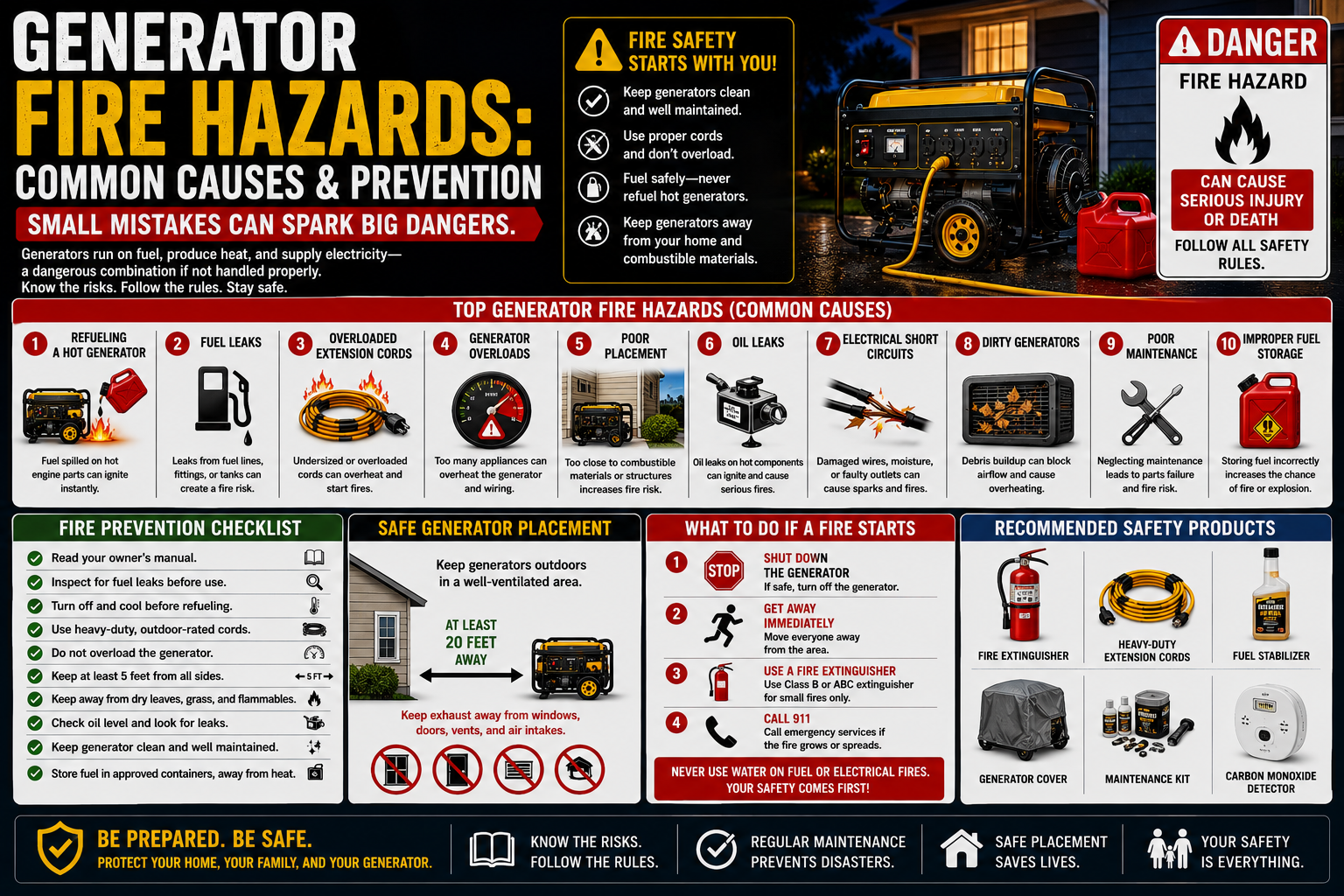
Top Generator Fire Hazards
1. Refueling a Hot Generator
One of the leading causes of generator fires is adding fuel while the generator is still hot.
Gasoline spilled onto hot engine components can ignite instantly.
Safety Rules:
✅ Turn off the generator.
✅ Allow it to cool completely.
✅ Refuel only in well-ventilated outdoor areas.
Never add fuel while the generator is running.
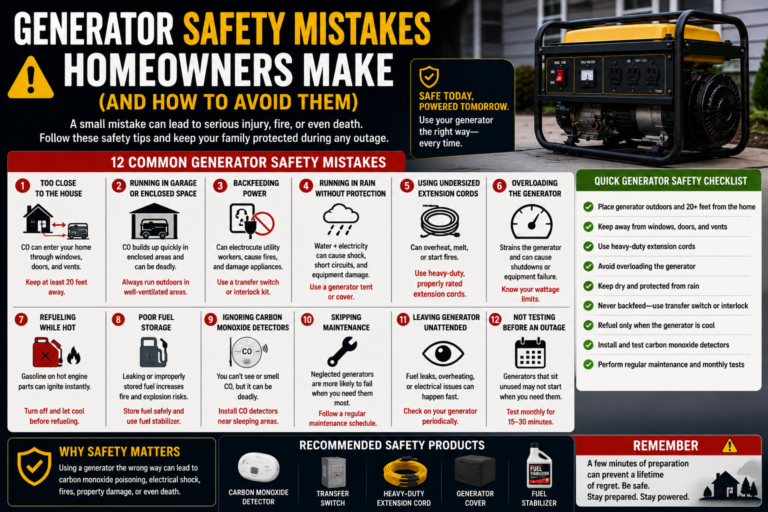
Related: Generator Safety Mistakes Homeowners Make (And How to Avoid Them)
2. Fuel Leaks
Fuel leaks create extremely dangerous conditions.
Common leak sources include:
- Cracked fuel lines
- Loose fittings
- Damaged fuel tanks
- Carburetor leaks
Even small leaks can ignite.
Inspect your generator regularly.
Related: Generator Leaking Gas: Causes, Risks & What to Do
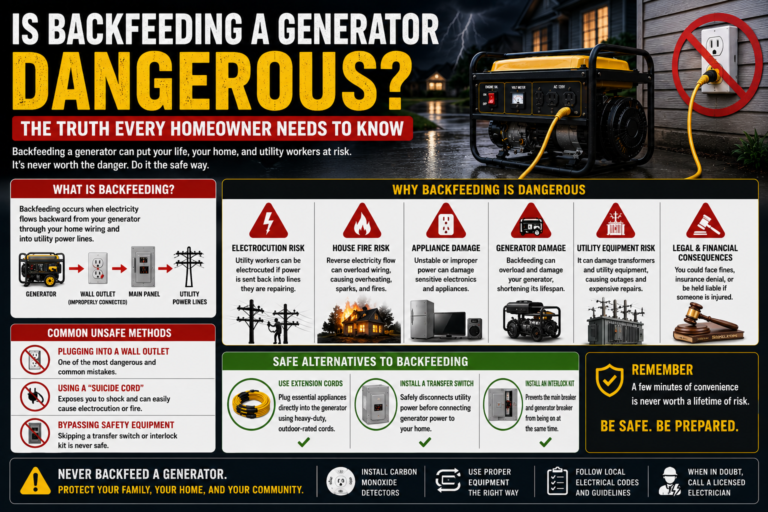
3. Overloaded Extension Cords
Undersized or overloaded cords can overheat and start fires.
Warning signs include:
- Hot cords
- Melted plugs
- Flickering power
- Burn marks
Always use heavy-duty generator-rated extension cords.
Related: Generator Extension Cord Size Chart
4. Generator Overloads
Trying to power too many appliances can overheat both the generator and connected wiring.
Common signs:
- Overload warning lights
- Repeated shutdowns
- Dimming lights
- Hot electrical connections
Know your generator’s wattage limits.
Related: Generator Overload Warning: Causes, Fixes & Prevention
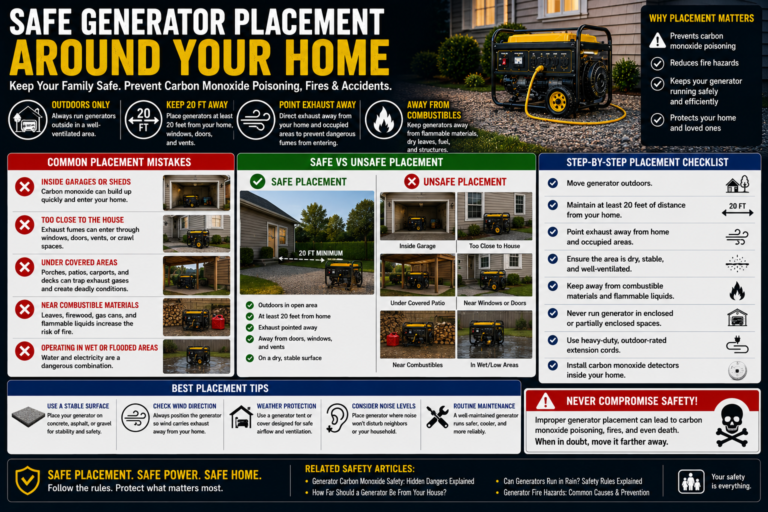
5. Poor Generator Placement
Generators placed too close to combustible materials increase fire risk.
Avoid operating near:
❌ Dry leaves
❌ Grass clippings
❌ Firewood
❌ Gas cans
❌ Flammable liquids
Always operate generators on stable, nonflammable surfaces.
Related: Safe Generator Placement Around Your Home
6. Oil Leaks
Oil leaks can ignite if oil contacts hot engine components.
Inspect regularly for:
- Drips
- Wet engine surfaces
- Low oil levels
Repair leaks promptly.
7. Electrical Short Circuits
Damaged wiring or moisture intrusion may create short circuits.
Common causes include:
- Worn cords
- Damaged outlets
- Water exposure
- Internal component failure
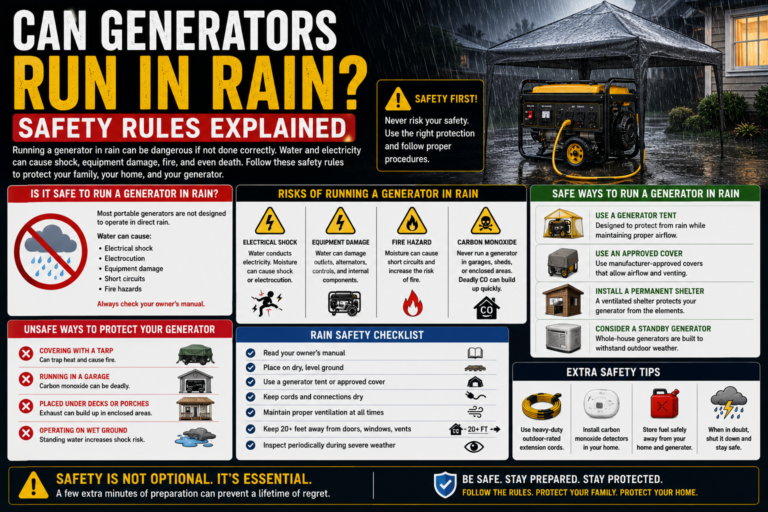
Related: Can Generators Run in Rain? Safety Rules Explained
8. Dirty Generators
Debris buildup restricts cooling airflow.
Accumulated dirt, leaves, and dust can also increase fire risk.
Keep generators clean and inspect cooling vents regularly.
9. Poor Maintenance
Neglected generators are more likely to experience:
- Fuel system failures
- Electrical problems
- Overheating
- Oil leaks
Routine maintenance dramatically lowers fire risk.
Related: Generator Maintenance Checklist to Prevent Breakdowns
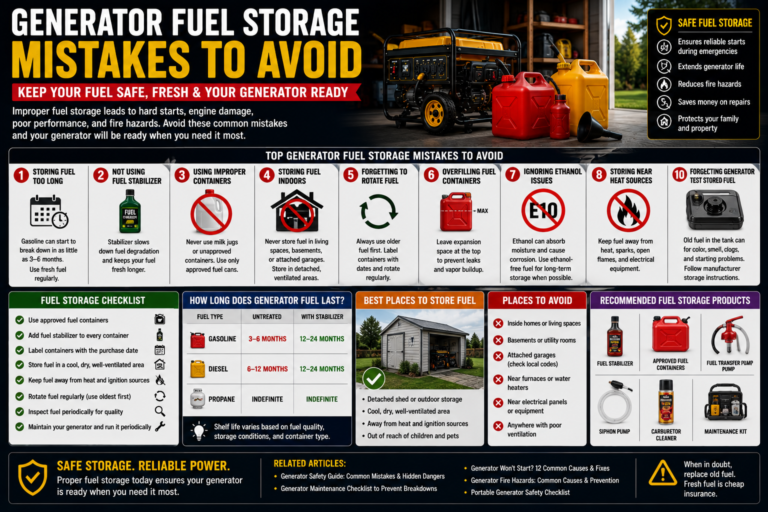
10. Improper Fuel Storage
Improper gasoline storage creates additional hazards.
Never:
❌ Store fuel indoors
❌ Store fuel near ignition sources
❌ Use unapproved containers
Use approved fuel containers only.
Related: Generator Fuel Storage Mistakes to Avoid
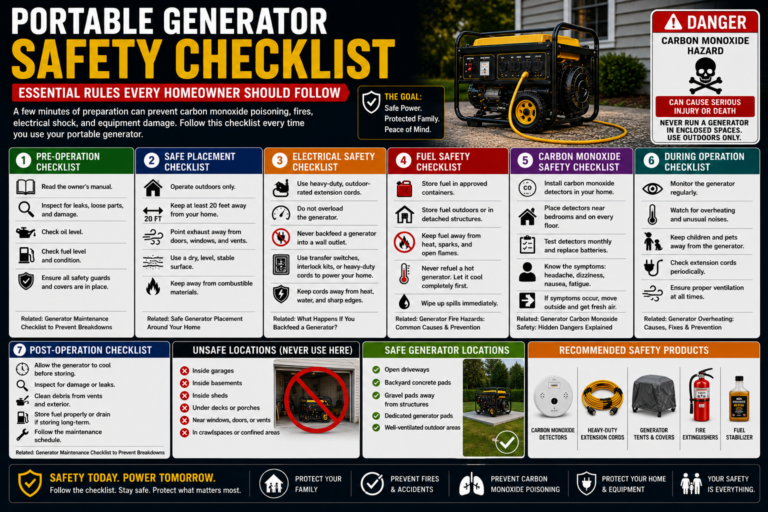
Step-by-Step Generator Fire Prevention Checklist
Before every outage:
Step 1: Inspect Fuel System
Check for leaks, cracks, and damaged hoses.
Step 2: Check Electrical Cords
Replace damaged cords immediately.
Step 3: Verify Proper Placement
Keep generators away from combustible materials.
Step 4: Check Oil Levels
Inspect for leaks and maintain proper oil levels.
Step 5: Avoid Overloading
Know appliance wattage requirements.
Step 6: Keep Generator Clean
Remove debris from cooling vents.
Step 7: Refuel Safely
Allow the generator to cool before adding fuel.
What To Do If a Generator Fire Starts
If a fire occurs:
- Shut down the generator if safe.
- Move away immediately.
- Use a Class B or ABC fire extinguisher if the fire is small.
- Call emergency services if the fire spreads.
- Never use water on electrical or fuel fires.
Your safety comes first.
When to Call a Professional
Contact a qualified technician if:
- Fuel leaks continue
- Electrical problems develop
- Burning smells persist
- Generator overheats repeatedly
- Smoke appears during operation
Do not continue using unsafe equipment.
Recommended Generator Safety Products
Helpful products for reducing fire risks:
- Heavy-duty extension cords
- Fuel stabilizer
- Generator maintenance kits
- Fire extinguishers
- Generator covers
- Carbon monoxide detectors
You can also browse our guide to the Best Generator Maintenance Products.
Related Safety Articles
Continue learning generator safety:
- Generator Safety Guide: Common Mistakes & Hidden Dangers
- Generator Safety Mistakes Homeowners Make
- Generator Leaking Gas: Causes, Risks & What to Do
- Can Generators Run in Rain? Safety Rules Explained
- Generator Maintenance Checklist to Prevent Breakdowns
Frequently Asked Questions
Can generators catch fire?
Yes. Fuel leaks, overheating, overloaded cords, and improper refueling can all cause generator fires.
Is it safe to refuel a generator while it’s running?
No. Always shut down the generator and allow it to cool completely before refueling.
What type of fire extinguisher should I keep near a generator?
A Class ABC fire extinguisher is recommended for most homeowners.
Can extension cords cause generator fires?
Yes. Undersized or damaged extension cords can overheat and ignite.
How can I reduce generator fire risk?
Proper maintenance, safe fueling practices, and correct generator placement significantly reduce fire hazards.
Final Verdict
Generator fires are rare when equipment is used correctly, but mistakes involving fuel, electrical connections, maintenance, and placement can create serious hazards.
The safest approach is simple:
Maintain your generator, inspect it regularly, use proper cords, store fuel safely, and never refuel a hot generator.