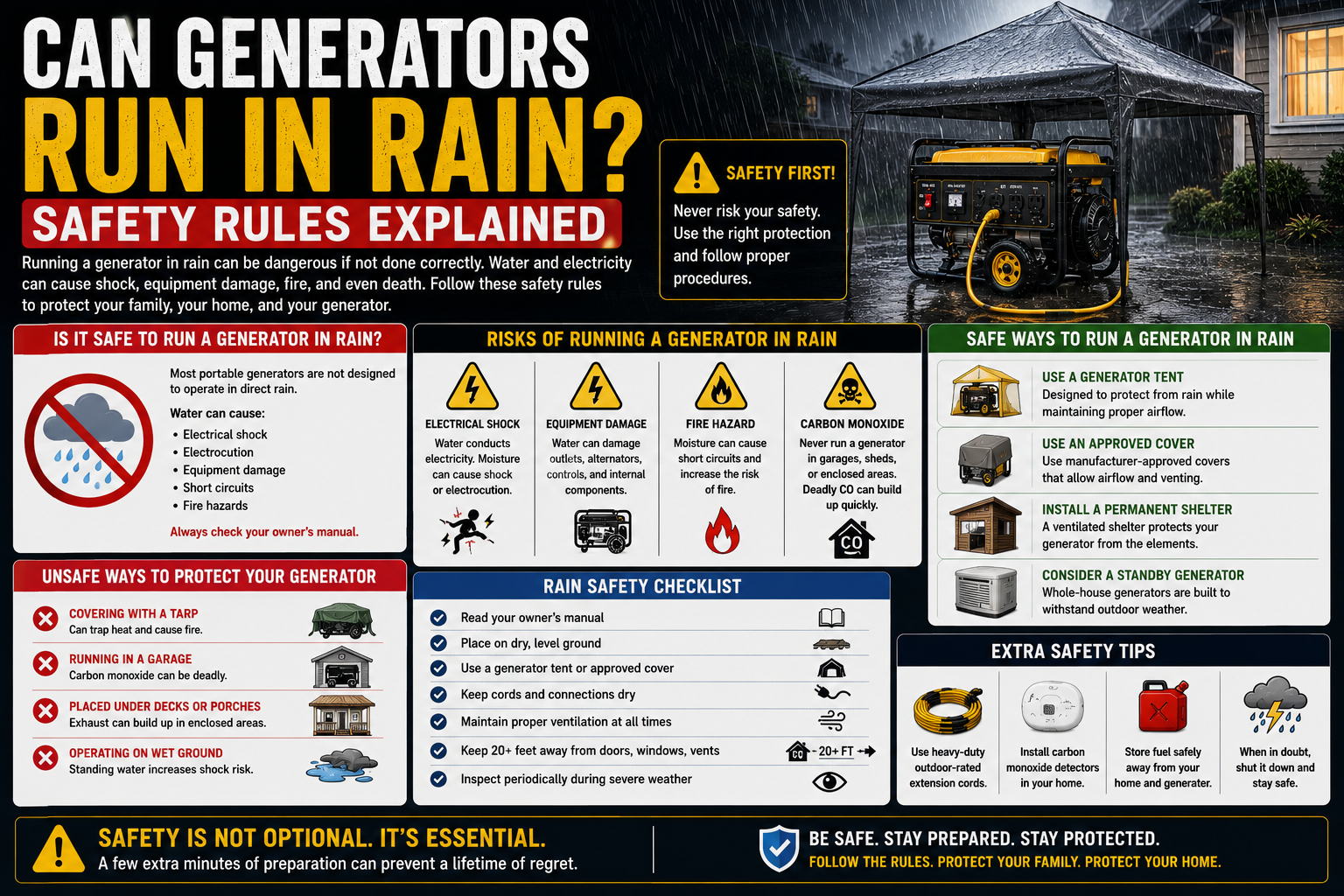
Can Generators Run in Rain? Safety Rules Explained
Many homeowners wonder if generators can safely run during rain, storms, or severe weather. After all, power outages often happen during bad weather. The short answer is:
No, generators should not run in rain unless they are properly protected and specifically designed for wet conditions.
Running a generator in rain can create serious safety hazards including electrical shock, electrocution, equipment damage, and fire risks.
The good news is that there are safe ways to operate a generator during wet weather—if you follow the proper safety guidelines.
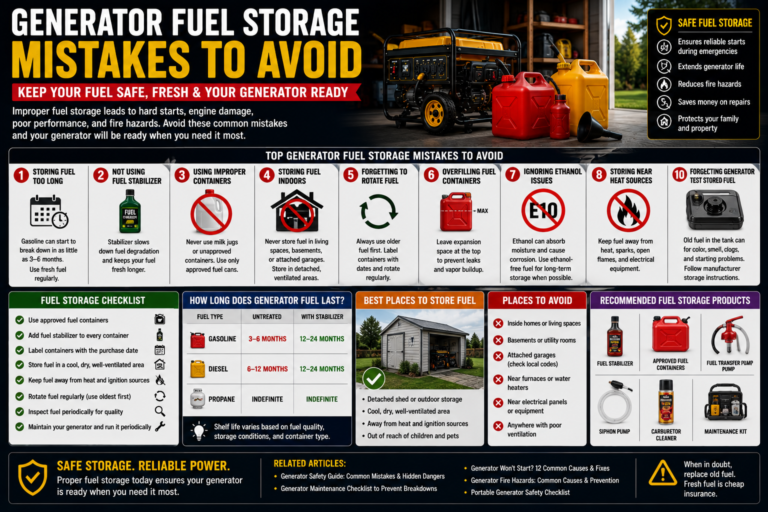
If you’re learning generator safety basics, start with our Generator Safety Guide: Common Mistakes & Hidden Dangers for a complete overview.
Signs Your Generator Setup May Be Unsafe in Rain
Before operating your generator during a storm, look for these warning signs:
- Generator sitting uncovered outdoors
- Extension cords lying in standing water
- Generator operating on wet ground
- No generator cover or tent installed
- Electrical outlets exposed to rain
- Generator positioned under enclosed structures
If any of these conditions exist, your setup may not be safe.
Can Portable Generators Run in Rain?
Most portable generators are not designed to operate in direct rain.
Water exposure can damage:
- Electrical outlets
- Circuit breakers
- Alternators
- Control panels
- Internal wiring
Rain and electricity create a dangerous combination.
Most manufacturer manuals specifically warn against operating generators in wet conditions without proper protection.
Always read your owner’s manual before using a generator during bad weather.
Why Is Running a Generator in Rain Dangerous?
1. Electrical Shock Risk
Water conducts electricity.
Rain can create shock hazards if moisture enters:
- Generator outlets
- Extension cord connections
- Electrical panels
Anyone touching wet equipment could receive a serious electrical shock.
2. Electrocution Hazard
Improper wet-weather operation increases the risk of electrocution.
Common causes include:
- Wet extension cords
- Standing water near the generator
- Damaged electrical insulation
Never touch electrical connections with wet hands.
3. Equipment Damage
Water intrusion can damage sensitive electrical components.
Potential damage includes:
- Short circuits
- Corrosion
- Alternator failure
- Outlet damage
Repairs can become expensive.
Related: How Much Does Generator Repair Cost?
4. Fire Risk
Moisture can create electrical arcing and short circuits.
Combined with fuel vapors, this can increase fire risks.
Generators should always be operated in safe, dry conditions whenever possible.
5. Carbon Monoxide Danger
Many homeowners move generators into garages or enclosed spaces to protect them from rain.
This creates a much greater risk:
Carbon monoxide poisoning.
Never move a generator indoors to keep it dry.
Do not operate generators inside:
❌ Garages
❌ Sheds
❌ Basements
❌ Enclosed patios
Related: Generator Carbon Monoxide Safety: Hidden Dangers Explained
Safe Ways to Run a Generator During Rain
Option 1: Use a Generator Tent
Generator tents are specially designed covers that:
✅ Protect against rain
✅ Maintain airflow
✅ Reduce water exposure
These are among the safest solutions for portable generators.
Option 2: Use a Manufacturer-Approved Cover
Some manufacturers sell weather-resistant covers designed for operation.
Always verify that:
- The cover is approved for use while running
- Airflow remains unrestricted
- Exhaust is not blocked
Option 3: Install a Permanent Generator Shelter
Permanent outdoor shelters provide:
✅ Weather protection
✅ Improved convenience
✅ Better long-term reliability
Shelters must remain properly ventilated.
Option 4: Install a Whole-House Standby Generator
Many standby generators are designed for outdoor weather exposure.
These units are typically:
- Permanently installed
- Weather resistant
- Automatically activated
Related: Best Whole House Generators
Unsafe Ways to Protect a Generator From Rain
Never use these methods:
Covering a Running Generator With a Tarp
Tarps trap heat and may create fire hazards.
Running a Generator in a Garage
Even with the garage door open, carbon monoxide can build quickly.
Placing a Generator Under a Deck or Porch
Semi-enclosed spaces may still trap dangerous exhaust gases.
Operating on Wet Ground
Standing water increases electrical shock risk.
Always place generators on dry, level surfaces.
Step-by-Step Generator Rain Safety Checklist
Before operating during wet weather:
Step 1: Read Your Owner’s Manual
Follow manufacturer recommendations.
Step 2: Inspect the Area
Choose a dry, level location.
Step 3: Install Weather Protection
Use a generator tent or approved cover.
Step 4: Keep Cords Dry
Protect all electrical connections from moisture.
Step 5: Maintain Ventilation
Never block airflow or exhaust.
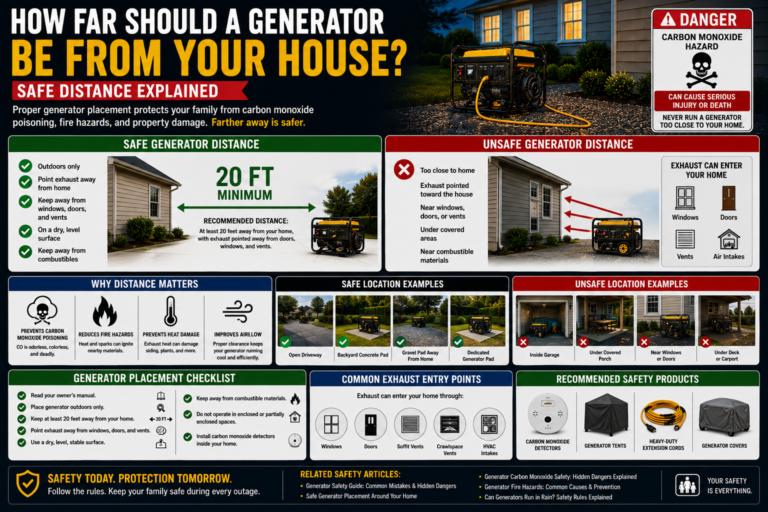
Step 6: Keep Away From Structures
Place generators at least 20 feet away from doors, windows, and vents.
Related: How Far Should a Generator Be From Your House?
Step 7: Monitor During Operation
Inspect periodically during severe weather.
When to Shut the Generator Down
Stop operating immediately if:
- Water enters outlets or controls
- Flooding develops around the generator
- Extension cords become submerged
- Electrical arcing occurs
- Smoke or burning smells appear
Safety always comes first.
Recommended Wet Weather Generator Products
Helpful products for rainy weather operation:
- Generator tents
- Weather-resistant generator covers
- Heavy-duty outdoor extension cords
- Carbon monoxide detectors
- Generator maintenance kits
You can also browse our guide to the Best Generator Covers (Weather Protection).
Related Safety Articles
Continue learning generator safety:
- Generator Safety Guide: Common Mistakes & Hidden Dangers
- Generator Safety Mistakes Homeowners Make
- Generator Carbon Monoxide Safety: Hidden Dangers Explained
- Safe Generator Placement Around Your Home
- Portable Generator Safety Checklist
Frequently Asked Questions
Can portable generators run in rain?
Generally, no. Most portable generators should not operate in direct rain unless properly protected.
Can I put a tarp over my generator while it’s running?
No. Tarps can trap heat and create fire hazards.
Can I run a generator in my garage if it’s raining?
No. Carbon monoxide can quickly build to deadly levels.
Are whole-house generators safe in rain?
Most standby generators are designed for outdoor weather exposure, but always follow manufacturer recommendations.
What is the safest way to run a generator during rain?
Use a properly designed generator tent or manufacturer-approved weather cover while maintaining adequate ventilation.
Final Verdict
Most portable generators should not run in direct rain without proper protection. Rain creates serious risks including electrical shock, equipment damage, and electrocution.
The safest approach is to use a generator tent or approved weather cover while keeping the generator outdoors, well ventilated, and away from standing water.
Never move a generator indoors to protect it from rain. The carbon monoxide risk is far more dangerous than the weather itself.