
Portable Generator Buying Insight
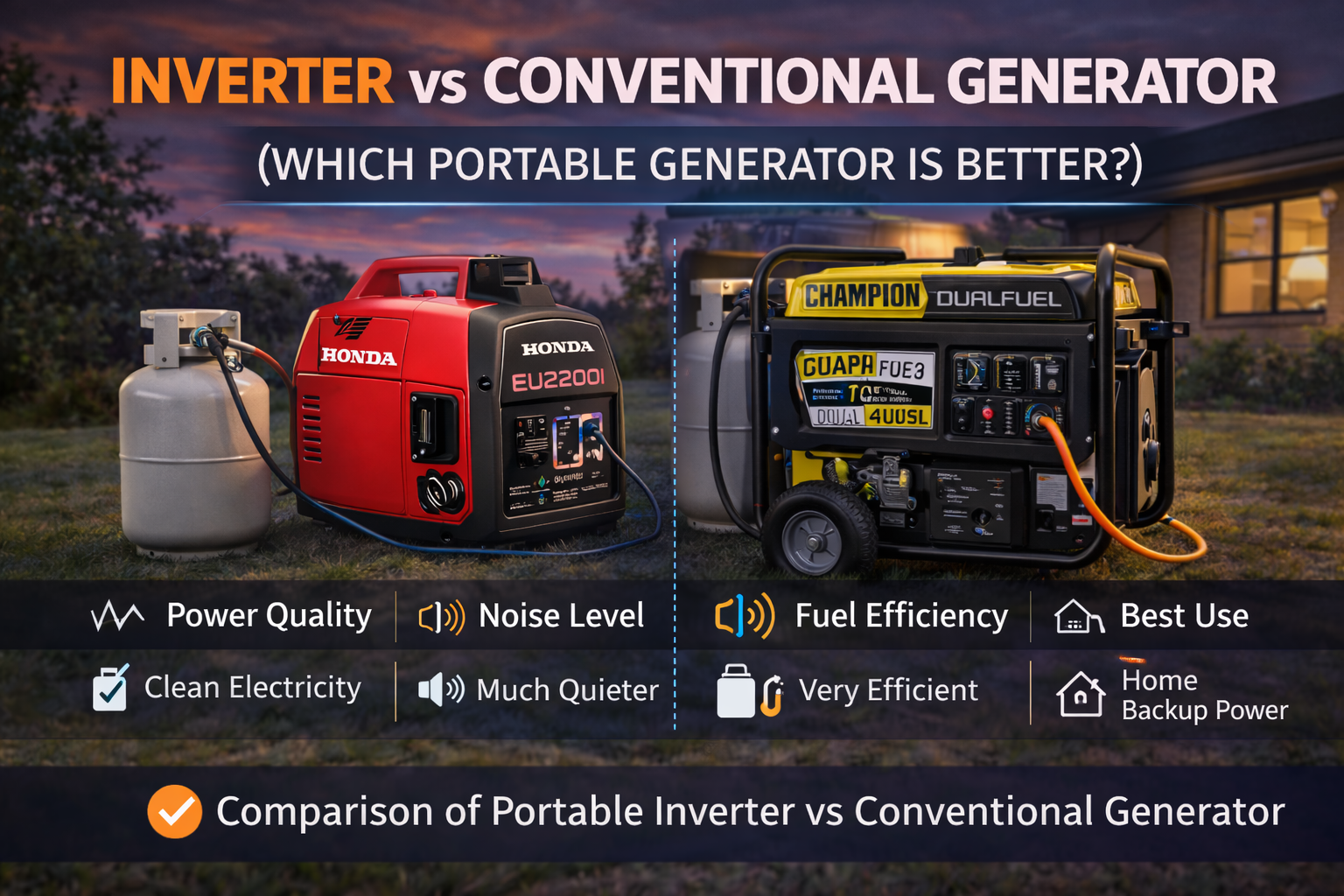
Choosing the right portable generator often comes down to understanding the difference between inverter generators and conventional generators. While both can provide backup power during outages, they are designed for different uses and power needs.
Inverter generators are known for producing cleaner electricity and quieter operation, while conventional generators typically deliver higher wattage and lower upfront cost. Knowing the advantages of each type can help homeowners select the generator that best fits their backup power needs.
👉 For a complete breakdown of portable generators, see our Portable Generators Guide.
Introduction
Portable generators are one of the most common solutions for emergency backup power. Whether you want to keep the refrigerator running during a storm or power tools on a job site, choosing the right type of generator is important.
Two main types of portable generators dominate the market: inverter generators and conventional generators. While both generate electricity using a gasoline-powered engine, they produce power differently and are designed for different scenarios.
In this guide we’ll compare inverter vs conventional generators, explain how each type works, and help you determine which generator is best for your home backup power setup.
Quick Answer
Inverter vs Conventional Generator
The main differences between inverter and conventional generators are power quality, noise level, and portability.
Inverter generators
• produce cleaner electricity
• operate much quieter
• are more fuel efficient
• are typically smaller and portable
Conventional generators
• provide higher power output
• cost less per watt
• are better for powering multiple appliances
• commonly used for home emergency backup
Most homeowners use conventional generators for home outages, while inverter generators are popular for camping and electronics.
Example Generator Comparison Chart
| Feature | Inverter Generator | Conventional Generator |
|---|---|---|
| Power Output | 2000–4000 watts | 4000–10,000+ watts |
| Noise Level | 50–60 dB | 65–75 dB |
| Fuel Efficiency | High | Moderate |
| Power Quality | Clean power | Standard AC output |
| Best Use | Electronics / camping | Home backup power |
Why Power Quality Matters
One of the biggest differences between inverter and conventional generators is the quality of electricity they produce.
Inverter generators convert power through an electronic inverter system, which stabilizes voltage and produces clean sine wave electricity. This type of power is ideal for sensitive electronics such as:
• laptops
• smartphones
• televisions
• modern appliances
Conventional generators generate electricity directly through an alternator connected to the engine. While this design produces reliable power, the voltage may fluctuate slightly, making it less ideal for sensitive electronics.
👉 Learn more about generator sizing in our 7500 Watt Generator Guide.
Use Case Scenario
Example Home Backup Setup
Many homeowners choose conventional portable generators to power essential appliances during outages.
Typical appliances include:
• refrigerator
• lights
• sump pump
• microwave
• internet router
This setup usually requires 3000–5000 running watts, which makes generators in the 5000–7500 watt range a practical choice.
👉 For generator recommendations, see our Best Portable Generators Guide.
Generator Selection Tool
Estimate Which Generator Type You Need
Consider these questions when choosing between generator types:
Choose an inverter generator if you need:
• quiet operation
• power for electronics
• small portable generator
• camping or RV use
Choose a conventional generator if you need:
• higher power output
• home emergency backup
• ability to run multiple appliances
👉 You can also estimate your power needs using our Generator Load Calculator.
Links Related Guides:
• Best Portable Generators
• 7500 Watt Generator Guide
• Starting vs Running Watts
• Appliance Wattage Chart
• Generator Safety Guide
These articles help you determine generator size and safe operation.
FAQ
Are inverter generators better than conventional generators?
Inverter generators produce cleaner power and operate more quietly, but conventional generators usually provide more wattage for home backup power.
Can inverter generators run household appliances?
Yes. Inverter generators can power small appliances and electronics, but larger appliances may require conventional generators with higher wattage.
Why are inverter generators quieter?
Inverter generators adjust engine speed based on electrical load, which reduces noise and improves fuel efficiency.
Which generator is best for home backup power?
Most homeowners choose conventional generators between 5000 and 7500 watts to power essential appliances during outages.
Conclusion
Both inverter generators and conventional generators provide useful portable power solutions. Inverter generators are ideal for quiet operation and powering sensitive electronics, while conventional generators offer higher wattage and better value for emergency home backup power.
Choosing the right generator depends on your power needs, budget, and how you plan to use the generator during an outage.
For more generator comparisons, see our Best Portable Generators Guide.