Is Backfeeding a Generator Dangerous? What Every Homeowner Should Know
Is Backfeeding a Generator Dangerous? What Every Homeowner Should Know
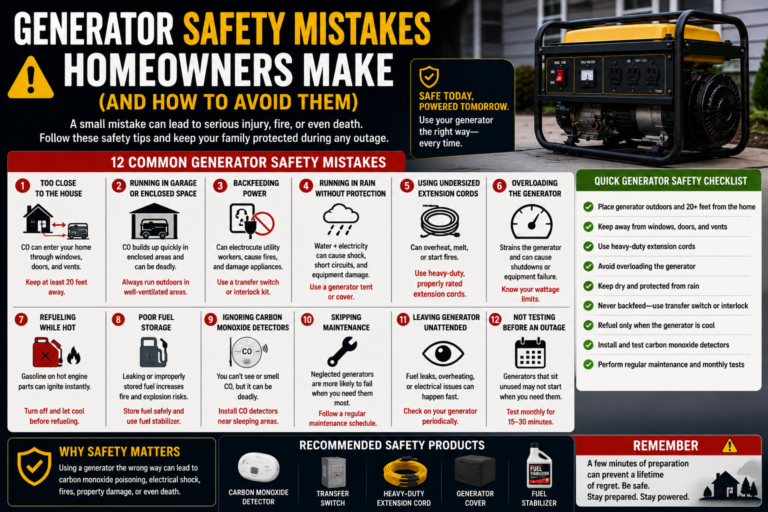
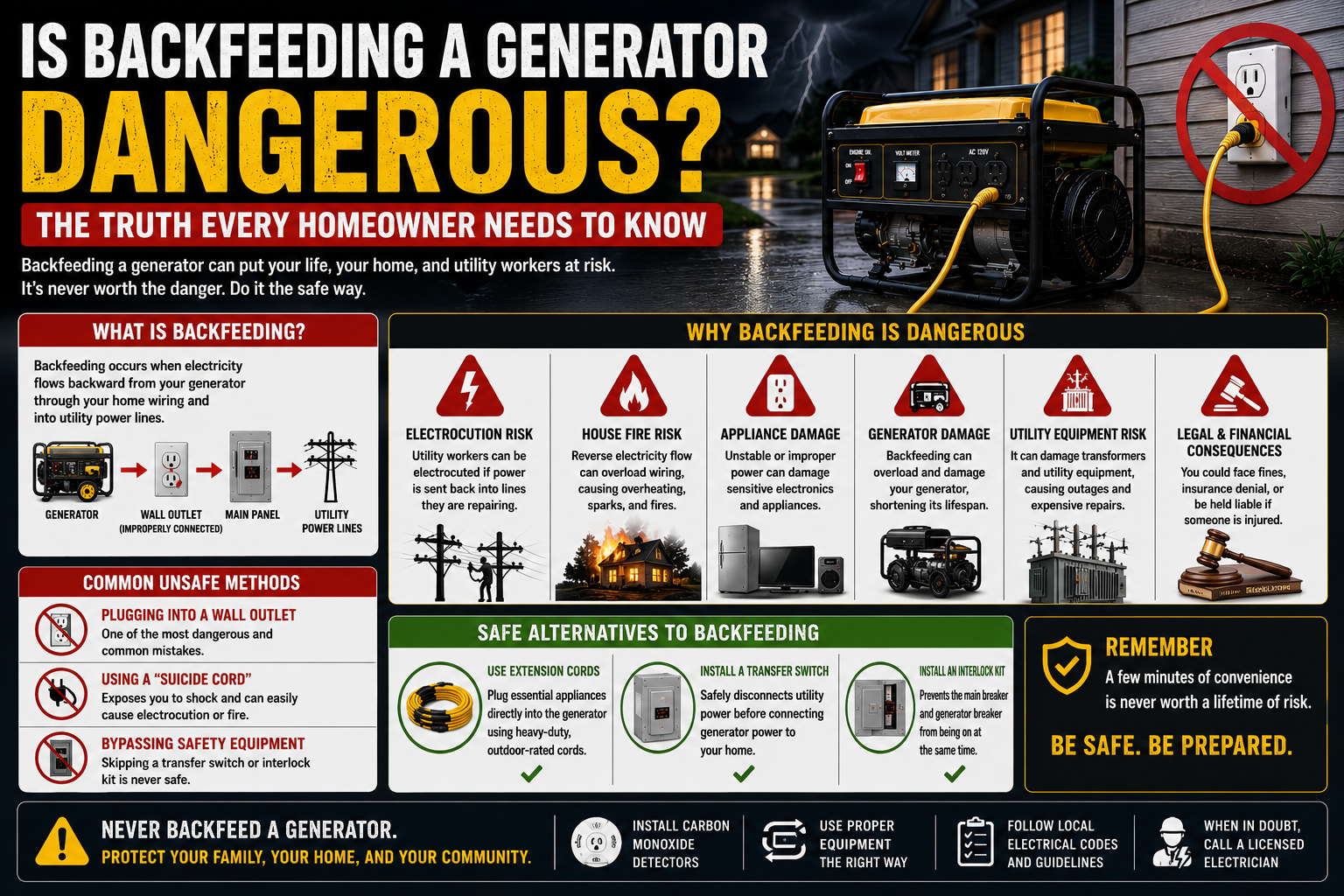
Yes—backfeeding a generator is extremely dangerous. It can electrocute utility workers, start house fires, destroy appliances, damage generators, and violate local electrical codes. Despite the risks, many homeowners still attempt backfeeding during power outages because they don’t understand the dangers involved.
Backfeeding occurs when a generator is connected directly to a home’s electrical system through a wall outlet or other improper connection instead of using a transfer switch or interlock kit.
While it may seem like a shortcut to power your home, the consequences can be severe.
The safest approach is simple: never backfeed a generator.
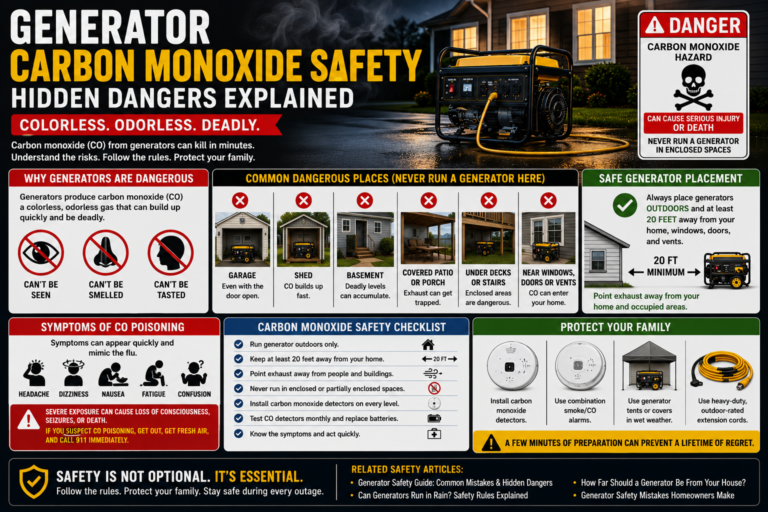
If you’re new to generator safety, start with our Generator Safety Guide: Common Mistakes & Hidden Dangers for a complete overview.
Signs a Generator Setup May Be Backfeeding
Many homeowners unknowingly create dangerous backfeeding situations.
Common warning signs include:
- Generator plugged into a household outlet
- Homemade generator wiring
- No transfer switch installed
- No interlock kit installed
- Use of a “suicide cord”
- Generator powering multiple home circuits improperly
If your setup includes any of these, it may be unsafe.
What Is Generator Backfeeding?
Backfeeding happens when generator power flows backward through your home’s wiring system.
Instead of following the normal path:
Utility Power → Main Panel → Home Circuits
Electricity flows:
Generator → Home Wiring → Utility Lines
This reverse flow can energize power lines and equipment that should be de-energized during an outage.
Related: What Happens If You Backfeed a Generator? The Hidden Dangers Explained
Why Is Backfeeding So Dangerous?
1. Utility Workers Can Be Electrocuted
This is the most serious risk.
When utility crews repair power lines, they expect those lines to be de-energized.
Backfeeding can send electricity into those lines unexpectedly.
Potential consequences include:
- Severe injury
- Electrocution
- Fatal accidents
A portable generator may seem small, but it can still create life-threatening conditions.
2. House Fires Can Start
Home wiring is designed to operate in a specific direction.
Backfeeding may overload circuits and create:
- Overheated wires
- Melted insulation
- Electrical arcing
- House fires
Some fires start inside walls where they aren’t immediately visible.
3. Appliances Can Be Damaged
Improper generator connections can create unstable voltage.
Sensitive electronics may be damaged, including:
- Refrigerators
- HVAC systems
- Computers
- Televisions
- Internet equipment
- Smart home devices
Repair costs can quickly exceed the cost of installing proper generator equipment.
4. Your Generator Can Be Destroyed
Backfeeding can create conditions the generator was never designed to handle.
Possible damage includes:
- Burned alternators
- Overloaded circuits
- Internal electrical failures
- Reduced generator lifespan
Related: How Much Does Generator Repair Cost?
5. Utility Equipment Can Be Damaged
Electricity flowing backward through the grid can damage:
- Transformers
- Utility infrastructure
- Distribution equipment
This can increase repair costs and extend outage durations.
6. Insurance Problems May Occur
Many insurance companies expect homeowners to follow electrical codes and manufacturer recommendations.
If a fire or injury occurs because of an illegal generator setup:
- Claims may be denied
- Liability risks may increase
- Repairs may not be covered
7. You May Violate Local Electrical Codes
Most electrical codes require approved transfer equipment when connecting generators to homes.
Improper generator connections may:
- Fail inspections
- Create legal liability
- Cause issues during home sales
Common Generator Backfeeding Methods That Are Dangerous
Using a Wall Outlet
Some homeowners attempt to power their house by plugging a generator into a standard outlet.
This is one of the most dangerous forms of backfeeding.
Never do this.
Using a Suicide Cord
A suicide cord is an extension cord with male plugs on both ends.
These cords expose live electrical prongs and create severe shock hazards.
They should never be used.
Bypassing Electrical Safety Equipment
Any setup that bypasses transfer switches or interlock kits increases risk dramatically.
Why Some Homeowners Still Backfeed
Most homeowners who backfeed are not trying to be unsafe.
Common reasons include:
- Lack of knowledge
- Emergency situations
- Desire to power the whole house
- Avoiding transfer switch costs
- Following bad advice online
Unfortunately, these shortcuts create serious risks.
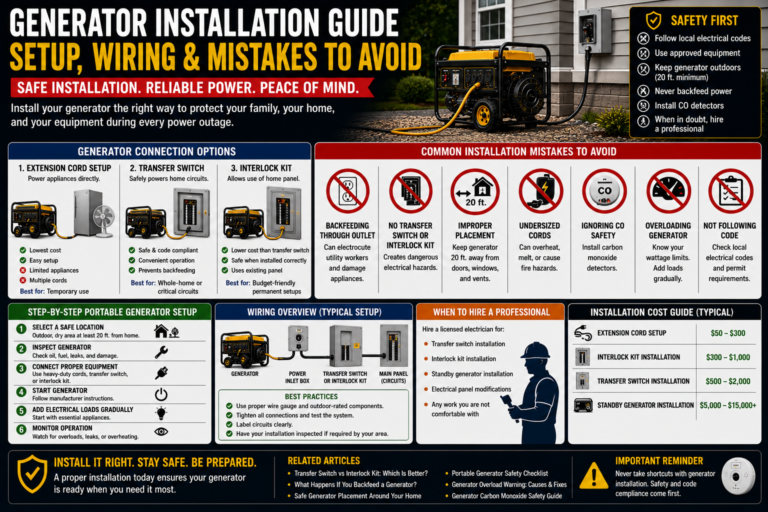
Safe Alternatives to Backfeeding
Option 1: Heavy-Duty Extension Cords
For temporary emergency power:
✅ Simple
✅ Affordable
✅ Safe when used properly
Use generator-rated extension cords only.
Related: Generator Extension Cord Size Chart
Option 2: Transfer Switch
Transfer switches safely disconnect utility power before generator power is connected.
Benefits:
✅ Code compliant
✅ Safe operation
✅ Easy to use
Related: Transfer Switch vs Interlock Kit: Which Is Better?
Option 3: Interlock Kit
Interlock kits mechanically prevent utility power and generator power from being connected simultaneously.
Benefits:
✅ Lower cost than transfer switches
✅ Safe when installed properly
✅ Popular for portable generators
When to Call a Professional
Call a licensed electrician if:
- You want to power home circuits
- You need a transfer switch installed
- You need an interlock kit installed
- You’re unsure whether your setup is safe
Electrical work is not the place to take shortcuts.
Recommended Safety Products
Helpful products for safer generator operation:
- Transfer switches
- Interlock kits
- Power inlet boxes
- Heavy-duty extension cords
- Carbon monoxide detectors
- Generator covers
- Surge protectors
You can also browse our guide to the Best Generator Maintenance Products.
Related Safety Articles
Continue learning generator safety:
- Generator Safety Guide: Common Mistakes & Hidden Dangers
- Generator Safety Mistakes Homeowners Make
- What Happens If You Backfeed a Generator? The Hidden Dangers Explained
- Generator Carbon Monoxide Safety: Hidden Dangers Explained
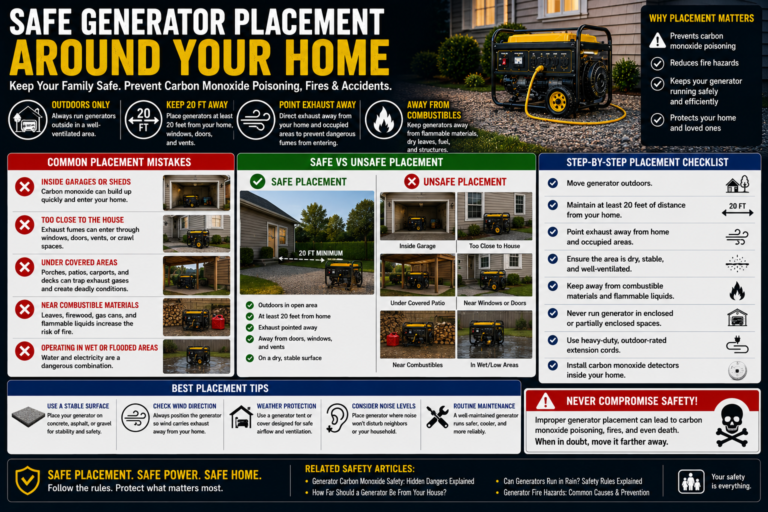
- Safe Generator Placement Around Your Home
Frequently Asked Questions
Is generator backfeeding dangerous?
Yes. It can electrocute utility workers, start fires, damage equipment, and violate electrical codes.
Can backfeeding kill someone?
Yes. Utility workers repairing power lines can be exposed to unexpected electricity.
Is it illegal to backfeed a generator?
In many jurisdictions, yes. Local electrical codes generally prohibit unsafe generator connections.
What is the safest way to connect a generator to a house?
A transfer switch or interlock kit installed correctly is typically the safest solution.
What is a suicide cord?
A homemade extension cord with male plugs on both ends. It is extremely dangerous and should never be used.
Final Verdict
Backfeeding a generator is one of the most dangerous mistakes homeowners can make during a power outage. The risks include electrocution, house fires, damaged appliances, generator failure, insurance problems, and code violations.
The solution is straightforward:
Never plug a generator into a wall outlet. Use extension cords, a transfer switch, or an interlock kit designed for safe generator operation.