Generator Fuel Storage Mistakes to Avoid: Keep Your Fuel Safe & Fresh
Proper fuel storage is one of the most overlooked aspects of generator ownership. Many homeowners focus on buying a generator but fail to store fuel correctly—leading to hard starts, engine damage, poor performance, fire hazards, and costly repairs.
Unfortunately, gasoline and diesel fuel do not last forever.
The good news is that most fuel-related generator problems are completely preventable with proper storage practices.
This guide covers the most common generator fuel storage mistakes homeowners make and how to avoid them.
If you’re learning generator safety basics, start with our Generator Safety Guide: Common Mistakes & Hidden Dangers for a complete overview.
Quick Answer
The biggest generator fuel storage mistakes include storing fuel too long, using improper containers, failing to use fuel stabilizer, storing fuel indoors, and neglecting fuel rotation.
Proper fuel storage helps:
- Prevent starting problems
- Extend generator life
- Reduce fire hazards
- Improve reliability during emergencies
Signs Your Generator Fuel May Be Bad
Bad fuel often causes generator problems.
Common warning signs include:
- Generator won’t start
- Rough running
- Hard starting
- Surging engine speed
- Stalling
- Strong varnish smell
- Dark or cloudy fuel
- Poor performance
If your generator has been sitting for several months, stale fuel may be the cause.
Related: Generator Won’t Start? 12 Common Causes & Fixes
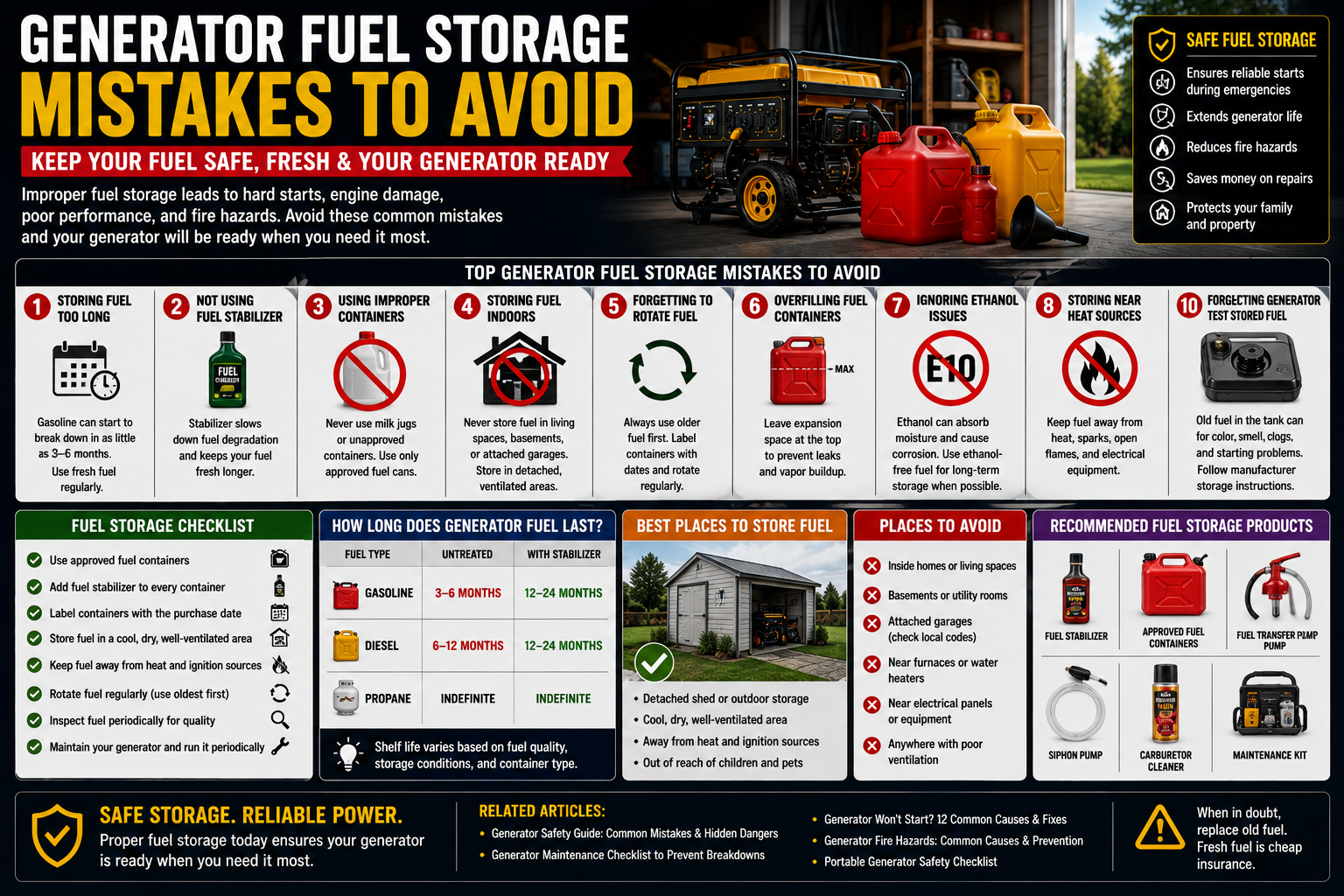
Top Generator Fuel Storage Mistakes to Avoid
1. Storing Gasoline Too Long
Gasoline naturally degrades over time.
Without treatment, gasoline may begin deteriorating in as little as 3 to 6 months.
Old fuel can cause:
- Clogged carburetors
- Hard starting
- Engine surging
- Complete no-start conditions
Best Practice:
Rotate stored gasoline regularly and avoid long-term storage without fuel stabilizer.
Related: Generator Maintenance Checklist to Prevent Breakdowns
2. Not Using Fuel Stabilizer
Fuel stabilizer significantly extends fuel shelf life.
Benefits include:
✅ Slower fuel degradation
✅ Cleaner fuel systems
✅ Improved starting reliability
Popular products include:
- STA-BIL
- Star Tron
- PRI-G
- Sea Foam
Related: Best Fuel Stabilizer for Generators
3. Using Improper Fuel Containers
Never store gasoline in:
❌ Milk jugs
❌ Glass containers
❌ Unapproved plastic containers
Use only approved fuel containers designed for gasoline or diesel.
Approved containers help reduce:
- Leaks
- Vapor release
- Fire risk
4. Storing Fuel Inside the Home
Gasoline vapors are highly flammable.
Never store fuel inside:
❌ Living spaces
❌ Basements
❌ Utility rooms
❌ Attached garages when prohibited by local code
Store fuel in detached, well-ventilated locations whenever possible.
Related: Generator Fire Hazards: Common Causes & Prevention
5. Forgetting to Rotate Fuel Supplies
Emergency fuel should not sit untouched for years.
A simple fuel rotation schedule prevents stale fuel problems.
Best practice:
- Label containers with purchase dates.
- Use oldest fuel first.
- Replace stored fuel regularly.
6. Filling Fuel Containers Completely Full
Fuel expands and contracts with temperature changes.
Overfilled containers may:
- Leak
- Release vapors
- Create fire hazards
Leave expansion space inside fuel containers.
7. Ignoring Ethanol Issues
Many gasoline blends contain ethanol.
Ethanol may:
- Absorb moisture
- Separate during storage
- Corrode fuel systems
Whenever possible, use ethanol-free gasoline for long-term storage.
Related: Generator Won’t Start? 12 Common Causes & Fixes
8. Storing Fuel Near Heat Sources
Keep fuel away from:
❌ Water heaters
❌ Furnaces
❌ Space heaters
❌ Open flames
❌ Electrical equipment
Heat increases fire risk.
Related: Generator Fire Hazards: Common Causes & Prevention
9. Neglecting Generator Fuel Tanks
Fuel left inside the generator for extended periods may also degrade.
For seasonal storage:
- Follow manufacturer recommendations.
- Run stabilized fuel through the system.
- Consider draining carburetors if recommended.
Related: How to Diagnose Common Generator Problems at Home
10. Forgetting to Test Stored Fuel
Periodically inspect stored fuel for:
- Dark color
- Water contamination
- Sediment
- Unusual odor
Discard questionable fuel according to local regulations.
Step-by-Step Generator Fuel Storage Checklist
Follow this checklist to keep fuel fresh and safe.
Step 1: Use Approved Containers
Purchase containers specifically rated for fuel storage.
Step 2: Add Fuel Stabilizer
Treat fuel immediately after purchase.
Step 3: Label Fuel Containers
Record storage dates.
Step 4: Store Fuel Safely
Keep fuel in cool, dry, ventilated areas.
Step 5: Rotate Fuel Regularly
Use oldest fuel first.
Step 6: Inspect Fuel Periodically
Look for signs of degradation.
Step 7: Maintain the Generator
Run the generator periodically to circulate fresh fuel.
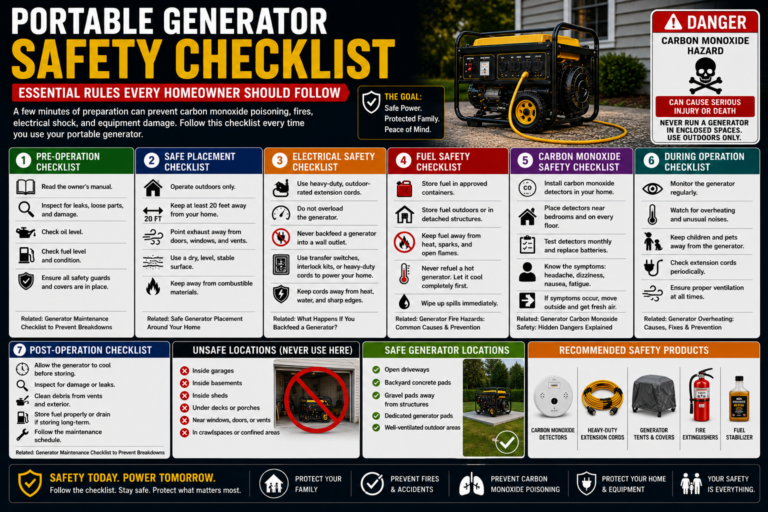
Related: Portable Generator Safety Checklist
How Long Does Generator Fuel Last?
Approximate shelf life:
| Fuel Type | Untreated | With Stabilizer |
|---|---|---|
| Gasoline | 3–6 Months | 12–24 Months |
| Diesel | 6–12 Months | 12–24 Months |
| Propane | Indefinite | Indefinite |
Actual shelf life varies based on storage conditions.
When to Replace Stored Fuel
Replace fuel if:
- It smells sour or varnish-like.
- It appears cloudy or dark.
- Water contamination is present.
- Generator performance declines.
Fresh fuel is cheap insurance during emergencies.
Recommended Fuel Storage Products
Helpful products for long-term fuel storage include:
- Fuel stabilizer
- Approved fuel containers
- Fuel transfer pumps
- Siphon pumps
- Generator maintenance kits
- Carburetor cleaner
You can also browse our guide to the Best Generator Maintenance Products.
Related Generator Articles
Continue learning generator maintenance and safety:
- Generator Safety Guide: Common Mistakes & Hidden Dangers
- Generator Fire Hazards: Common Causes & Prevention
- Generator Maintenance Checklist to Prevent Breakdowns
- Generator Won’t Start? 12 Common Causes & Fixes
- Portable Generator Safety Checklist
Frequently Asked Questions
How long can gasoline sit in a generator?
Untreated gasoline may begin degrading in 3–6 months.
Should I use fuel stabilizer in generator fuel?
Yes. Fuel stabilizer significantly extends fuel shelf life.
Is ethanol-free gas better for generators?
Generally, yes—especially for long-term storage.
Where should generator fuel be stored?
Store fuel in approved containers in cool, dry, well-ventilated areas away from ignition sources.
Can old gasoline damage a generator?
Yes. Stale gasoline can clog carburetors and create starting problems.
Final Verdict
Fuel storage mistakes are one of the biggest reasons generators fail during emergencies. Fortunately, proper storage practices are simple and inexpensive.
Use approved containers, rotate fuel regularly, add fuel stabilizer, and store fuel safely.
Fresh fuel means a generator that starts when you need it most.