Generator Safety Mistakes Homeowners Make (And How to Avoid Them)
Generator mistakes can quickly turn dangerous during a power outage. Every year, homeowners deal with fires, carbon monoxide poisoning, electrical shock, damaged appliances, and expensive repairs caused by improper generator use.
The good news? Most generator accidents are completely preventable.
Many generator safety problems happen because homeowners simply don’t know what mistakes to avoid. This guide covers the most common generator safety mistakes, the risks involved, and how to use your generator safely during emergencies.
If you’re learning generator safety basics, start with our Generator Safety Guide: Common Mistakes & Hidden Dangers for a complete overview.
Signs You May Be Using a Generator Unsafely
Before problems happen, there are warning signs that your generator setup may not be safe.
Common red flags include:
- Generator placed too close to the house
- Running inside garages or covered spaces
- Using damaged or undersized extension cords
- Generator exposed to rain
- Overloaded outlets or appliances
- Strong fuel smells near operation
- Hot extension cords or plugs
- Refueling while generator is still hot
If any of these sound familiar, it may be time to improve your setup.
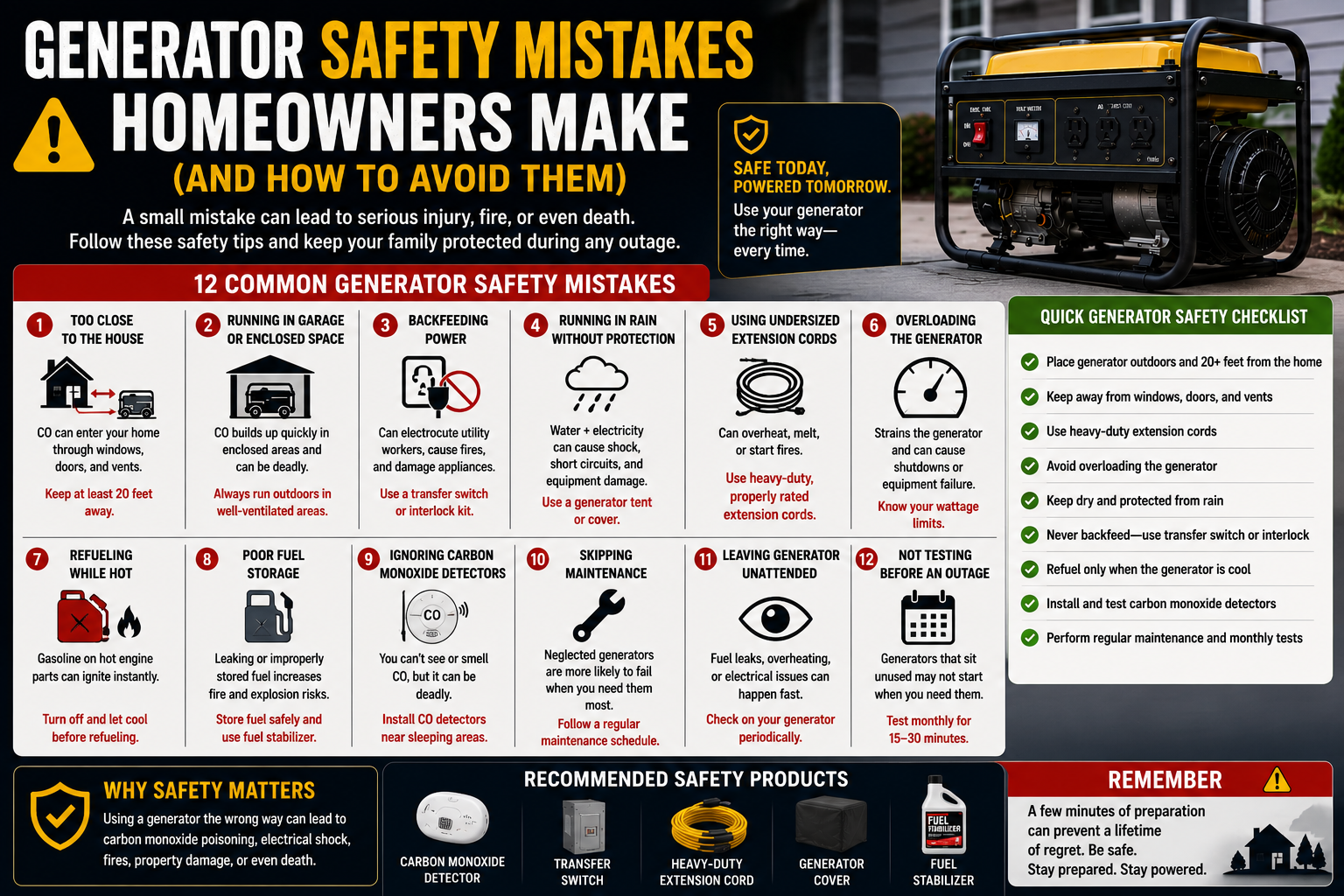
Top Generator Safety Mistakes Homeowners Make
1. Running a Generator Too Close to the House
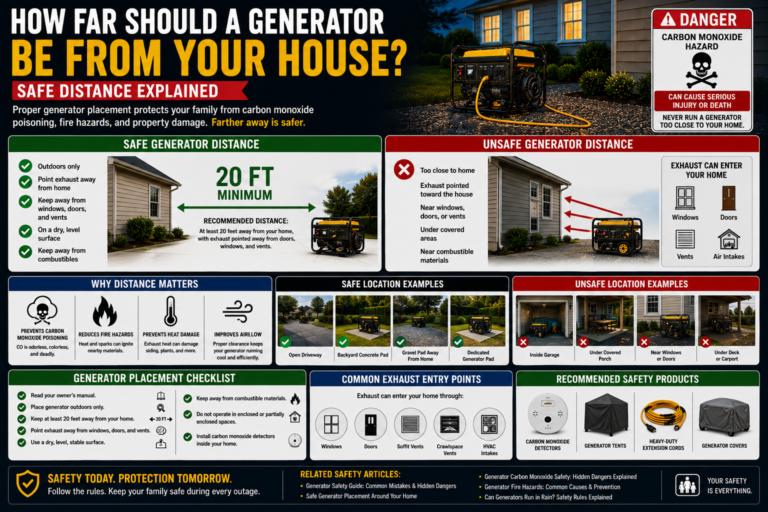
One of the most dangerous mistakes is poor placement.
Generators produce carbon monoxide gas that can enter homes through:
- Windows
- Doors
- Vents
- Garages
Safety Tip:
Keep generators at least 20 feet away from your home whenever possible.
Related: How Far Should a Generator Be From Your House?
2. Running a Generator in a Garage or Enclosed Space
Even with doors open, garages are dangerous.
Carbon monoxide builds quickly in enclosed spaces and can become deadly.
Never run generators inside:
❌ Garage
❌ Basement
❌ Shed
❌ Covered patio
❌ Crawlspace
Safety Tip:
Always run generators outdoors in well-ventilated areas.
Related: Generator Carbon Monoxide Safety: Hidden Dangers Explained
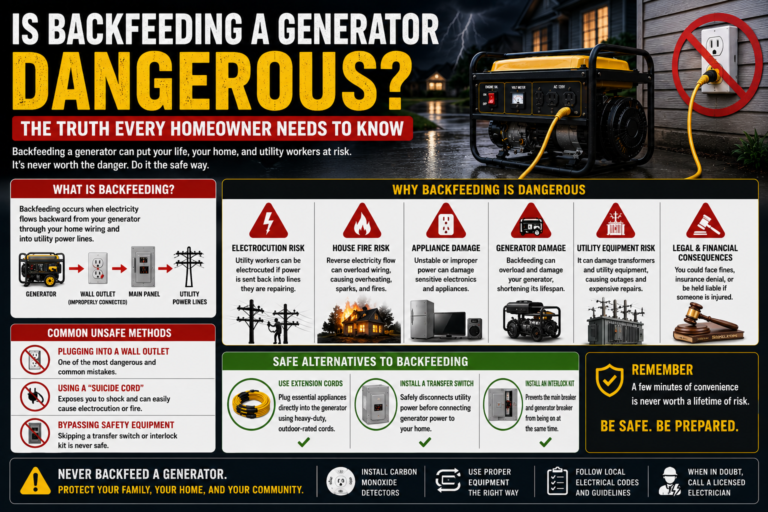
3. Backfeeding Power Into the Home
Plugging a generator into a wall outlet is one of the most dangerous mistakes homeowners make.
Backfeeding can:
- Electrocute utility workers
- Start electrical fires
- Damage electronics
- Destroy generator components
Safety Tip:
Use a transfer switch or interlock kit.
Related:
What Happens If You Backfeed a Generator?
Is Backfeeding a Generator Dangerous?
4. Running a Generator in Rain Without Protection
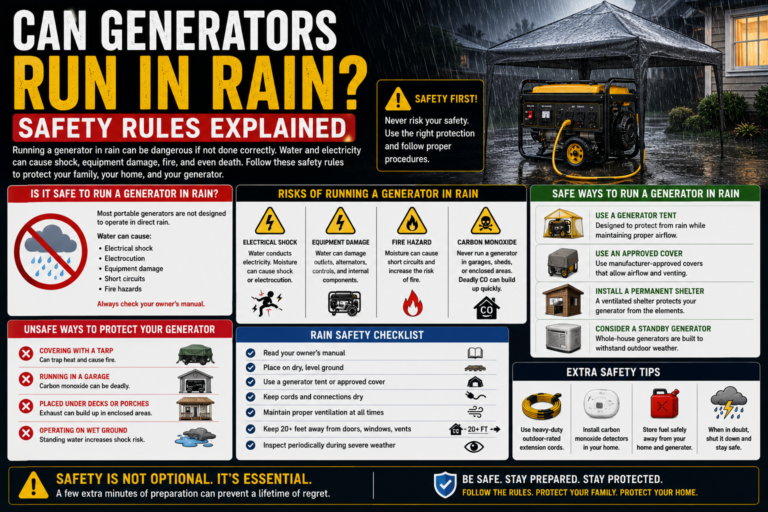
Water and electricity are a dangerous combination.
Rain exposure can cause:
- Electrical shock
- Short circuits
- Equipment damage
- Electrocution risks
Safety Tip:
Use generator tents or approved weather protection.
Related: Can Generators Run in Rain? Safety Rules Explained
5. Using Cheap or Undersized Extension Cords
Undersized cords create overheating and fire risks.
Warning signs include:
- Warm or hot cords
- Flickering power
- Melting plugs
Safety Tip:
Only use heavy-duty generator-rated extension cords.
Related: Generator Extension Cord Size Chart
6. Overloading the Generator
Trying to power too many appliances at once strains generators.
Common signs include:
- Shutdowns
- Overload warning lights
- Flickering power
Safety Tip:
Know your generator’s wattage limits before connecting appliances.
Related: Generator Overload Warning: Causes, Fixes & Prevention
7. Refueling While the Generator Is Hot
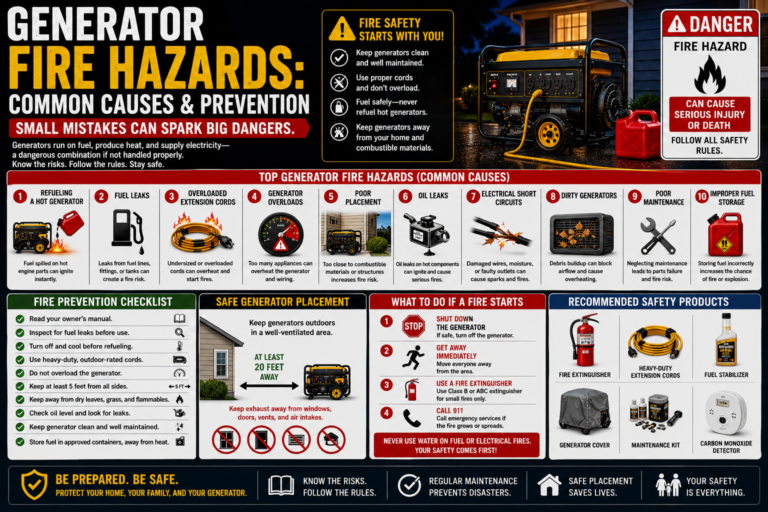
Gasoline on hot engine parts can ignite instantly.
This is one of the most overlooked fire risks.
Safety Tip:
Turn the generator off and allow it to cool fully before adding fuel.
Related: Generator Fire Hazards: Common Causes & Prevention
8. Poor Fuel Storage
Improper fuel storage creates both safety and performance problems.
Mistakes include:
- Storing gasoline indoors
- Using old fuel
- Improper fuel containers
Safety Tip:
Store fuel safely and use fuel stabilizer.
Related: Generator Fuel Storage Mistakes to Avoid
9. Ignoring Carbon Monoxide Detectors
Generators increase carbon monoxide risk during outages.
Without detectors, homeowners may never notice dangerous gas buildup.
Safety Tip:
Install carbon monoxide detectors near sleeping areas.
Related: Generator Carbon Monoxide Safety: Hidden Dangers Explained
10. Skipping Generator Maintenance
Neglected generators are more likely to fail during emergencies.
Common maintenance issues include:
- Dirty air filters
- Old fuel
- Low oil
- Weak batteries
Safety Tip:
Run monthly checks and maintenance.
Related: Generator Maintenance Checklist to Prevent Breakdowns
11. Leaving a Generator Unattended
Generators should be monitored while running.
Potential risks include:
- Fuel leaks
- Overheating
- Theft
- Electrical issues
Safety Tip:
Check on your generator periodically during long outages.
12. Forgetting to Test the Generator Before an Emergency
Many generators fail simply because they sat unused too long.
Safety Tip:
Run your generator monthly for 15–30 minutes.
Related: How to Diagnose Common Generator Problems at Home
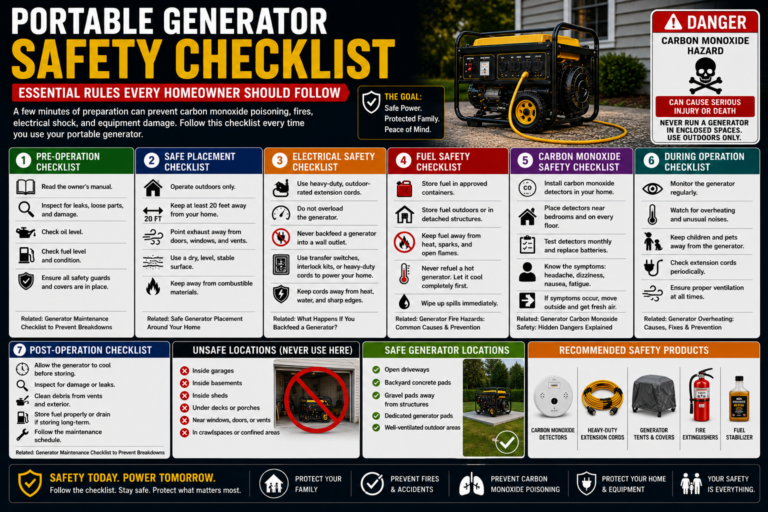
Step-by-Step Generator Safety Checklist
Before every outage, follow this quick checklist.
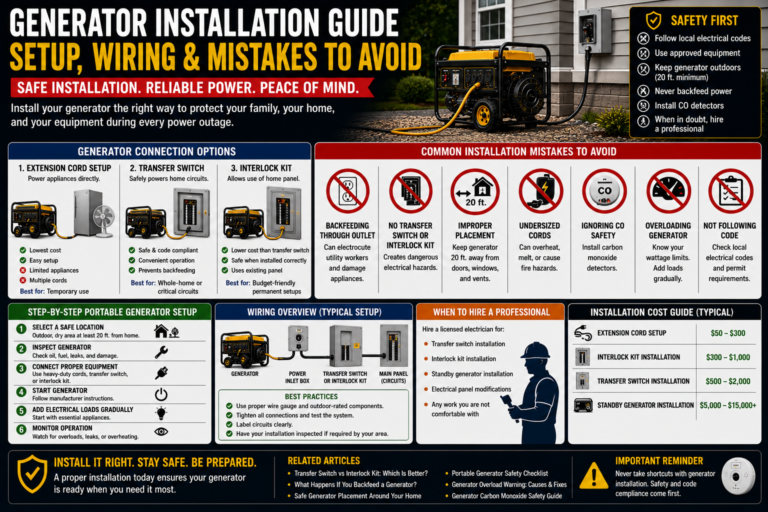
Step 1: Place Generator Outdoors
Never run inside garages or enclosed spaces.
Step 2: Maintain Safe Distance
Stay at least 20 feet from doors and windows.
Step 3: Inspect Extension Cords
Only use heavy-duty cords.
Step 4: Avoid Overloads
Start with essential appliances first.
Step 5: Keep It Dry
Protect against rain and standing water.
Step 6: Never Backfeed
Use proper transfer equipment.
Step 7: Refuel Safely
Wait until generator cools down.
Step 8: Test Carbon Monoxide Detectors
Verify batteries are working.
When to Upgrade Your Generator Setup
You may need a safer setup if:
- Extension cords are everywhere
- Power needs exceed generator capacity
- Setup feels unsafe during storms
- You regularly experience outages
Safer upgrades may include:
Related:
Best Portable Generators
Best Whole House Generators
Recommended Generator Safety Products
Helpful products for safer operation:
- Carbon monoxide detectors
- Heavy-duty extension cords
- Generator tents and covers
- Transfer switches
- Interlock kits
- Fuel stabilizer
- Generator maintenance kits
You can also browse our guide to the Best Generator Maintenance Products.
Related Safety Articles
Still learning generator safety? These guides may help:
- Generator Safety Guide: Common Mistakes & Hidden Dangers
- What Happens If You Backfeed a Generator?
- Is Backfeeding a Generator Dangerous?
- Can Generators Run in Rain? Safety Rules Explained
- Generator Carbon Monoxide Safety: Hidden Dangers Explained
Frequently Asked Questions
What is the biggest generator mistake homeowners make?
Running generators too close to the house or inside garages is one of the biggest dangers.
Is it dangerous to plug a generator into a wall outlet?
Yes. This is called backfeeding and can be deadly.
Can generators run in rain?
Usually no unless properly protected.
Why are carbon monoxide detectors important with generators?
Generators produce odorless carbon monoxide gas that can become deadly.
How often should I test my generator?
Monthly testing is recommended for reliability and safety.
Final Verdict
Most generator accidents happen because of preventable mistakes—not equipment failure. Poor placement, backfeeding, overloads, unsafe fueling, and carbon monoxide risks are among the biggest problems homeowners face.
The safest approach is simple: keep generators outdoors, use proper cords, avoid overloads, and never ignore safety precautions during outages.