How Far Should a Generator Be From Your House? Safe Distance Explained
One of the most common questions homeowners ask during a power outage is: How far should a generator be from your house?
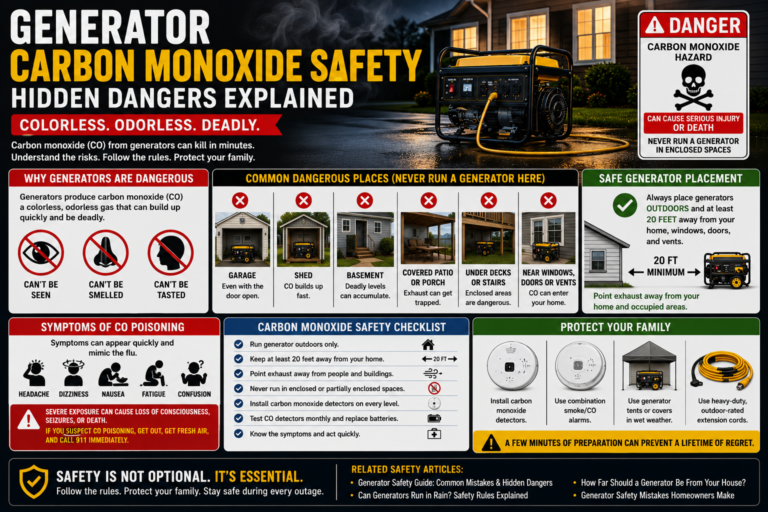
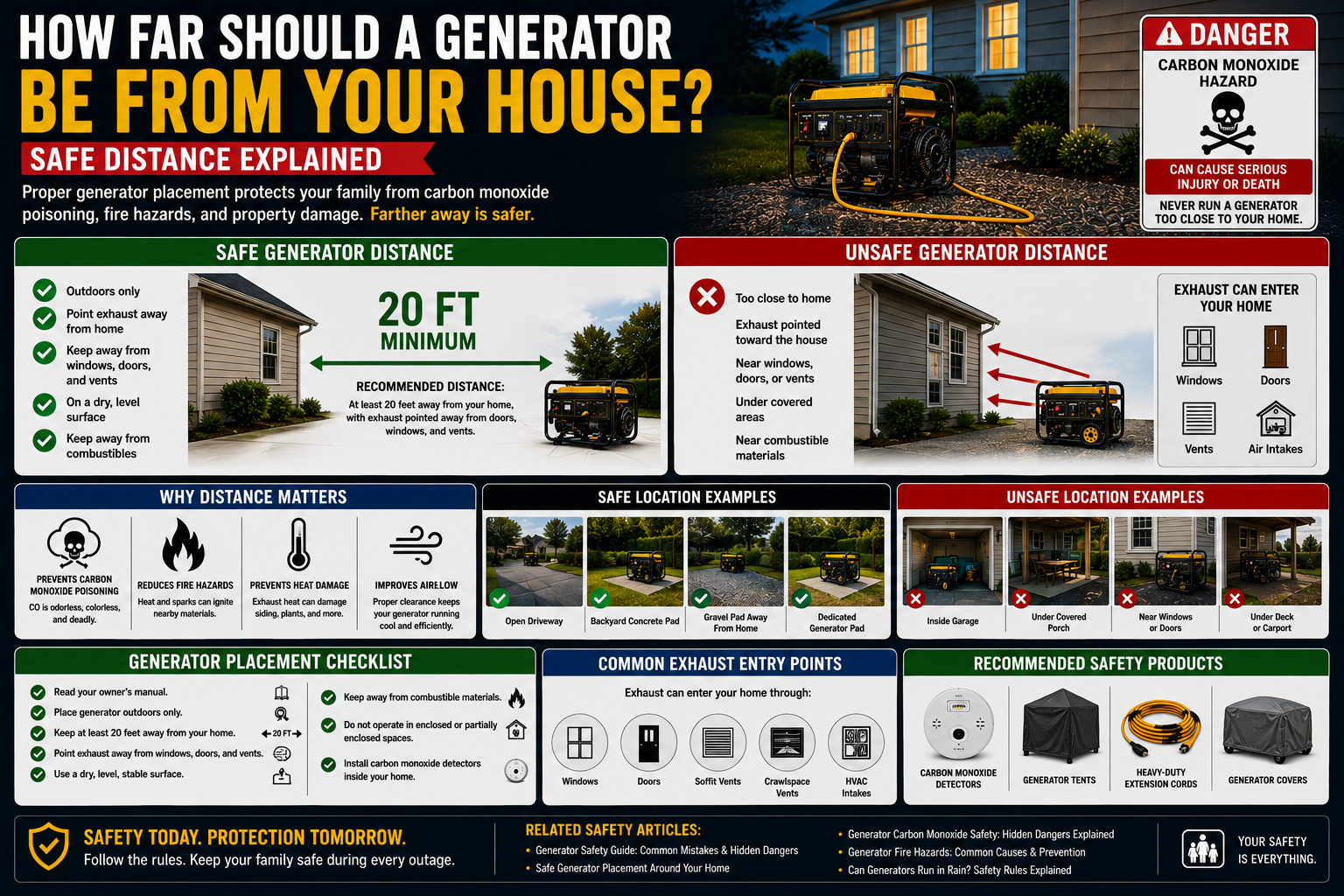
The general recommendation from safety experts and many generator manufacturers is to place portable generators at least 20 feet away from your home whenever possible, with the exhaust pointed away from windows, doors, vents, and other openings.
Placing a generator too close to your house can significantly increase the risk of carbon monoxide poisoning, fire hazards, and property damage.
The good news is that safe generator placement is simple once you understand a few basic rules.
If you’re learning generator safety basics, start with our Generator Safety Guide: Common Mistakes & Hidden Dangers for a complete overview.
Quick Answer
Most portable generators should be operated at least 20 feet away from your home whenever possible.
The generator exhaust should always point away from:
- Windows
- Doors
- Garage openings
- HVAC intakes
- Crawlspace vents
- Occupied outdoor areas
Always follow the specific distance recommendations in your owner’s manual.
Why Distance Matters
Many homeowners mistakenly believe that placing a generator just outside the garage or next to the house is safe.
Unfortunately, dangerous exhaust gases can easily enter the home.
Proper distance helps reduce the risk of:
- Carbon monoxide poisoning
- Fire hazards
- Noise issues
- Heat damage
- Exhaust infiltration
Top Risks of Placing a Generator Too Close to Your House
1. Carbon Monoxide Poisoning
Carbon monoxide (CO) is the biggest concern.
Generator exhaust contains large amounts of carbon monoxide, which is:
- Colorless
- Odorless
- Potentially deadly
Carbon monoxide can enter your home through:
- Open windows
- Doors
- Soffit vents
- Attic vents
- HVAC systems
Even if a generator is outdoors, placing it too close to the house can still create dangerous conditions.
Related: Generator Carbon Monoxide Safety: Hidden Dangers Explained
2. Fire Hazards
Generators produce heat during operation.
Placing them too close to:
- Siding
- Decks
- Landscaping
- Dry vegetation
can increase fire risk.
Always maintain adequate clearance around the generator.
Related: Generator Fire Hazards: Common Causes & Prevention
3. Heat Damage
Generator exhaust systems become extremely hot.
Excessive heat can damage:
- Vinyl siding
- Exterior finishes
- Landscaping
- Outdoor furniture
Maintaining proper distance helps protect your property.
4. Poor Ventilation
Generators require unrestricted airflow.
Operating too close to structures may:
- Restrict cooling airflow
- Increase overheating risk
- Reduce performance
Related: Generator Overheating: Causes, Fixes & Prevention
Recommended Generator Distances
Portable Generators
Recommended distance:
✅ 20 feet or more whenever possible
Always:
- Operate outdoors only
- Point exhaust away from the home
- Use a dry, level surface
Whole-House Standby Generators
Standby generator distances vary by manufacturer and local code.
Typical installations require:
- Minimum clearance from walls
- Clearance from windows and vents
- Proper airflow spacing
Always follow:
- Manufacturer requirements
- Local building codes
- Installation instructions
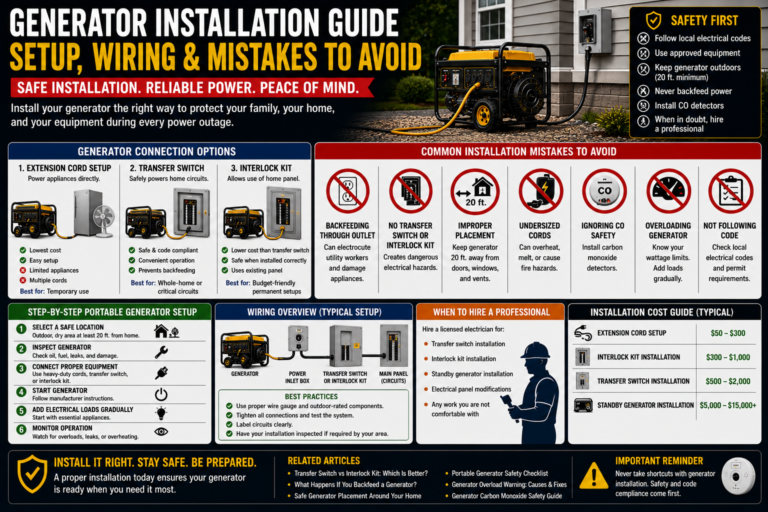
Related: Generator Installation Guide: Setup, Wiring & Mistakes to Avoid
Unsafe Generator Locations
Never place generators:
❌ Inside garages
❌ Inside sheds
❌ Inside basements
❌ Under decks
❌ On covered porches
❌ Next to open windows
❌ Near HVAC air intakes
These locations can trap dangerous exhaust gases.
Related: Safe Generator Placement Around Your Home
Safe Generator Locations
Good locations include:
✔ Open driveway areas
✔ Backyard concrete pads
✔ Gravel pads away from structures
✔ Dedicated generator pads
Safe locations should always be:
- Outdoors
- Dry
- Well ventilated
- Away from combustible materials
Step-by-Step Generator Placement Checklist
Before starting your generator:
Step 1: Read Your Owner’s Manual
Manufacturers may specify minimum distances.
Step 2: Move Generator Outdoors
Never operate inside enclosed spaces.
Step 3: Measure Distance
Aim for at least 20 feet from the home.
Step 4: Check Exhaust Direction
Point exhaust away from windows, doors, and vents.
Step 5: Inspect the Area
Remove combustible materials nearby.
Step 6: Verify Ground Conditions
Choose a dry, level surface.
Step 7: Install Carbon Monoxide Detectors
Ensure working CO detectors are installed inside the home.
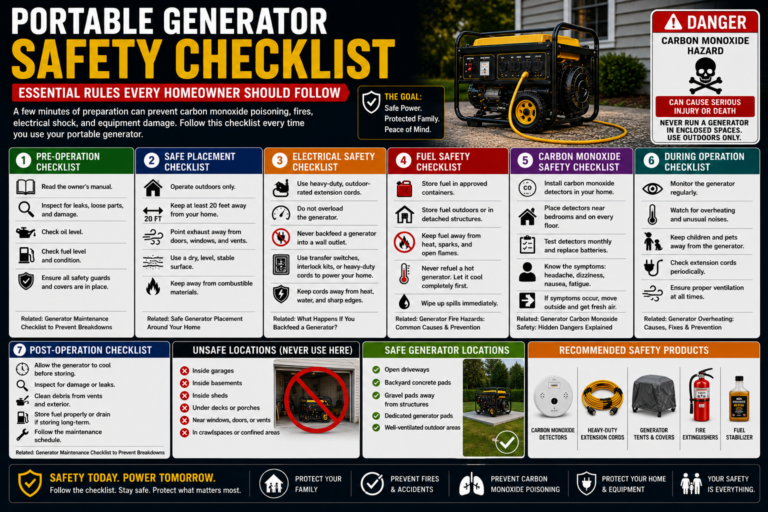
Related: Portable Generator Safety Checklist
What If You Cannot Place the Generator 20 Feet Away?
Sometimes space limitations make this difficult.
If you cannot maintain the full distance:
- Follow manufacturer instructions closely.
- Maximize available distance.
- Point exhaust away from the house.
- Install multiple CO detectors.
- Never operate near windows or vents.
When in doubt, place the generator farther away.
When to Call a Professional
Consult a professional if:
- Installing a standby generator
- Unsure about local code requirements
- Planning permanent generator placement
- Installing transfer switches or interlock kits
Professional installation ensures safe operation and code compliance.
Recommended Generator Safety Products
Helpful products for safe generator placement include:
- Carbon monoxide detectors
- Generator tents
- Weatherproof generator covers
- Heavy-duty extension cords
- Generator pads
You can also browse our guide to the Best Generator Covers (Weather Protection).
Related Safety Articles
Continue learning generator safety:
- Generator Safety Guide: Common Mistakes & Hidden Dangers
- Safe Generator Placement Around Your Home
- Generator Carbon Monoxide Safety: Hidden Dangers Explained
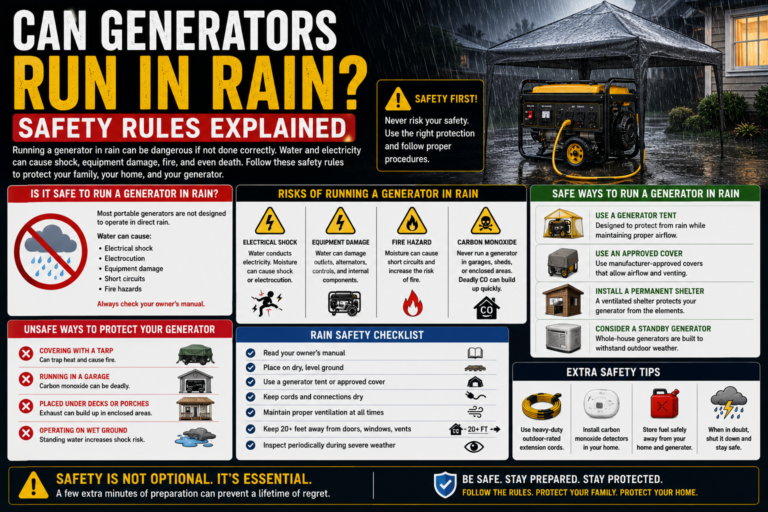
- Can Generators Run in Rain? Safety Rules Explained
- Generator Safety Mistakes Homeowners Make
Frequently Asked Questions
How far should a portable generator be from a house?
Most experts recommend at least 20 feet away whenever possible.
Can I run a generator in my garage if the door is open?
No. Carbon monoxide can still build to dangerous levels.
Can I place a generator under a covered porch?
No. Covered spaces can trap dangerous exhaust gases.
Does exhaust direction matter?
Yes. Always point exhaust away from doors, windows, vents, and people.
Should I install carbon monoxide detectors if I own a generator?
Absolutely. Every home using a generator should have working carbon monoxide detectors.
Final Verdict
Portable generators should generally be placed at least 20 feet away from your home, outdoors, and with exhaust pointed away from doors, windows, and vents.
Safe placement dramatically reduces the risk of carbon monoxide poisoning, fire hazards, and equipment problems.
When it comes to generator safety, farther away is usually safer.