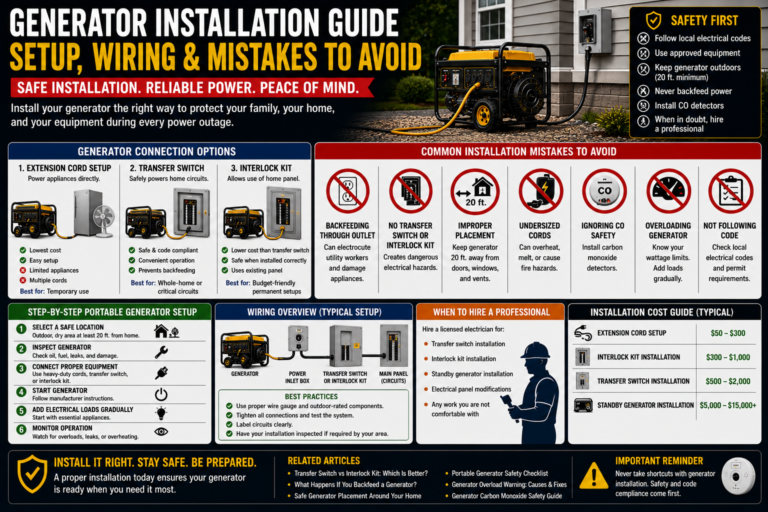
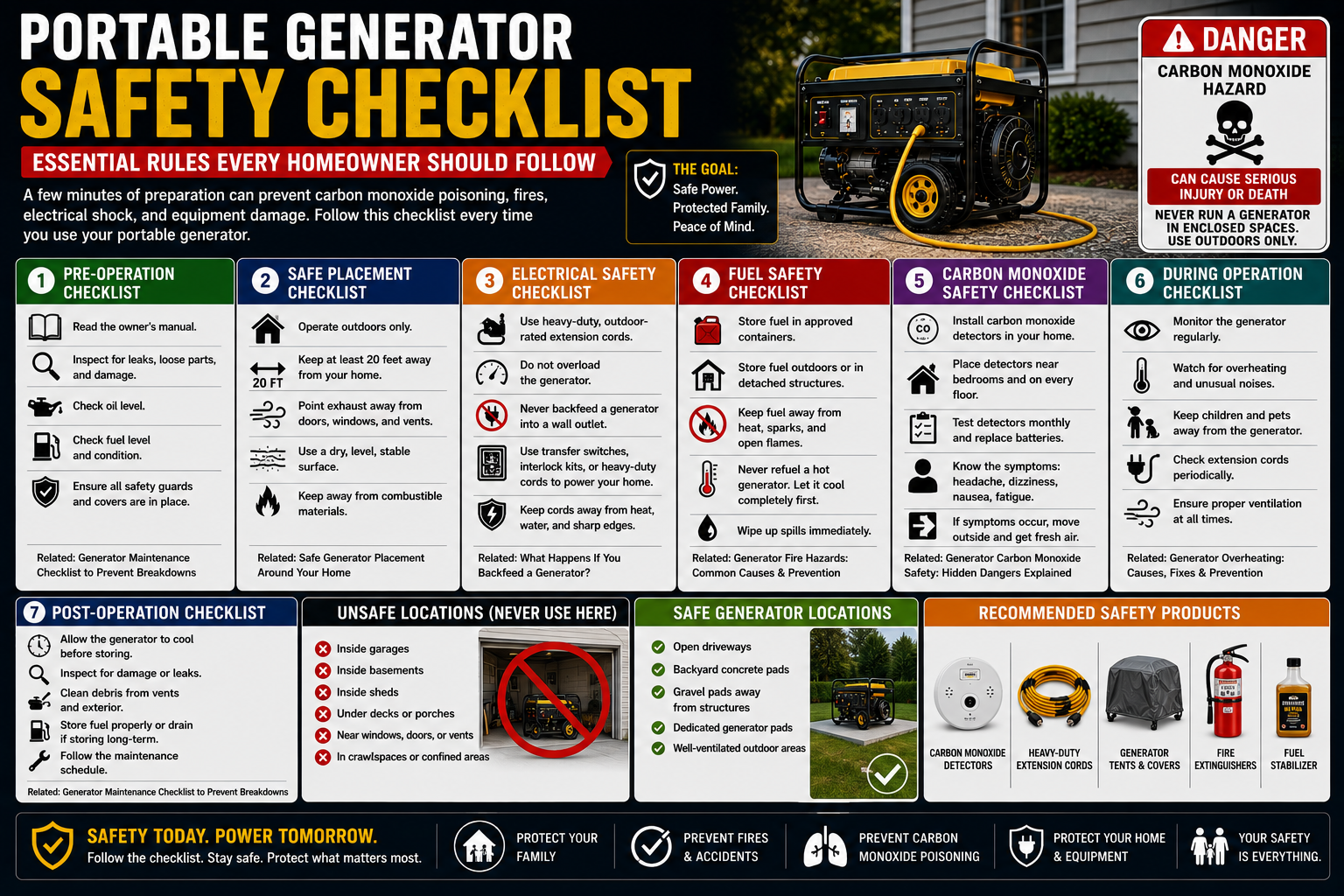
Portable Generator Safety Checklist: Essential Rules Every Homeowner Should Follow
Portable generators are one of the best tools for keeping your home powered during an outage. However, improper generator use can lead to serious dangers including carbon monoxide poisoning, fires, electrical shock, equipment damage, and even death.
The good news is that most generator accidents are completely preventable.
By following a simple safety checklist every time you use your generator, you can protect your family, your home, and your equipment.
This guide covers the essential portable generator safety rules every homeowner should know before the next power outage.
If you’re learning generator safety basics, start with our Generator Safety Guide: Common Mistakes & Hidden Dangers for a complete overview.
Quick Answer
Before operating a portable generator, always verify that it is outdoors, at least 20 feet away from your home, properly ventilated, protected from rain, and connected using heavy-duty generator-rated extension cords.
Never operate a generator inside garages, basements, sheds, or other enclosed spaces.
Why Generator Safety Matters
Generators combine:
- Fuel
- Electricity
- Heat
- Exhaust gases
When used improperly, generators can cause:
- Carbon monoxide poisoning
- House fires
- Electrical shock
- Electrocution
- Property damage
Fortunately, following a basic checklist dramatically reduces these risks.
Pre-Operation Safety Checklist
Before starting your generator, complete these steps.
✔ Read the Owner’s Manual
Every generator is different.
Review:
- Startup procedures
- Maintenance requirements
- Manufacturer safety recommendations
- Fuel requirements
Always follow manufacturer instructions.
✔ Inspect the Generator
Before each use, inspect for:
- Fuel leaks
- Oil leaks
- Damaged wiring
- Loose components
- Cracked fuel lines
Do not operate damaged equipment.
Related: Generator Leaking Gas: Causes, Risks & What to Do
✔ Check Oil Levels
Low oil can cause:
- Automatic shutdowns
- Overheating
- Engine damage
Check oil before every use.
Related: Generator Maintenance Checklist to Prevent Breakdowns
✔ Verify Fuel Condition
Old gasoline can create starting problems.
If fuel is older than several months:
- Drain stale fuel
- Replace with fresh fuel
- Add fuel stabilizer when appropriate
Related: Generator Won’t Start? 12 Common Causes & Fixes
Safe Generator Placement Checklist
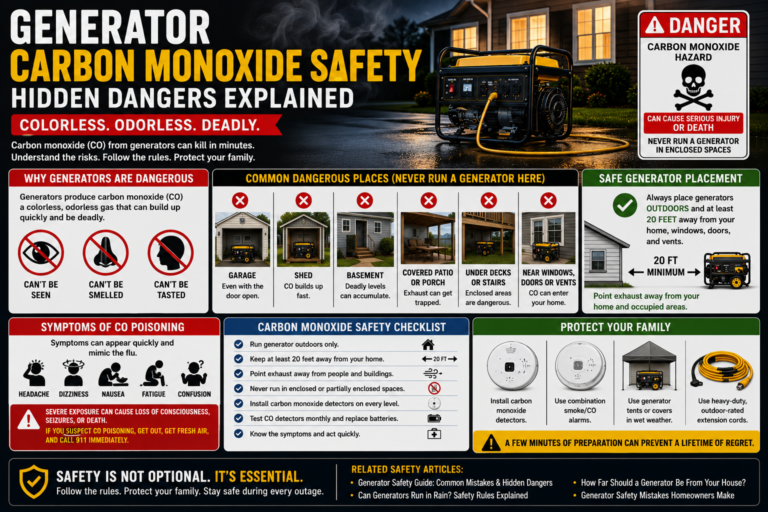
✔ Operate Outdoors Only
Never run a generator indoors.
Never use generators inside:
❌ Garages
❌ Basements
❌ Sheds
❌ Crawlspaces
❌ Enclosed patios
Related: Generator Carbon Monoxide Safety: Hidden Dangers Explained
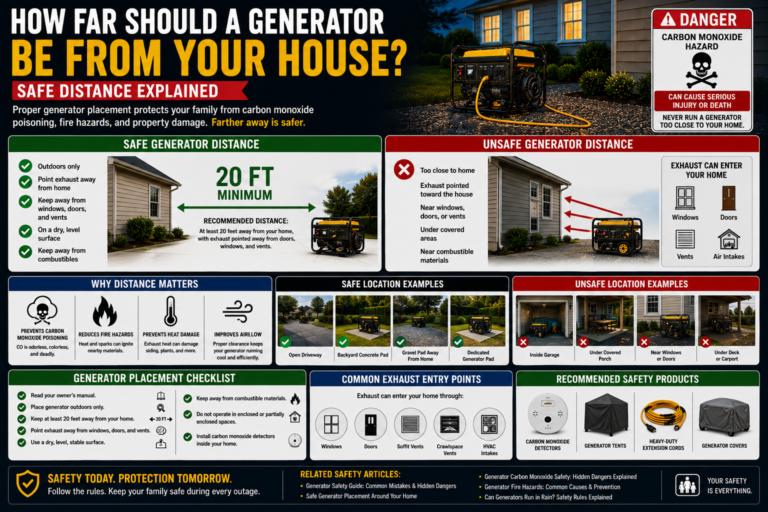
✔ Maintain Safe Distance
Place generators at least 20 feet away from your home whenever possible.
Keep away from:
- Doors
- Windows
- Vents
- Air intakes
Related: How Far Should a Generator Be From Your House?
✔ Point Exhaust Away From the House
Generator exhaust should always point away from:
- People
- Doors
- Windows
- Neighboring homes
Related: Safe Generator Placement Around Your Home
✔ Use a Dry, Level Surface
Operate generators on:
✅ Concrete
✅ Gravel
✅ Dry pavement
Avoid:
❌ Standing water
❌ Mud
❌ Wet grass
Related: Can Generators Run in Rain? Safety Rules Explained
Electrical Safety Checklist
✔ Use Heavy-Duty Extension Cords
Use only:
- Outdoor-rated cords
- Generator-rated cords
- Proper wire gauge sizes
Never use damaged cords.
Related: Generator Extension Cord Size Chart
✔ Avoid Overloading the Generator
Know your generator’s wattage limits.
Common overload warning signs include:
- Flickering lights
- Tripped breakers
- Shutdowns
- Overload indicators
Related: Generator Overload Warning: Causes, Fixes & Prevention
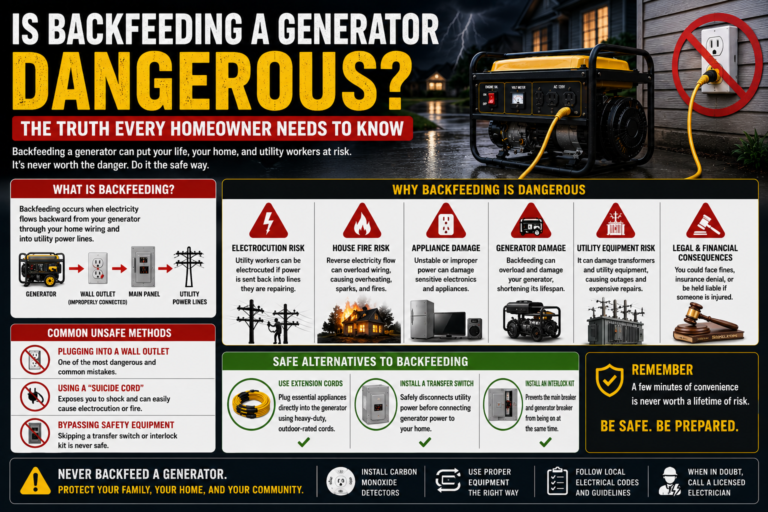
✔ Never Backfeed a Generator
Never plug a generator directly into a household outlet.
Backfeeding can:
- Electrocute utility workers
- Damage appliances
- Cause house fires
Use:
✅ Transfer switches
✅ Interlock kits
✅ Heavy-duty extension cords
Related:
What Happens If You Backfeed a Generator?
Is Backfeeding a Generator Dangerous?
Fuel Safety Checklist
✔ Store Fuel Safely
Use approved fuel containers only.
Store fuel:
- Outdoors or in detached structures
- Away from ignition sources
- Away from children
Related: Generator Fuel Storage Mistakes to Avoid
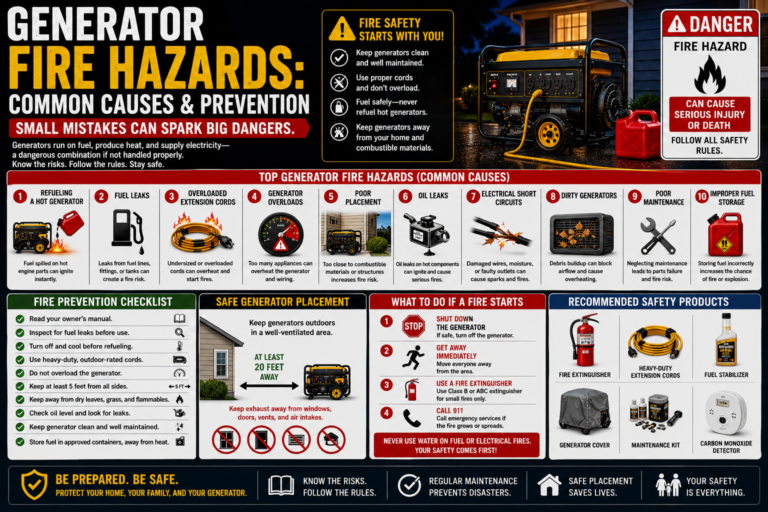
✔ Never Refuel a Hot Generator
Always:
- Turn off the generator.
- Allow it to cool completely.
- Refuel outdoors.
Spilled gasoline on hot components can ignite instantly.
Related: Generator Fire Hazards: Common Causes & Prevention
Carbon Monoxide Safety Checklist
✔ Install Carbon Monoxide Detectors
Install detectors:
✅ Near bedrooms
✅ On every floor
✅ According to manufacturer recommendations
Test monthly.
Related: Generator Carbon Monoxide Safety: Hidden Dangers Explained
✔ Watch for Carbon Monoxide Symptoms
Symptoms include:
- Headache
- Dizziness
- Nausea
- Fatigue
- Confusion
If symptoms develop:
- Shut down the generator if safe.
- Move everyone outdoors.
- Call emergency services.
During Operation Checklist
While the generator is running:
✔ Monitor for unusual noises
✔ Watch for leaks
✔ Keep children and pets away
✔ Check extension cords periodically
✔ Verify proper ventilation
✔ Watch for overheating
Never leave generators completely unattended for long periods.
Post-Operation Checklist
After use:
✔ Allow generator to cool
✔ Inspect for leaks or damage
✔ Clean debris from cooling vents
✔ Store properly
✔ Refill fuel if needed
✔ Perform scheduled maintenance
Regular maintenance improves reliability and safety.
Recommended Generator Safety Products
Helpful products for safe generator operation include:
- Carbon monoxide detectors
- Heavy-duty extension cords
- Generator tents
- Generator covers
- Fuel stabilizer
- Generator maintenance kits
- Fire extinguishers
You can also browse our guide to the Best Generator Maintenance Products.
Related Safety Articles
Continue learning generator safety:
- Generator Safety Guide: Common Mistakes & Hidden Dangers
- Generator Safety Mistakes Homeowners Make
- Generator Carbon Monoxide Safety: Hidden Dangers Explained
- Can Generators Run in Rain? Safety Rules Explained
- Safe Generator Placement Around Your Home
Frequently Asked Questions
What is the most important generator safety rule?
Always operate generators outdoors and away from your home.
Can I run a generator in my garage with the door open?
No. Carbon monoxide can still accumulate and become deadly.
How far should a generator be from my house?
Most experts recommend at least 20 feet away whenever possible.
Should I install carbon monoxide detectors if I own a generator?
Yes. Every generator owner should have working CO detectors.
Can generators be left running overnight?
Generators can run for extended periods if designed for it, but they should be monitored regularly and operated safely.
Final Verdict
Portable generators provide valuable emergency power, but safe operation should always come first.
By following this portable generator safety checklist before every outage, you can significantly reduce the risks of carbon monoxide poisoning, fires, electrical hazards, and equipment damage.
A few minutes spent reviewing safety rules can protect your family when it matters most.