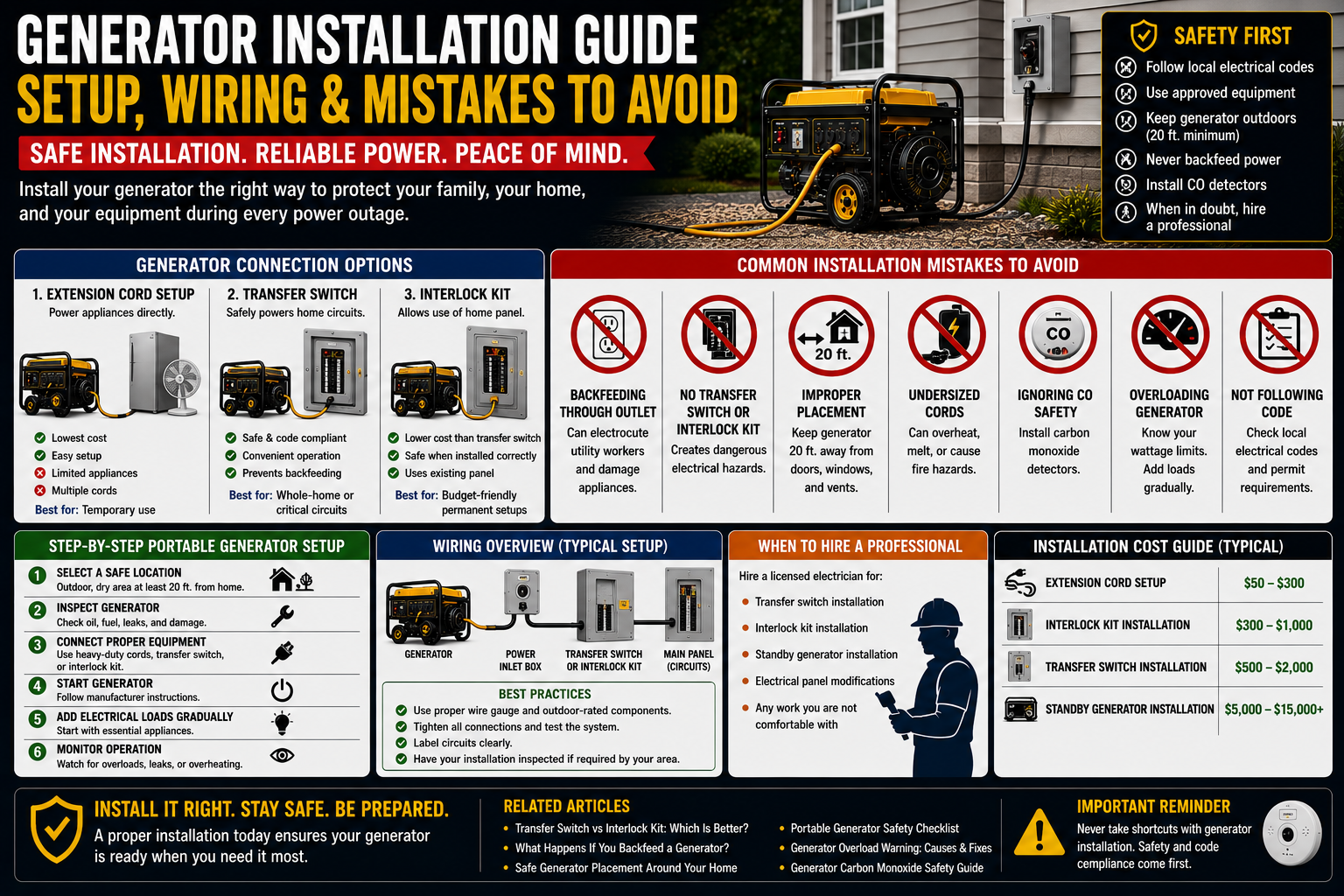
Generator Installation Guide: Setup, Wiring & Mistakes to Avoid
Installing a generator correctly is one of the most important steps you can take to ensure safe, reliable backup power during an outage. Whether you’re installing a portable generator hookup or a whole-house standby generator, proper setup is essential.
Unfortunately, many homeowners make installation mistakes that can lead to electrical hazards, carbon monoxide poisoning, equipment damage, code violations, and costly repairs.
The good news is that most installation problems are completely preventable.
This guide explains generator installation basics, wiring options, common mistakes, and when to hire a professional.
If you’re new to generator safety, start with our Generator Safety Guide: Common Mistakes & Hidden Dangers for a complete overview.
Quick Answer
Generators should always be installed according to manufacturer instructions and local electrical codes. Portable generators should never be connected directly to household outlets. Instead, use heavy-duty extension cords, a transfer switch, or an interlock kit.
Whole-house standby generators should typically be installed by licensed professionals.
Signs Your Generator Installation May Be Unsafe
Watch for these warning signs:
- Generator plugged into a wall outlet
- No transfer switch installed
- Homemade wiring connections
- Extension cords running through windows or doors
- No carbon monoxide detectors installed
- Generator placed too close to the home
- Frequent breaker trips
- Overheating wiring or cords
If any of these apply, your setup may need immediate attention.
Generator Installation Options
There are several ways to connect a generator to your home.
Option 1: Heavy-Duty Extension Cords
The simplest and least expensive method is powering appliances directly.
Advantages:
✅ Lowest cost
✅ No home wiring changes
✅ Easy setup
Disadvantages:
❌ Limited appliances powered
❌ Multiple cords required
❌ Less convenient
Best for:
- Small portable generators
- Temporary emergency use
Related: Portable Generator Safety Checklist
Option 2: Transfer Switch Installation
A transfer switch safely isolates utility power before generator power is connected.
Benefits include:
✅ Safe operation
✅ Code compliance
✅ Convenient operation
✅ Prevents backfeeding
Transfer switches are one of the safest ways to power critical home circuits.
Related:
What Happens If You Backfeed a Generator?
Option 3: Interlock Kit Installation
Interlock kits mechanically prevent utility power and generator power from being connected simultaneously.
Benefits:
✅ Lower cost than transfer switches
✅ Safe when installed correctly
✅ Allows panel-based power distribution
Interlock kits are popular with portable generator owners.
Related: Is Backfeeding a Generator Dangerous?
Option 4: Whole-House Standby Generator Installation
Standby generators automatically restore power during outages.
Advantages:
✅ Automatic operation
✅ Whole-home coverage
✅ Permanent installation
Disadvantages:
❌ Higher cost
❌ Professional installation required
Related: Best Whole House Generators
Generator Wiring Basics
A safe generator system generally includes:
- Generator
- Power inlet box
- Transfer switch or interlock kit
- Circuit breaker panel
- Heavy-duty wiring
Never attempt wiring modifications unless you fully understand electrical systems.
Improper wiring can result in:
- Electrical shock
- Electrocution
- Fire hazards
- Equipment damage
Common Generator Installation Mistakes to Avoid
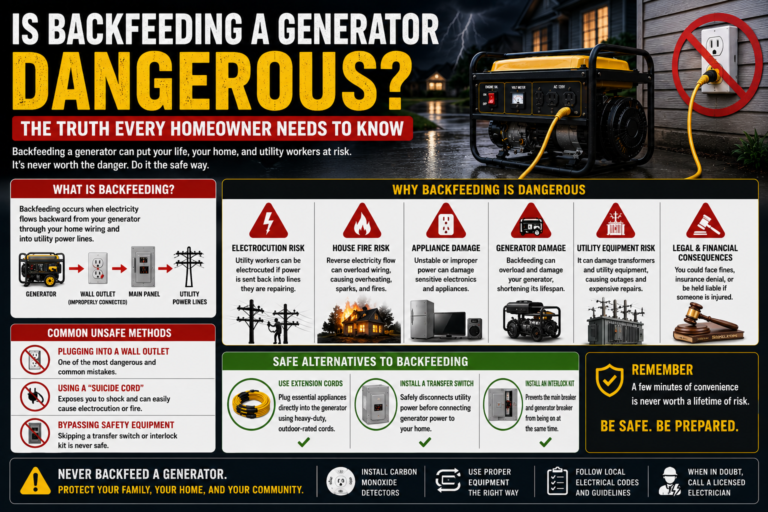
1. Backfeeding Through a Wall Outlet
Plugging a generator directly into a wall outlet is extremely dangerous.
This practice can:
- Electrocute utility workers
- Damage appliances
- Start house fires
Never use “suicide cords.”
Related:
What Happens If You Backfeed a Generator?
Is Backfeeding a Generator Dangerous?
2. Skipping a Transfer Switch or Interlock Kit
Connecting generators without approved transfer equipment creates serious hazards.
Always use approved connection methods.
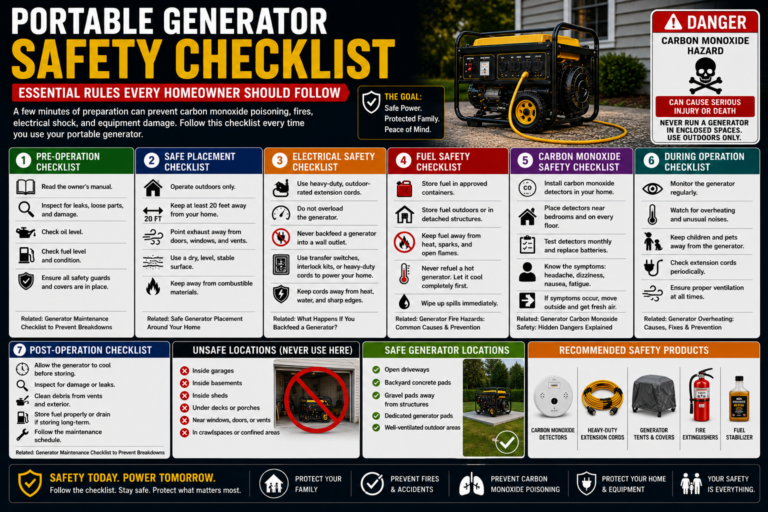
3. Improper Generator Placement
Generators should never operate:
❌ Inside garages
❌ Under decks
❌ Near windows or doors
Always maintain proper distance from the home.
Related:
Safe Generator Placement Around Your Home
How Far Should a Generator Be From Your House?
4. Undersized Wiring or Extension Cords
Improper wire sizing may cause:
- Overheating
- Voltage drop
- Fire hazards
Always use properly sized generator cords.
Related: Generator Extension Cord Size Chart
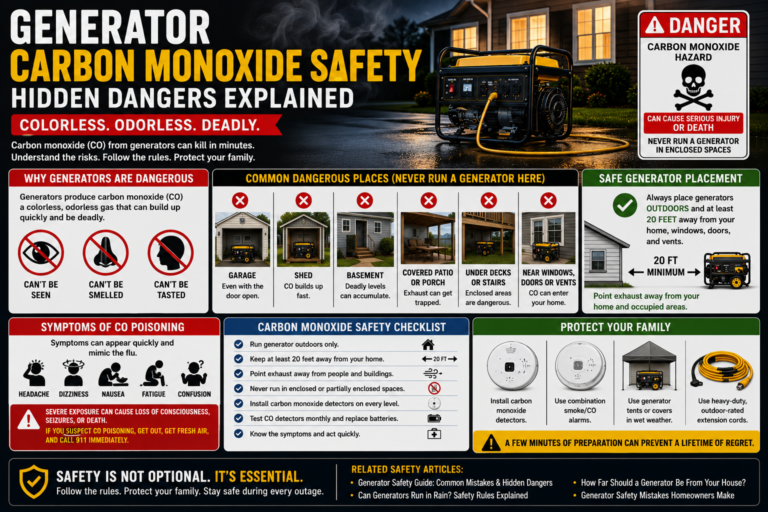
5. Ignoring Carbon Monoxide Safety
Generators produce dangerous exhaust gases.
Always install carbon monoxide detectors.
Related: Generator Carbon Monoxide Safety: Hidden Dangers Explained
6. Overloading the Generator
Attempting to power too many appliances may result in:
- Shutdowns
- Overload warnings
- Equipment damage
Know your generator’s wattage limits.
Related: Generator Overload Warning: Causes, Fixes & Prevention
7. Ignoring Local Electrical Codes
Electrical codes vary by location.
Failure to comply may:
- Void insurance coverage
- Fail inspections
- Create safety hazards
Always verify local requirements before installation.
Step-by-Step Portable Generator Setup Guide
Step 1: Select a Safe Location
Choose a dry, outdoor location at least 20 feet from your home.
Step 2: Inspect the Generator
Check:
- Oil level
- Fuel level
- Leaks
- Damage
Step 3: Connect Proper Equipment
Use:
✅ Heavy-duty extension cords
✅ Transfer switch
✅ Interlock kit
Never use household outlets.
Step 4: Start the Generator
Follow manufacturer startup procedures.
Step 5: Add Electrical Loads Gradually
Start with essential appliances first.
Avoid sudden heavy loads.
Step 6: Monitor Operation
Watch for:
- Overload warnings
- Unusual noises
- Leaks
- Overheating
When to Hire a Professional
Hire a licensed electrician if:
- Installing a transfer switch
- Installing an interlock kit
- Installing a standby generator
- Modifying electrical panels
- Unsure about local code requirements
Professional installation is usually required for permanent systems.
Estimated Generator Installation Costs
Typical installation costs:
| Installation Type | Estimated Cost |
|---|---|
| Extension Cord Setup | $50–$300 |
| Transfer Switch Installation | $500–$2,000 |
| Interlock Kit Installation | $300–$1,000 |
| Standby Generator Installation | $5,000–$15,000+ |
Actual costs vary by location and installation complexity.
Related: How Much Does Generator Repair Cost?
Recommended Installation Products
Helpful products for safe installation include:
- Transfer switches
- Interlock kits
- Power inlet boxes
- Heavy-duty extension cords
- Generator covers
- Carbon monoxide detectors
- Surge protectors
You can also browse our guide to the Best Generator Maintenance Products.
Related Generator Articles
Continue learning generator setup and safety:
- Generator Safety Guide: Common Mistakes & Hidden Dangers
- Portable Generator Safety Checklist
- What Happens If You Backfeed a Generator?
- Safe Generator Placement Around Your Home
- Generator Carbon Monoxide Safety: Hidden Dangers Explained
Frequently Asked Questions
Can I plug my generator directly into a wall outlet?
No. This creates a dangerous condition known as backfeeding.
Do I need a transfer switch for my generator?
If you plan to power home circuits, a transfer switch or interlock kit is strongly recommended.
Can I install a standby generator myself?
Most whole-house standby generators should be professionally installed.
What is the safest way to connect a portable generator to a house?
A transfer switch or interlock kit installed correctly is generally the safest option.
Do generator installations require permits?
In many areas, yes. Check local building and electrical codes.
Final Verdict
Proper generator installation protects your family, your home, and your equipment.
Avoid shortcuts, follow electrical codes, maintain safe generator placement, and never backfeed power into your home.
When in doubt, hire a qualified electrician. Safe installation is always worth the investment.